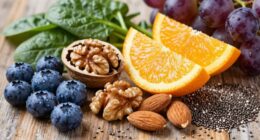
Staying hydrated isn’t just about drinking eight glasses of water a day. You can boost hydration by choosing electrolyte drinks to replace minerals lost during workouts or heat, and eating water-rich foods like watermelon, cucumbers, and oranges. Adjust your intake based on activity and environment to prevent dehydration. Paying attention to your body’s signals helps you stay balanced. Keep exploring for more surprising ways to hydrate effectively and feel your best.
Key Takeaways
- Incorporate electrolyte drinks after workouts or heat exposure to replenish minerals and maintain hydration.
- Consume water-rich foods like watermelon, cucumbers, and oranges to boost fluid intake naturally.
- Tailor hydration strategies based on activity level, environment, and individual needs for optimal health.
- Balance electrolytes through specialized drinks to prevent cramps and support muscle and nerve function.
- Maintain continuous hydration by combining water, electrolyte beverages, and hydrating foods throughout the day.

Have you ever wondered if drinking just eight glasses of water a day is enough for your health? The truth is, hydration isn’t just about gulping down plain water. Your body needs a variety of fluids and nutrients to stay properly hydrated, especially if you’re active or live in a hot climate. While water is essential, it’s not the only way to quench your thirst. You can go beyond the standard advice by incorporating electrolyte drinks into your routine, which help replenish minerals like sodium, potassium, and magnesium lost through sweat. These drinks are especially helpful after intense workouts or prolonged exposure to heat, ensuring your muscles and nervous system function smoothly.
Hydrate smarter with electrolyte drinks and water-rich foods for optimal health and performance.
In addition to beverages, paying attention to hydrating foods can make a significant difference. Fruits like watermelon, strawberries, and oranges are packed with water, making them a tasty and nutritious way to boost hydration levels. Vegetables such as cucumbers, lettuce, and celery also contain high water content, and incorporating them into your meals can help maintain fluid balance throughout the day. Eating hydrating foods can be more effective than drinking water alone because they deliver hydration alongside essential vitamins, minerals, and fiber, supporting overall health and digestion. Paying attention to your hydration strategies can help you optimize fluid intake and maintain better health. Incorporating hydrating foods into your diet can also provide additional benefits like antioxidants and fiber, which support your immune system and digestion.
It’s important to recognize that hydration needs vary depending on your activity level, environment, and individual health. If you’re exercising or working outdoors in the heat, your body loses more fluids, and relying solely on water might not be enough. In these cases, electrolyte drinks can help restore electrolyte balance, preventing dehydration and muscle cramps. Likewise, if you’re feeling thirsty, fatigued, or experiencing dark urine, it’s a clear sign you need to increase your fluid intake through a combination of drinks and hydrating foods. Additionally, understanding your hydration needs can help you tailor your intake for optimal well-being. Recognizing the role of electrolyte balance can also enhance your hydration efforts and overall health.
Don’t forget that hydration isn’t just about avoiding thirst; it’s about maintaining your energy, mental clarity, and overall well-being. Drinking water regularly is important, but mixing in electrolyte drinks and hydrating foods offers a more extensive approach. It’s a simple change that can make a big difference in how you feel each day. Remember, staying hydrated is a continuous process, so listen to your body and adapt your intake to meet your needs. With these strategies, you’ll go beyond the basic eight glasses and truly support your health from the inside out.
Frequently Asked Questions
Can Certain Foods Hydrate Better Than Water?
Yes, certain foods can hydrate you better than water. Fruit infusions and hydrating fruits like watermelon, cucumber, and oranges contain high water content and natural electrolytes, making them effective for hydration. You can enjoy fruit-infused water or snack on these hydrating fruits throughout the day. They not only quench your thirst but also provide essential nutrients, helping you stay hydrated naturally and deliciously.
Does Caffeine Consumption Affect Hydration Levels?
They say “a little knowledge is a dangerous thing,” but caffeine consumption doesn’t necessarily lead to dehydration. While coffee’s diuretic effects can cause some fluid loss, moderate intake usually doesn’t substantially impact your hydration levels. Be mindful of caffeine’s potential to cause dehydration, especially with high doses, but enjoy your coffee or tea without worry. Just balance it with plenty of water to stay truly hydrated.
How Does Hydration Impact Mental Clarity?
Hydration substantially boosts your mental clarity by reducing mind fog and improving decision-making. When you’re well-hydrated, your brain functions more efficiently, helping you stay focused and alert. Dehydration can cause sluggish thinking and distractibility, making it harder to concentrate. Drinking enough water keeps your brain hydrated, supporting sharper cognition and better judgment throughout the day. Prioritize hydration to maintain mental sharpness and make clearer decisions effortlessly.
Are There Signs of Overhydration?
Think of your body as a delicate river, where overhydration causes it to flood. Signs include confusion, nausea, and swelling, indicating disrupted electrolyte balance. You might also notice frequent urination and kidney strain, risking impaired kidney function. Stay vigilant, as too much water can drown your body’s signals. Maintaining proper electrolyte balance helps prevent overhydration, ensuring your body’s river flows smoothly without overflow or damage.
Can Hydration Needs Vary by Activity Level?
Yes, your hydration needs vary by activity level. During intense or prolonged exercise, you need more hydration through activity-specific hydration strategies to replace lost fluids. Your individualized fluid needs depend on factors like sweat rate, duration, and environment. Pay attention to your body’s signals, such as thirst and color of urine, to adjust your intake accordingly. Staying aware helps prevent dehydration or overhydration, ensuring ideal performance and health.
Conclusion
Staying hydrated isn’t just about counting glasses like a strict rulebook. Think of it as watering a vibrant garden—you nourish your body with a variety of fluids and foods, helping it flourish. Remember, hydration is a personalized journey, not a one-size-fits-all rule. By exploring these surprising ways, you’ll keep your body energized and your mind sharp. So, embrace the variety, stay curious, and let your hydration habits bloom like a well-tended garden.