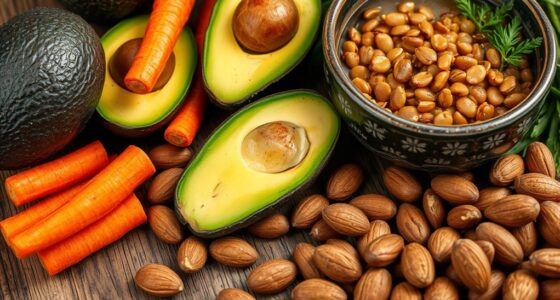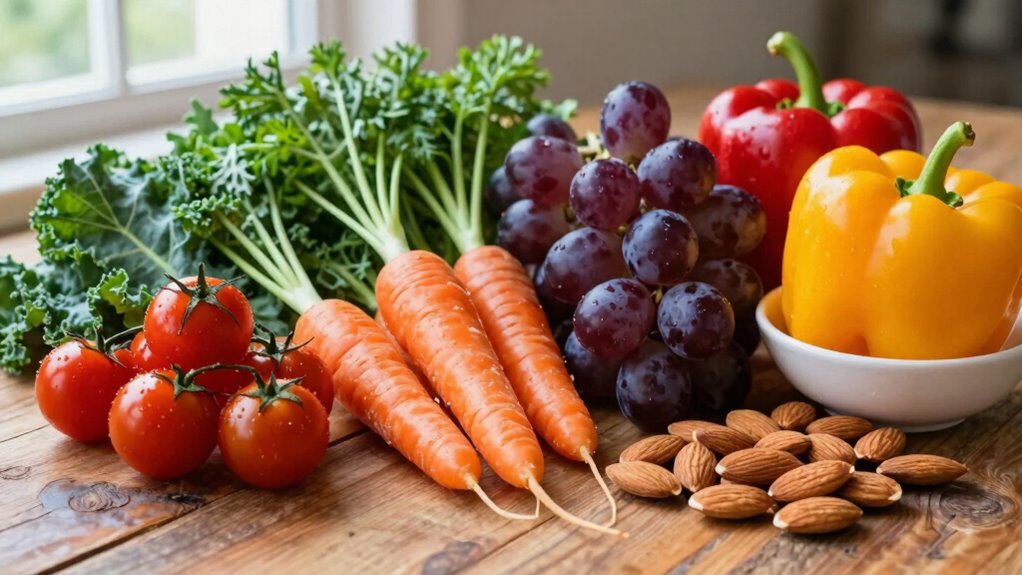

To keep your health on track, stock up on nutrient-dense foods like leafy greens, berries, nuts, seeds, whole grains, and colorful vegetables. These foods provide essential vitamins, minerals, antioxidants, fiber, and healthy fats to strengthen your immune system and boost energy. Including a variety ensures you get a broad spectrum of nutrients. If you want to discover more about maximizing these foods and their benefits, keep exploring how to pair and prepare them for maximum absorption.
Key Takeaways
- Stock up on colorful fruits and vegetables like berries, kale, and peppers for high antioxidant and vitamin content.
- Keep nuts, seeds, and whole grains for healthy fats, fiber, and essential minerals.
- Include legumes and lean proteins to boost iron, zinc, and B-vitamins intake.
- Incorporate superfoods such as berries, nuts, and leafy greens for nutrient density.
- Use proper food pairing (e.g., vitamin C with plant-based iron) to enhance nutrient absorption.
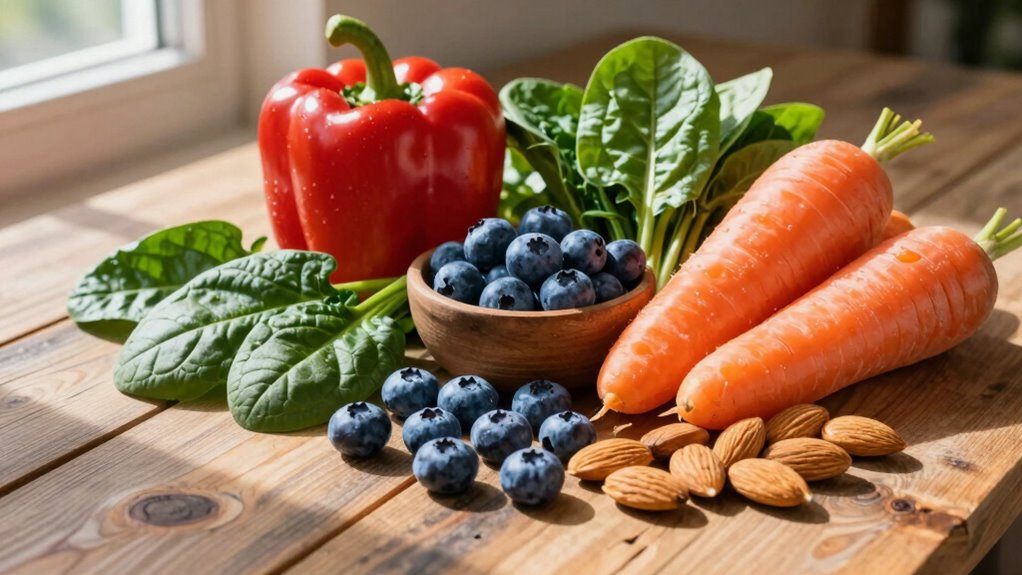
Eating a variety of micronutrient-rich foods is crucial for maintaining good health and fueling your body with the vitamins and minerals it needs. When you choose foods packed with nutrients, you support your immune system, improve energy levels, and promote overall well-being. Incorporating superfoods into your diet can amplify these benefits, as they tend to be nutrient-dense and offer numerous superfood benefits. For example, foods like kale, berries, and nuts provide high amounts of antioxidants, fiber, and healthy fats, all of which contribute to better health. But simply adding these foods isn’t enough—you also need to pay attention to nutrient absorption tips to maximize their benefits. Combining certain foods or preparing them properly can make a big difference in how well your body absorbs key nutrients.
Eating nutrient-rich foods and combining them properly boosts your health and nutrient absorption.
For instance, pairing vitamin C-rich foods like citrus fruits or bell peppers with iron-rich plant foods such as spinach or lentils enhances iron absorption. This is because vitamin C helps convert plant-based iron into a more absorbable form. Similarly, consuming healthy fats along with fat-soluble vitamins like A, D, E, and K can markedly boost your body’s ability to utilize these nutrients. Think about drizzling olive oil over a salad with leafy greens or adding sliced avocado to your smoothies—these simple steps improve nutrient uptake. Additionally, understanding the importance of nutrient bioavailability can help you make smarter choices to maximize your health benefits. When you optimize food preparation techniques, you ensure your body can utilize the nutrients more effectively. Proper food pairing not only enhances digestion but also increases the efficiency of nutrient absorption. Recognizing the role of proper food pairing can also significantly improve nutrient absorption and utilization.
It’s also smart to keep a variety of micronutrient-rich foods on hand so that your meals remain balanced and colorful. Nuts, seeds, whole grains, and a wide array of fruits and vegetables should be staples in your kitchen. These foods provide a broad spectrum of essential vitamins and minerals, ensuring you’re covering your nutritional bases. Remember, consistency is key—regularly including these foods in your diet will help you enjoy sustained health benefits. By understanding superfood benefits and applying nutrient absorption tips, you can optimize how your body uses the nutrients from your foods, leading to better health and increased energy.
nutrient-dense leafy greens
As an affiliate, we earn on qualifying purchases.
As an affiliate, we earn on qualifying purchases.
Frequently Asked Questions
Which Micronutrients Are Most Important for Immune Health?
You should focus on zinc, vitamin C, and vitamin D for immune health. To maximize micronutrient absorption, pair foods rich in vitamin C with iron sources, like citrus with spinach. Incorporate food pairing strategies such as combining healthy fats with vitamin D-rich foods like fatty fish for better absorption. These practices support your immune system by ensuring you get the most out of your micronutrient intake.
How Can I Incorporate These Foods Into a Daily Diet?
Mix micronutrient-rich foods into your daily diet with simple meal prep tips. Incorporate vibrant vegetables, hearty nuts, and flavorful fruits into your meals for maximum benefit. Use herbs and spices to enhance flavor without extra calories. Snack on colorful carrots and crunchy almonds, or add leafy greens to sandwiches and smoothies. By planning ahead and pairing produce with proteins, you’ll effortlessly boost your immune health while enjoying delicious, nutrient-packed dishes every day.
Are Supplements Necessary if I Eat These Foods Regularly?
Supplements aren’t always necessary if you maintain good dietary habits, but it depends on your individual needs. If you regularly eat a variety of micronutrient-rich foods, you’re likely meeting your nutritional requirements. However, supplement necessity varies based on factors like age, health conditions, and lifestyle. Consulting with a healthcare professional helps you determine if you need supplements or if your diet alone suffices to support your overall health.
Can Cooking Methods Affect Micronutrient Content?
A picture is worth a thousand words, and so is how you cook your food. Cooking techniques can considerably impact nutrient preservation, especially for delicate vitamins and minerals. Steaming, blanching, or microwaving help retain more micronutrients than boiling or frying. To keep your meals nutrient-rich, choose cooking methods that preserve vitamins and minerals, ensuring you get the most benefit from the foods you eat without sacrificing flavor or texture.
Which Foods Are Best for Specific Deficiencies?
If you want to address specific deficiencies, focus on superfood varieties like salmon for omega-3s, spinach for iron, and citrus fruits for vitamin C. Incorporate seasonal produce such as berries, squash, and leafy greens, which are packed with essential micronutrients. By choosing these nutrient-dense options regularly, you’ll improve your intake of crucial vitamins and minerals, helping you target deficiencies effectively and support overall health.
antioxidant-rich berries
As an affiliate, we earn on qualifying purchases.
As an affiliate, we earn on qualifying purchases.
Conclusion
Keeping a variety of micronutrient-rich foods on hand guarantees your body gets essential vitamins and minerals to stay healthy and energized. Did you know that over 2 billion people worldwide are deficient in key micronutrients? By incorporating foods like leafy greens, nuts, and berries into your diet, you can help prevent deficiencies and boost your immune system. Make these nutrient-packed options a daily habit, and you’ll be supporting your health in a simple, delicious way.
healthy nuts and seeds
As an affiliate, we earn on qualifying purchases.
As an affiliate, we earn on qualifying purchases.
whole grain food storage
As an affiliate, we earn on qualifying purchases.
As an affiliate, we earn on qualifying purchases.