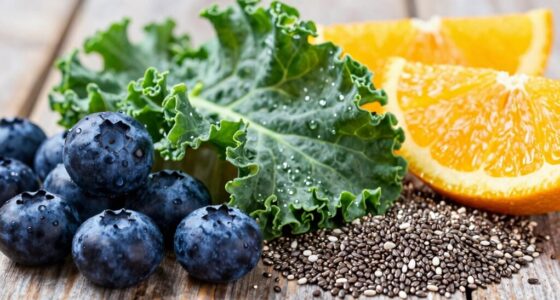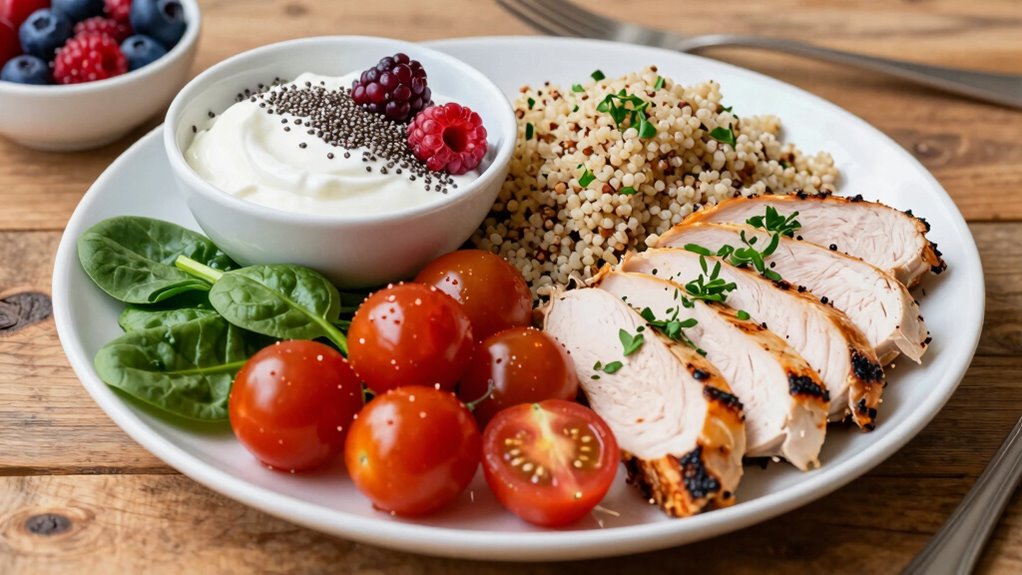

To feel full without overeating, focus on nutrient-dense foods high in fiber, protein, and healthy fats. These foods, like vegetables, legumes, whole grains, and lean meats, slow digestion and signal fullness longer. Incorporate portion control and eat at regular intervals to stabilize your hunger. Mindful eating and smaller plates also help manage portions. Want to discover more tips for staying satisfied? Keep exploring to find out how to boost your fullness strategies effectively.
Key Takeaways
- Prioritize fiber-rich foods like vegetables, legumes, and whole grains to increase fullness and aid digestion.
- Include high-protein options such as lean meats, eggs, and dairy to prolong satiety.
- Incorporate healthy fats from sources like nuts, seeds, and avocados to slow digestion and signal fullness.
- Eat smaller, balanced meals at regular intervals to maintain steady blood sugar and curb hunger.
- Use mindful portion control with smaller plates and attentive eating to prevent overeating.
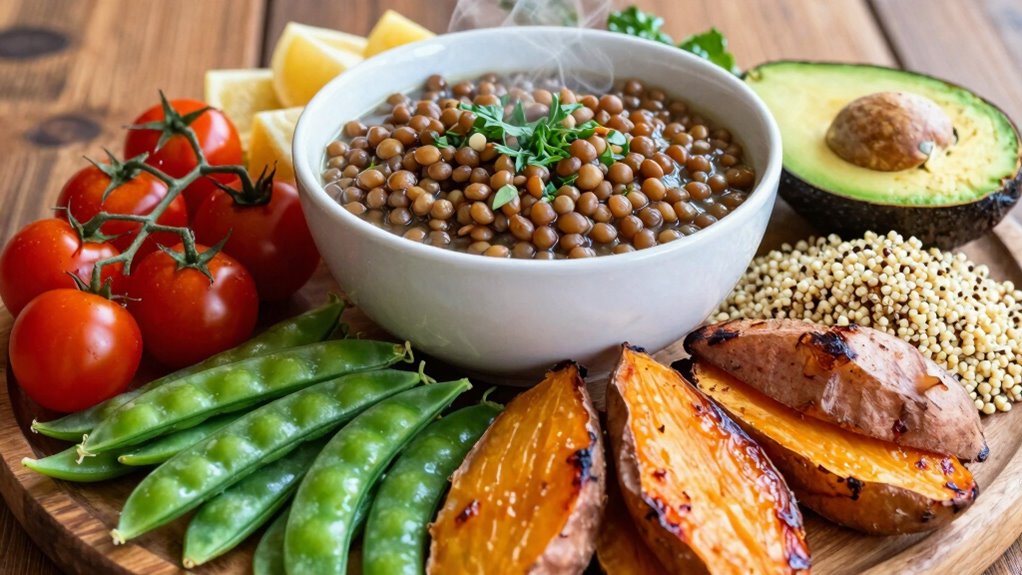
Feeling full after a meal can help you eat less and manage your weight more effectively. When you choose foods that promote satiety, you’re less likely to snack unnecessarily or overeat during your next meal. The key is selecting meals that support portion control and align with proper meal timing. These strategies work together to keep you feeling satisfied longer and prevent those dreaded hunger spikes that lead to overeating.
Choosing filling foods and proper meal timing helps control hunger and supports healthy weight management.
Foods rich in fiber, protein, and healthy fats are your best allies. Fiber adds bulk to your meals, slows digestion, and keeps your stomach feeling full. Think whole grains, legumes, vegetables, and fruits. When you incorporate these into your meals, you naturally control portion sizes because these foods are dense and satisfying, reducing the temptation to pile on large servings. Protein is another essential component; it takes longer to digest and has a high satiety factor. Include lean meats, eggs, dairy, or plant-based options like tofu and beans. Healthy fats, found in nuts, seeds, avocados, and olive oil, also promote fullness because fats slow gastric emptying, giving your body more time to signal that you’re satisfied. Additionally, choosing nutrient-dense foods ensures you’re getting maximum nourishment from smaller portions, which can further aid in weight management. Incorporating fiber-rich foods into your diet can also help regulate your digestion and keep you feeling full for longer periods.
Meal timing plays a significant role in feeling full. Spacing your meals evenly throughout the day, instead of skipping or having irregular eating patterns, helps regulate your hunger hormones. When you eat at regular intervals, your body learns to anticipate nourishment, which stabilizes blood sugar levels and reduces cravings. Combining proper meal timing with foods that promote satiety prevents those energy dips that make you reach for quick, less nutritious snacks. For example, having a balanced breakfast with protein, fiber, and healthy fats can set the tone for the rest of the day, keeping hunger at bay and supporting portion control later on. Additionally, choosing small, frequent meals can help maintain steady energy levels and prevent overeating. Maintaining consistent meal patterns also supports your body’s natural rhythms, which can enhance overall satiety signals.
Additionally, paying attention to portion control is essential. Even healthy foods can lead to overeating if portions are too large. Use smaller plates, measure servings, and listen to your body’s hunger cues. Eating slowly and mindfully allows your brain to register fullness before you go back for seconds. Proper meal timing and controlled portions guarantee you don’t feel deprived, which is indispensable for maintaining healthy eating habits long-term. Developing awareness of portion sizes can also prevent consuming excess calories, supporting your overall health and weight goals.

5 PCS Large Fruit Containers for Fridge – Leakproof Food Storage Containers with Removable Colander – Dishwasher & microwave safe Produce Containers Keep Fruits, Vegetables, Berry, Meat Fresh longer
5 packs : You will get 5 fridge storage containers with colander size from 300 ml to 4200…
As an affiliate, we earn on qualifying purchases.
As an affiliate, we earn on qualifying purchases.
Frequently Asked Questions
Can These Foods Help With Weight Loss Long-Term?
Yes, these foods can support long-term sustainability in weight loss when combined with a balanced diet. They help you feel full longer, reducing overeating, while promoting nutritional balance essential for overall health. By incorporating these foods into your routine, you create manageable eating habits that are sustainable over time. Consistency and variety are key, so focus on enjoying a diverse range of nutritious options to maintain your progress.
Are There Any Side Effects to Eating These Foods?
Eating high-fiber foods can cause some side effects, like bloating or gas, especially if you suddenly increase your intake. While dietary fiber is generally safe, you should watch for potential allergies to certain foods like nuts or gluten. If you notice discomfort or allergic reactions, it’s best to consult a healthcare professional. Moderation and gradual changes help minimize side effects and keep you feeling good.
How Much of These Foods Should I Consume Daily?
You should focus on portion control and maintaining nutrient balance daily. Typically, aim for a moderate amount—about a fist-sized portion of nuts, a cup of beans, or a serving of Greek yogurt—while listening to your hunger cues. Too much of even healthy foods can backfire, so balance your intake to stay full without overeating. Consistency helps your body adapt and keeps your energy steady.
Do These Foods Work for Everyone Equally?
These foods don’t work equally for everyone because personal preferences and dietary restrictions play a big role. You might find you feel fuller with certain options, while others don’t have the same effect. It’s important to listen to your body and consider your dietary needs. Some foods might work better for your digestion or taste, so experiment and adjust your choices to find what helps you feel full without overeating.
Can I Combine These Foods for Better Satiety?
You can absolutely combine these foods to boost satiety, and food pairing plays a key role. For example, pairing high-fiber foods with protein or healthy fats slows digestion and prolongs fullness. Timing your meals strategically also matters—eating balanced, nutrient-dense foods at regular intervals helps manage hunger. Experiment with different combinations, like nuts with fruit or yogurt with seeds, to discover what keeps you full longer and supports your appetite control.

Fit & Lean Meal Shake, Fat Burning Meal Replacement, Protein, Fiber, Probiotics, Chocolate, 1lb, 10 Servings Per Container
ALL IN ONE MEAL REPLACEMENT DRINK– Complete Nutrition to support optimal health, fitness and weight management
As an affiliate, we earn on qualifying purchases.
As an affiliate, we earn on qualifying purchases.
Conclusion
By choosing these filling foods, you’re planting seeds of satiety that grow into a lush garden of fullness. They act like gentle anchors, keeping you steady and satisfied, preventing you from drifting into overeating. Think of each nourishing bite as a drop of rain nourishing your body’s needs. With these foods as your allies, you’ll sail smoothly through your day, feeling grounded, satisfied, and ready to conquer whatever comes next—without the weight of unnecessary hunger.

Dehydrated Avocado Seed Powder – Natural Fiber and Antioxidant, 4.41 oz – Supports Digestion, Wellness, and Detox, Ideal for Smoothies and Herbal Drinks
✅ 100% Pure Avocado Seed Powder: Made from premium dehydrated avocado seeds with no additives or preservatives.
As an affiliate, we earn on qualifying purchases.
As an affiliate, we earn on qualifying purchases.

VIYNRAN 4 Pcs Portion Control Plates & Bowls Set (9 Inch), Self-Measuring for Weight Loss, Gastric Bypass, LapBand, Diabetes, & Healthy Diets, Divided Nutrition Plates for Adults & Children
Effective Portion Control for Weight Management: Support weight loss, recovery, or diabetes management with our self-measuring plates and…
As an affiliate, we earn on qualifying purchases.
As an affiliate, we earn on qualifying purchases.