
Eating a variety of colorful fruits and vegetables gives your body essential antioxidants that fight off free radicals, which can damage your cells and accelerate aging. These antioxidants, like vitamins C and E, carotenoids, and flavonoids, protect your tissues and support your immune system. Different colors provide different antioxidants, so including a rainbow of foods boosts your health more effectively. Want to discover how to make your diet more vibrant and health-boosting? Keep exploring.
Key Takeaways
- Colorful fruits and vegetables contain diverse antioxidants like vitamins, carotenoids, and flavonoids that protect cells from free radical damage.
- Different colors indicate specific antioxidants that support eye health, reduce inflammation, and boost immunity.
- Consuming a variety of colorful foods enhances overall antioxidant intake and works synergistically to combat oxidative stress.
- Antioxidants neutralize free radicals, preventing cellular deterioration, aging, and chronic diseases like heart disease and cancer.
- Food preparation methods can influence antioxidant absorption, making a colorful, varied diet essential for maximum health benefits.

Have you ever wondered how certain foods help protect your body from damage? The answer lies in the powerful compounds called antioxidants, which combat harmful agents known as free radicals. Free radicals are unstable molecules that can damage your cells, DNA, and tissues, leading to aging and various chronic diseases. When your body produces energy or is exposed to environmental stressors like pollution, smoking, or UV rays, free radicals increase. This surge creates oxidative stress, a state where your body’s natural defenses become overwhelmed, causing cellular deterioration and inflammation. Oxidative stress is linked to heart disease, cancer, neurodegenerative disorders, and more, making it vital to find ways to neutralize these damaging molecules.
Free radicals damage cells and DNA, causing aging and disease; antioxidants help protect and repair your body.
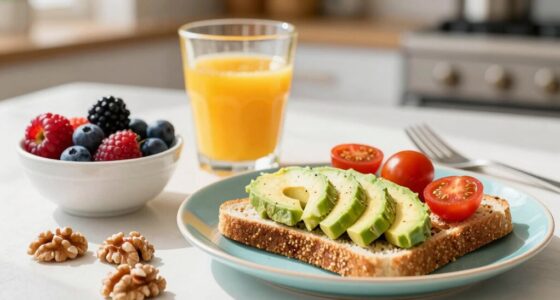
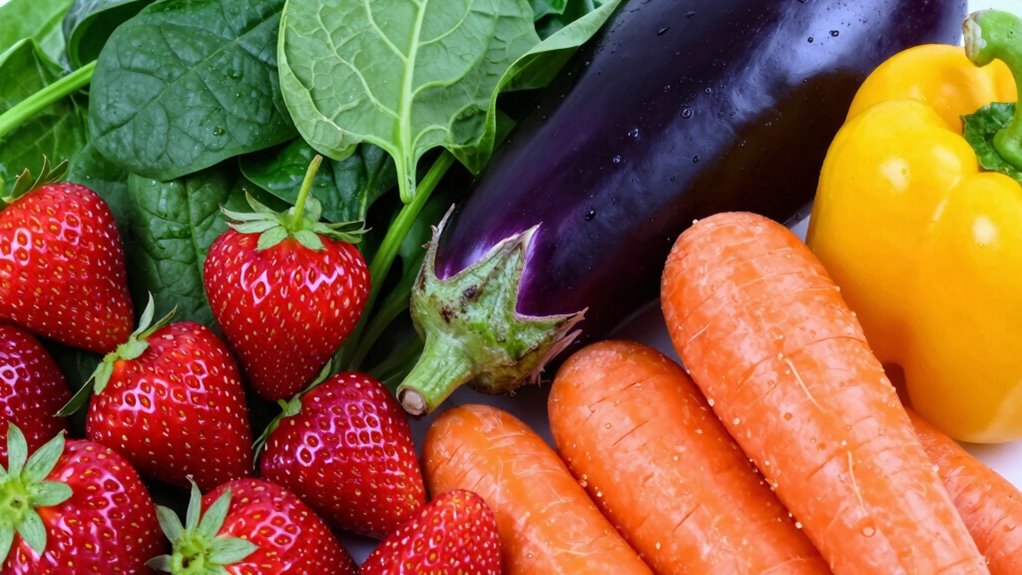
That’s where antioxidants come into play. They are naturally occurring substances found abundantly in colorful fruits and vegetables. These compounds, such as vitamins C and E, carotenoids, flavonoids, and polyphenols, act as scavengers for free radicals. When you consume a variety of vibrant foods—think berries, spinach, carrots, peppers, and tomatoes—you’re supplying your body with molecules that can donate electrons to free radicals, stabilizing them and preventing cellular damage. This process reduces oxidative stress, helping to maintain your overall health and improve your immune response.
Eating a colorful diet isn’t just about aesthetics; it’s a strategic way to enhance your body’s defenses. Each hue signals the presence of different antioxidants. For example, red and orange foods like tomatoes and carrots are rich in carotenoids, which are particularly effective at protecting your skin and eyes. Blue and purple fruits such as blueberries and grapes contain anthocyanins, known for their anti-inflammatory and neuroprotective properties. Green vegetables like spinach and broccoli provide chlorophyll and other antioxidants that support detoxification and cellular repair. By diversifying your food choices, you maximize the range of antioxidants you consume, which work synergistically to neutralize various types of free radicals. Additionally, research shows that the bioavailability of antioxidants can vary depending on how foods are prepared, further emphasizing the importance of a varied diet.
Incorporating a rainbow of foods into your meals isn’t just a health trend; it’s a smart strategy to defend your body against the ongoing assault of oxidative stress. The more colorful your plate, the broader your antioxidant arsenal. This approach helps reduce the damage caused by free radicals, slowing down aging and lowering your risk of chronic illnesses. Remember, maintaining a diet rich in antioxidants is a simple, tasty way to support your body’s natural defenses, keep your cells healthy, and promote long-term wellness. So, next time you reach for a snack or prepare a meal, think about the vibrant colors—they’re not just beautiful; they’re essential for your health.

Nutricost Super Antioxidants (1000mg) 120 Capsules – Antioxidant Supplement for Men and Women with Acai, Goji, Blueberry and More, 60 Servings
120 capsules per bottle with 60 two-capsule servings for daily antioxidant routine
As an affiliate, we earn on qualifying purchases.
As an affiliate, we earn on qualifying purchases.
Frequently Asked Questions
Can Antioxidants Prevent All Types of Diseases?
Antioxidants can’t prevent all types of diseases, but they help protect your cells from damage. You should be cautious about antioxidant overdose, which can have negative effects. Natural antioxidants from colorful foods are preferable over synthetic ones, as they’re better absorbed and safer. However, relying solely on antioxidants isn’t enough; a balanced diet and healthy lifestyle are essential for disease prevention.
Are Supplements as Effective as Natural Colorful Foods?
Like comparing a vintage vinyl to a modern playlist, supplements often fall short of natural colorful foods. Natural foods offer a complex mix of antioxidants with superior supplement quality, while synthetic options may lack potency. You’re better off eating a variety of colorful fruits and vegetables because they provide a broader spectrum of antioxidants that work synergistically, unlike most supplements, which can be less effective despite their convenience.
How Much Colorful Food Should I Eat Daily?
You should aim for at least five servings of colorful foods daily, incorporating a variety of fruits and vegetables. Use portion control and meal planning to guarantee you get enough antioxidants and nutrients. For example, include berries or leafy greens in your breakfast, add chopped peppers or carrots to lunch, and include colorful vegetables in dinner. Consistent variety helps maximize antioxidant intake and supports overall health.
Do Antioxidants Have Any Side Effects?
Antioxidants are generally safe, but they can cause potential allergenic effects in some people, leading to reactions like itching or swelling. Excessive intake might also cause nutrient imbalances, potentially interfering with other nutrients’ absorption. If you notice any adverse symptoms, reduce your intake and consult a healthcare professional. Moderation is key, and it’s best to get antioxidants from a balanced, colorful diet rather than supplements.
Can Antioxidants Improve Mental Health or Focus?
Think of antioxidants as tiny warriors, fighting off mental fog and boosting your brain clarity. They can help improve focus and mood enhancement by reducing oxidative stress that hampers cognitive function. Eating colorful foods rich in antioxidants fuels your mind like sunlight energizes flowers. So, yes, incorporating these vibrant foods can sharpen your focus and lift your mood, making your mental landscape clearer and more vibrant each day.

COUNTRY FARMS Super Reds, Energizing Polyphenol Superfood, 48 Super Fruits and Berries, Powerful Antioxidants and Polyphenols, Supports Energy, 20 Servings, Mixed Berry Flavor
STRAIGHT FROM THE GARDEN. Don’t skimp on your fruit and veggies consumption! Just one serving of Country Farms…
As an affiliate, we earn on qualifying purchases.
As an affiliate, we earn on qualifying purchases.
Conclusion
So, next time you’re faced with a dull, colorless plate, remember you’re basically snubbing nature’s superhero squad. Those vibrant fruits and veggies aren’t just eye candy — they’re your secret weapons against aging and disease. Skip them, and you might as well be waving a white flag in the battle for health. So, go ahead, indulge in those rainbow plates, and let antioxidants do their magic. After all, who wouldn’t want a little extra sparkle in their life?
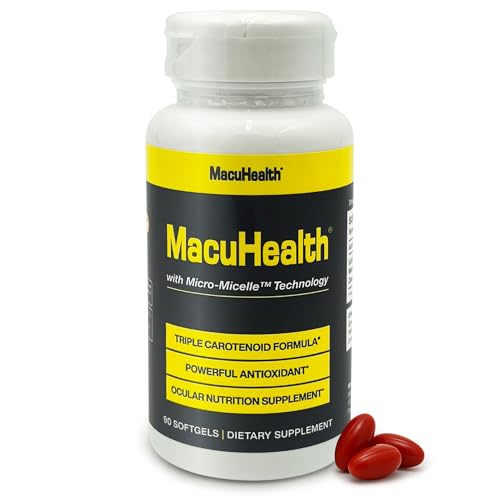
MacuHealth Triple Carotenoid Formula – Eye Vitamins for Adults – 90 Softgels, 3 Month Supply – Advanced Eye Support & Health Eye Formula
Macuhealth with Transparency – Scan your bottle with your App to ensure you have a Macuhealth Original
As an affiliate, we earn on qualifying purchases.
As an affiliate, we earn on qualifying purchases.
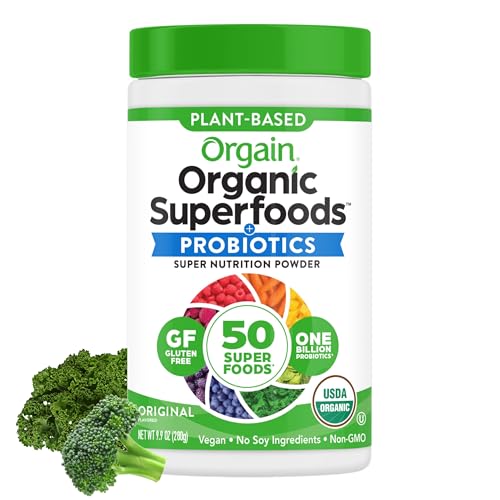
Orgain Organic Greens Powder + 50 Superfoods, Original – 1 Billion Probiotics for Digestive Health, Antioxidants, Vegan, Plant-Based, Gluten-Free, Non-GMO, Green Juice & Smoothie Drink Mix – 0.62lb
CLEANER INGREDIENTS: Our Organic Superfoods Powder is packed with nutrients & antioxidants from 50 plant-based superfood ingredients such…
As an affiliate, we earn on qualifying purchases.
As an affiliate, we earn on qualifying purchases.