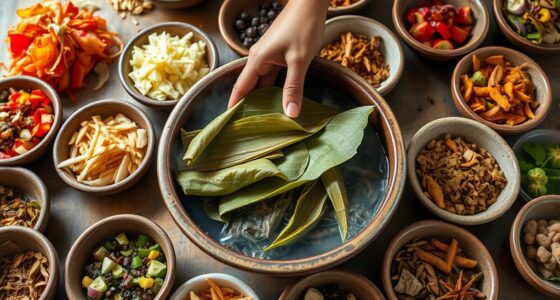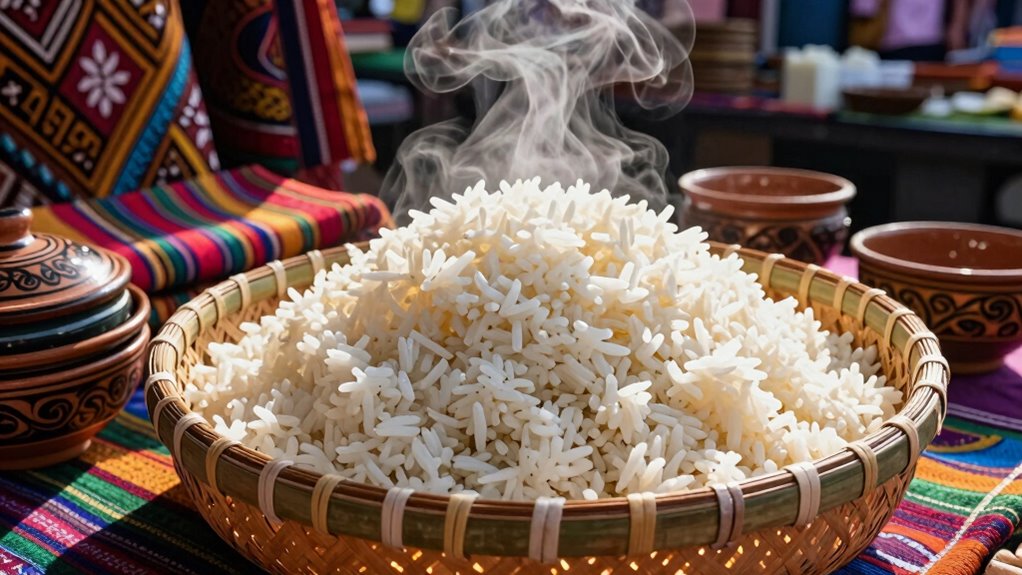

In Indonesian culture, rice is more than just your daily meal; it symbolizes prosperity, harmony, and community bonds. It plays a crucial role in rituals, festivals, and family gatherings, reflecting deep spiritual and social values. From rice terrace farming to sacred offerings in Bali, rice embodies respect for nature and heritage. If you keep exploring, you’ll discover even more about how rice connects traditions, history, and identity across Indonesia.
Key Takeaways
- Rice symbolizes prosperity, community, and spiritual connection, reflecting its deep cultural and religious significance across Indonesia.
- It functions as a central element in daily life, family gatherings, and communal rituals, fostering social bonds.
- Regional culinary traditions showcase rice’s versatility, with unique dishes and preparation styles highlighting local identities.
- Rice terrace farming exemplifies sustainable practices, preserving cultural heritage and supporting environmental conservation.
- Beyond nourishment, rice embodies hope, abundance, and spiritual values, playing a vital role in rituals and national identity.
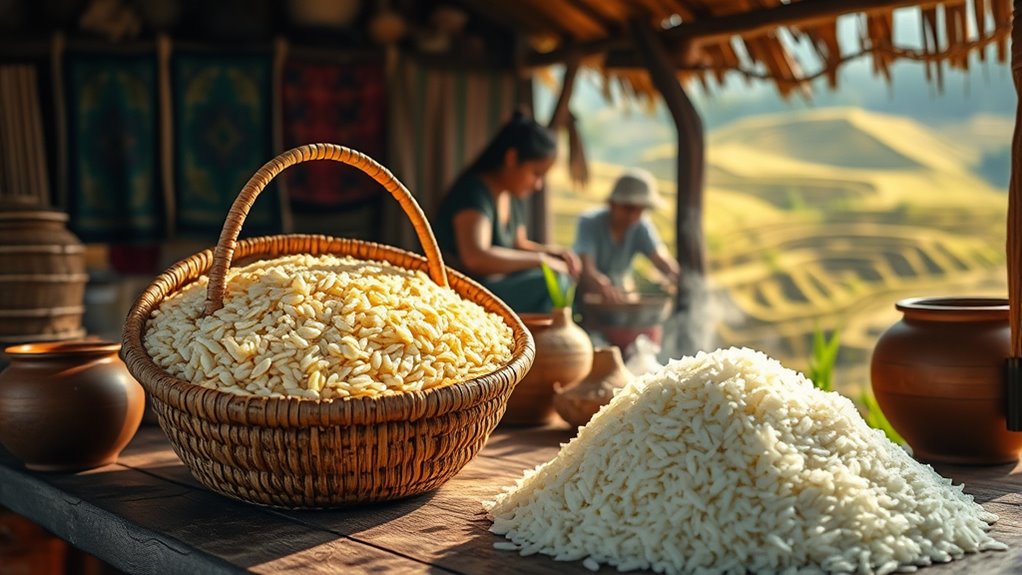
Rice is more than just a staple food in Indonesia; it is deeply woven into the country’s cultural identity and daily life. You’ll find that rice symbolizes more than sustenance—it embodies prosperity, harmony, and community in Indonesian society. Throughout the archipelago, rice holds a special place in rituals and celebrations, reflecting its significance beyond nutrition. It’s not just about filling stomachs; rice represents life itself, a symbol of fertility and abundance that connects people to their land and ancestors. This rice symbolism influences how Indonesians view their relationship with nature and each other, creating a collective sense of identity rooted in this humble grain. Additionally, the traditional methods of cultivating rice, such as rice terrace farming, showcase sustainable practices that preserve the environment and cultural heritage.
Rice symbolizes prosperity, harmony, and community, deeply woven into Indonesia’s cultural identity and daily life.
In Indonesia, culinary traditions revolve heavily around rice, shaping how you prepare, serve, and enjoy your meals. Rice is often the centerpiece of every meal, whether it’s plain steamed rice or elaborately prepared dishes like nasi uduk or nasi kuning. Your daily routine might start with rice, and it’s common to see families gathering around a communal tray, sharing freshly cooked rice along with a variety of side dishes. The act of eating rice together isn’t just about nourishment—it’s a sign of unity and social bonding. Many celebrations, from religious festivals to family ceremonies, feature rice prominently, emphasizing its role in fostering community ties.
Culinary traditions in Indonesia also showcase the versatility of rice. You might find yourself savoring sticky rice during special occasions or enjoying rice porridge, known as bubur, as a comforting breakfast. Regional differences influence how rice is prepared and served, reflecting local tastes and cultural nuances. For example, in Bali, rice is often woven into intricate offerings and rituals, highlighting its sacred status. In Java, rice is the foundation of numerous dishes, with each region adding its unique flavors and techniques. This diversity illustrates how rice is not just a food but an integral part of cultural expression and tradition. Additionally, the practice of maintaining traditional rice terraces demonstrates sustainable agricultural methods that support biodiversity and preserve local ecosystems, which is crucial for the environment and future generations.
Your experience with Indonesian rice culture will reveal how deeply rooted this grain is in daily life and spiritual practice. It’s a symbol of hope, abundance, and community that transcends mere sustenance. Whether in simple meals or elaborate ceremonies, rice’s presence underscores its significance in shaping Indonesian identity. It also plays a vital role in rituals, emphasizing its spiritual importance beyond daily consumption. The culinary traditions surrounding rice reflect a respect for nature, history, and social bonds that continue to thrive today. As you immerse yourself in Indonesian culture, you’ll see that rice is more than food—it’s a reflection of the soul of the nation.
Frequently Asked Questions
How Is Rice Cultivation Integrated Into Indonesian Traditional Ceremonies?
You’ll notice rice symbolism is central to Indonesian traditional ceremonies, often representing fertility, prosperity, and life itself. During these events, you participate in ritual offerings that include rice, which is believed to bring blessings and good fortune. These ceremonies emphasize the importance of rice cultivation, honoring farmers and nature’s bounty, making rice more than just a staple—it’s an essential part of cultural identity and spiritual practice.
What Are Unique Rice Varieties Native to Indonesia?
You’ll find that Indonesia is home to unique rice varieties like the ancient rice varieties, such as *padi bali* and *padi jawi*, which have been cultivated for centuries. These indigenous rice traditions keep traditional farming methods alive and connect you to cultural heritage. Exploring these varieties, you’ll appreciate their distinct flavors and significance in local rituals, highlighting how deeply rice is woven into Indonesia’s history and identity.
How Does Rice Influence Indonesian Art and Folklore?
Have you ever wondered how rice symbolism shapes Indonesian art and folklore? You can see it vividly in vibrant paintings, intricate carvings, and storytelling, where rice represents fertility, prosperity, and community. Folklore stories often highlight rice’s sacred role, weaving it into legends that emphasize gratitude and tradition. This cultural significance inspires artists and storytellers alike, reinforcing rice’s central place in Indonesia’s identity and heritage.
Are There Specific Rice Dishes Associated With Regional Identities?
You’ll find that regional rice dishes like Nasi Padang from West Sumatra or Nasi Uduk from Jakarta define local identities. During rice festivals, communities celebrate their unique traditions through traditional dishes and rituals, reinforcing cultural pride. These rice festivals and regional rice dishes highlight the rich diversity across Indonesia, making rice more than just a staple — it’s a symbol of regional heritage and social unity.
How Has Modern Agriculture Affected Traditional Rice Farming Practices?
Modern agriculture has transformed traditional rice farming through technological advancements like mechanization and improved irrigation, making practices more efficient. However, you should be aware of sustainability challenges, such as overuse of water and chemical inputs, which threaten long-term viability. These changes push farmers to adapt, balancing innovation with environmental concerns, ultimately reshaping how rice is cultivated while trying to preserve Indonesia’s rich rice heritage.
Conclusion
You might see rice as just a staple, but in Indonesia, it’s much more—it’s tradition, identity, and celebration woven into every meal. Like a quiet guardian, rice quietly sustains your culture, yet during festivals, it becomes the vibrant heart of community and joy. This contrast reminds you that beneath its simple appearance lies a profound symbol of life and unity, making rice more than a side—it’s the soul of Indonesian heritage.