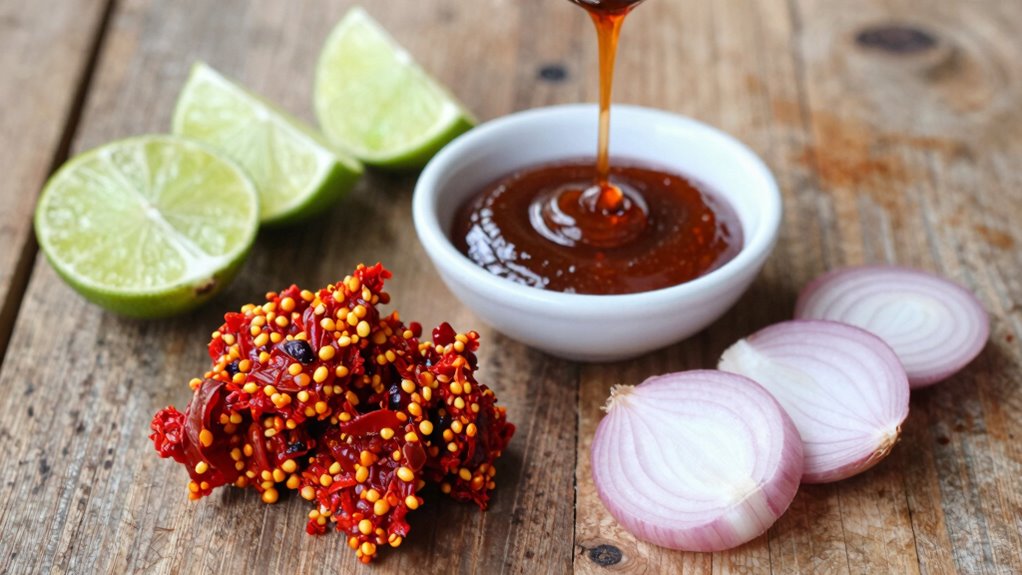

Indonesian condiments like sambal and kecap manis instantly elevate simple meals with bold, complex flavors. Sambal adds fiery heat and fresh chili notes, while kecap manis brings sweet, savory richness. Incorporating aromatic ingredients like lemongrass and turmeric into spice pastes also layers flavors and enhances even the simplest dishes. These condiments reflect Indonesia’s rich culinary heritage and craftsmanship. Keep exploring to discover more about how these ingredients can transform your cooking.
Key Takeaways
- Indonesian condiments like sambal and kecap manis add bold, complex flavors to elevate simple dishes.
- Aromatic ingredients such as lemongrass and turmeric infuse basic recipes with rich, layered tastes.
- Traditional condiments serve as flavor enhancers, transforming plain ingredients into flavorful, memorable meals.
- Indigenous ingredients reflect cultural heritage, enriching dishes with authentic Indonesian flavors.
- Condiments create depth and versatility, turning ordinary ingredients into vibrant, satisfying dishes.

Indonesia’s rich culinary heritage is beautifully reflected in its diverse array of condiments, which play an essential role in enhancing the flavors of its dishes. These condiments are more than just flavor enhancers; they are a testament to the country’s traditional recipes passed down through generations. When you incorporate these condiments into your meals, you connect with Indonesia’s culinary heritage, experiencing a taste that’s both authentic and vibrant.
Indonesian condiments embody tradition, enriching dishes with authentic flavors passed down through generations.
You’ll find that many Indonesian condiments are crafted from simple ingredients but deliver complex flavors. For example, sambal, a staple in Indonesian cuisine, is a chili-based condiment that can range from mild to fiery. Made with fresh chili peppers, garlic, shallots, and sometimes shrimp paste, sambal is a versatile addition that elevates everything from rice bowls to grilled meats. Its bold, spicy flavor can turn a plain dish into a memorable meal, and because each region has its own variation, you get to explore a broad spectrum of taste profiles.
Another key condiment is kecap manis, a sweet soy sauce that embodies Indonesia’s love for balance—combining salty, sweet, and umami flavors. Its thick, syrupy consistency makes it perfect for marinating meats, glazing vegetables, or simply drizzling over rice. Using kecap manis in your cooking connects you to traditional recipes that have been cherished for generations, giving your dishes a depth of flavor that’s uniquely Indonesian. It’s a reminder of the country’s culinary tradition, where simple ingredients transform into rich, comforting flavors.
Lemongrass and turmeric are also commonly used in Indonesian seasonings, often incorporated into spice pastes like bumbu. These pastes serve as the foundation for many traditional recipes, infusing dishes with fragrant, earthy notes. When you add these condiments to your cooking, you tap into a culinary tradition that emphasizes fresh, aromatic ingredients. They help create a layered flavor profile that’s characteristic of Indonesian cuisine, making even the simplest meal feel special. Indonesian flavor profiles often rely on these aromatic ingredients to build depth and complexity.
In addition, these condiments often include indigenous ingredients, which contribute to their unique flavors and cultural significance. When you use them, you’re not just enhancing your dishes, but also embracing a culinary tradition that celebrates local flavors and ingredients. They help create a layered flavor profile that’s characteristic of Indonesian cuisine, making even the simplest meal feel special.
As an affiliate, we earn on qualifying purchases.
Frequently Asked Questions
How Are Indonesian Condiments Traditionally Prepared at Home?
You typically prepare Indonesian condiments at home through traditional fermentation and spice blending. For example, you might ferment chili and garlic to make sambal or blend spices with vinegar and sugar for sambal bajak. You often use mortar and pestle to grind ingredients fresh, ensuring vibrant flavors. These methods preserve the condiments longer and deepen their taste, making them essential for authentic Indonesian meals.
Which Condiment Is Considered the Most Popular Across Indonesia?
You’ll find sambal, a spicy chili paste, is the most popular condiment across Indonesia. Its regional flavor varies, reflecting local ingredients and traditional techniques, making it a staple in many households. You can enjoy it with rice, grilled meats, or snacks, as it adds a fiery kick that elevates simple meals. Its versatility and deep cultural roots make sambal an essential part of Indonesian cuisine, loved nationwide.
Are Any Indonesian Condiments Suitable for Vegan Diets?
Like a gentle rain nourishing the earth, some Indonesian condiments embrace vegan friendly options and plant-based substitutions. Sambal and kecap manis are naturally suitable, as they’re made from chili peppers and soy sauce, respectively. These condiments add bold flavors without animal ingredients. Always check labels for hidden animal-derived additives, but many traditional Indonesian sauces can easily fit into a vegan diet, enhancing meals while keeping it plant-based.
How Long Do Homemade Indonesian Condiments Typically Last?
Homemade Indonesian condiments usually last about one to two weeks, but shelf life depends on ingredients and storage. To maximize freshness, store them in airtight containers in the refrigerator. Follow storage tips like keeping condiments away from direct sunlight and using clean utensils to prevent spoilage. If you notice any off smells, mold, or changes in texture, discard the condiment to stay safe. Proper storage helps maintain flavor and extends their usability.
Can Indonesian Condiments Be Used in Non-Indonesian Cuisines?
Did you know that over 60% of home cooks experiment with fusion recipes? Indonesian condiments can definitely be used in non-Indonesian cuisines, adding vibrant flavors. You might substitute sambal for hot sauce in tacos or incorporate kecap manis into marinades for a sweet, savory twist. These condiments are versatile, so don’t hesitate to mix them into your favorite dishes to create exciting flavor combinations.
As an affiliate, we earn on qualifying purchases.
Conclusion
Think of Indonesian condiments as the secret spices that turn everyday meals into vibrant masterpieces. They’re like colorful brushstrokes on a blank canvas, adding depth, flavor, and personality to each bite. Once you’ve explored these rich, spicy, and tangy accompaniments, you’ll see how they transform simple ingredients into a feast for the senses. So, don’t just eat—embark on a flavor adventure and let these condiments be your guiding palette.
As an affiliate, we earn on qualifying purchases.
As an affiliate, we earn on qualifying purchases.