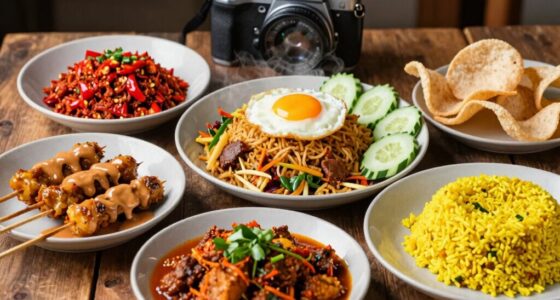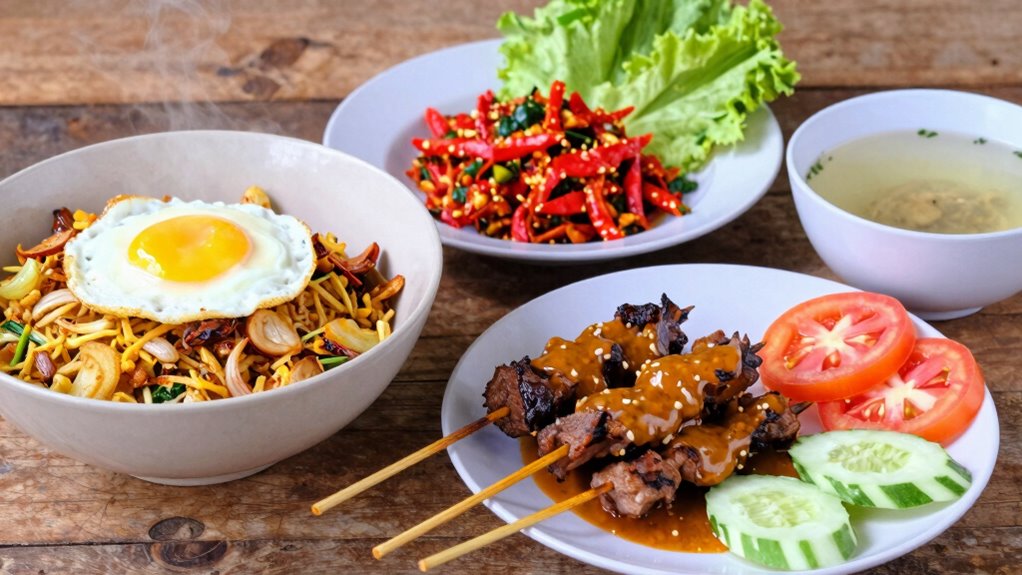

You’ll discover that Indonesian everyday meals are simple yet full of bold, balanced flavors. Breakfast often includes warm bubur ayam or lontong, offering comfort and nourishment. During the day, you might enjoy nasi uduk or nasi campur, showcasing the harmony of spices and ingredients. Street snacks like satay and gorengan bring communities together, highlighting Indonesia’s rich street food culture. Keep exploring, and you’ll uncover more about the true essence behind these beloved dishes.
Open a free Amazon Business account
Business pricing, bulk buying and tax-exempt orders.
As an affiliate, we earn on qualifying purchases.
Key Takeaways
- Traditional breakfasts like bubur ayam and lontong showcase Indonesia’s comforting, simple yet flavorful morning cuisine.
- Street snacks such as satay and kue cubit reflect Indonesia’s vibrant street food culture and social traditions.
- Regional dishes like nasi uduk and nasi campur highlight Indonesia’s diverse flavors and culinary heritage.
- Evening street foods like gorengan foster community bonding through shared, quick bites.
- Indonesian everyday meals prioritize harmony of flavors, simple ingredients, and cultural authenticity.

Indonesia’s vibrant culinary landscape is reflected in its everyday meals, which are simple yet bursting with flavor. These meals reveal the true essence of Indonesian cuisine, crafted from ingredients you can find daily and prepared with a love for bold tastes. When you wake up in the morning, your traditional breakfast might be a steaming bowl of bubur ayam—soft rice porridge topped with shredded chicken, scallions, and a drizzle of savory broth. It’s a comforting start to your day, offering warmth and nourishment that’s both hearty and light. Alternatively, you might indulge in lontong, compressed rice served with spicy sambal goreng and boiled eggs, a dish that’s both filling and flavorful, perfect for kickstarting your morning.
Start your day with comforting bubur ayam or flavorful lontong, embodying Indonesia’s bold and simple culinary spirit.
Throughout the day, you encounter Indonesia’s street snack culture, which is a vibrant part of daily life. As you walk through busy markets or along bustling streets, the aroma of fried snacks fills the air. You might stop for a plate of martabak—thick, sweet or savory pancakes filled with eggs, meats, or chocolate, depending on your preference. Or you could try kue cubit, tiny bites of sweet pancake topped with colorful sprinkles or chocolate syrup. These street snacks are more than just quick bites; they’re a reflection of Indonesia’s rich tradition of street food, crafted from recipes passed down through generations. You’ll notice vendors expertly flipping skewers of satay—marinated meat grilled on bamboo sticks, served with peanut sauce—offering a taste that’s both smoky and savory. The street food culture is deeply embedded in daily Indonesian life, representing more than just food but a shared social experience. In recent years, efforts to preserve traditional culinary practices have helped maintain the authenticity and diversity of these beloved dishes. This culinary diversity is also supported by Indonesia’s rich regional flavors, which vary from island to island, adding to the vibrant tapestry of local cuisine.
Lunch often brings a plate of nasi uduk or nasi campur, rice dishes infused with coconut milk or served with assorted side dishes like fried chicken, vegetables, and sambal. These meals are straightforward yet layered with complex flavors, representing the Indonesian knack for balancing spice, sweetness, and tang. The balance of flavors is a hallmark of Indonesian cooking, making each meal a harmonious blend of tastes. As dusk approaches, you might indulge in gorengan—deep-fried snacks such as tofu, tempeh, or bananas—sold from street carts, providing a quick, satisfying snack as you go about your day. The street snack culture isn’t just about quick eating; it’s an integral part of daily social life, connecting communities through shared flavors and traditions.
In your everyday experience of Indonesian meals, simplicity meets richness. Whether it’s your traditional breakfast, a snack from a street vendor, or a simple rice dish, each meal tells a story. These are the meals that reveal Indonesia’s authentic cuisine—rooted in tradition, yet alive with the energy of street food that keeps the culture vibrant and inviting.
Indonesian rice porridge bubur ayam
As an affiliate, we earn on qualifying purchases.
As an affiliate, we earn on qualifying purchases.
Frequently Asked Questions
How Do Indonesian Meals Vary Across Different Regions?
You’ll find Indonesian meals vary greatly across regions, reflecting local ingredients and traditions. In Bali, you might enjoy spicy satay, while Java offers sweet tempeh dishes. Street snacks like martabak and bakso differ regionally, and regional dessert varieties such as klepon and dodol showcase local flavors. These differences create a rich culinary mosaic, giving you a diverse taste of Indonesia’s vibrant culture with every region offering unique flavors and specialties.
What Are the Traditional Cooking Methods Used in Everyday Indonesian Dishes?
You’ll find that traditional Indonesian cooking methods often involve fusion techniques like grilling, steaming, and stir-frying, which blend flavors seamlessly. Preservation methods such as salting, fermenting, and drying are also common, helping ingredients last longer in tropical climates. These techniques preserve freshness and enhance taste, making everyday dishes rich and flavorful. By using these methods, Indonesians maintain their culinary heritage while adapting to local ingredients and cultural influences.
Are There Specific Ingredients Unique to Indonesian Cuisine?
Imagine a vibrant tapestry—Indonesian cuisine is woven with unique ingredients like spice blends such as turmeric, galangal, and lemongrass, which give dishes their distinctive flavor. You’ll also find tropical fruits like mango, papaya, and banana adding sweetness and freshness. These ingredients are uniquely Indonesian, transforming everyday meals into a flavorful experience that captures the country’s rich culinary heritage.
How Do Indonesian Meals Reflect the Country’s Cultural Diversity?
You see Indonesian meals reflecting the country’s cultural diversity through vibrant street food scenes and traditional dining customs. As you explore Indonesian street food, you notice flavors from various ethnic groups blending seamlessly. Traditional customs, like communal eating and sharing dishes, showcase Indonesia’s rich cultural tapestry. These meals embody regional ingredients and cooking styles, making them a delicious mirror of Indonesia’s diverse heritage and the unity found within its culinary traditions.
What Are Common Beverages Served With Indonesian Everyday Meals?
You’ll often find traditional beverage pairings like iced tea, lime juice, or coconut water accompanying Indonesian meals. Regional drink variations include sweet bandrek from West Java or bitter herbal jamu from Central Java, adding local flavor. These drinks refresh your palate and complement the diverse, spicy dishes. Whether it’s a cool, tangy drink or a herbal infusion, these beverages enhance your dining experience and reflect Indonesia’s rich regional traditions.
As an affiliate, we earn on qualifying purchases.
Conclusion
So, next time you sit down for an Indonesian meal, remember it’s more than just flavors — it’s a story told through everyday dishes. Each bite reveals secrets of tradition, resilience, and community that go beyond the plate. But what’s the true meaning behind these humble ingredients? The answer might just surprise you, waiting to be uncovered in the heart of Indonesia’s most beloved home-cooked meals. Are you ready to discover more?
As an affiliate, we earn on qualifying purchases.
Indonesian street snack kitchenware
As an affiliate, we earn on qualifying purchases.
As an affiliate, we earn on qualifying purchases.
Grilling season Picks
grills
As an affiliate, we earn on qualifying purchases.