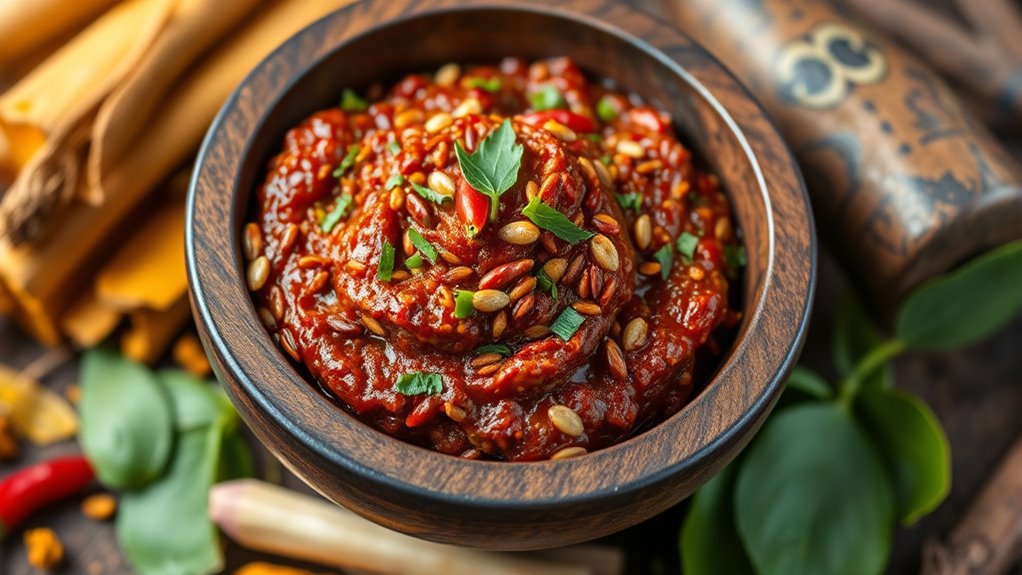

To make Balinese spice paste, start by gathering fresh ingredients like turmeric, ginger, galangal, shallots, garlic, and chili peppers. Lightly roast or fry these to enhance aroma, then blend them into a smooth, slightly oily paste using a mortar and pestle or food processor. The process involves releasing their fragrant oils, creating a rich base for many dishes. Continue exploring to discover detailed steps that will help you master this essential Balinese flavor.
Key Takeaways
- Gather authentic ingredients like turmeric, ginger, galangal, shallots, garlic, and chili peppers.
- Roast or lightly fry ingredients to enhance aroma and flavor before blending.
- Use a mortar and pestle or food processor to blend ingredients into a smooth, aromatic paste.
- Fry the spice paste in oil at the start of cooking to release flavors and infuse dishes.
- Variations reflect regional tastes and traditions, emphasizing authentic ingredients for true flavor.
Have you ever wondered what gives Balinese dishes their vibrant and complex flavors? It all comes down to the magic of their traditional cooking techniques, especially the use of spice pastes. These pastes serve as the foundation for many dishes, blending aromatic herbs and spices into a single, flavorful mixture. The beauty of Balinese spice paste lies in its versatility and the way it captures the essence of local ingredients, making each dish uniquely rich and fragrant.
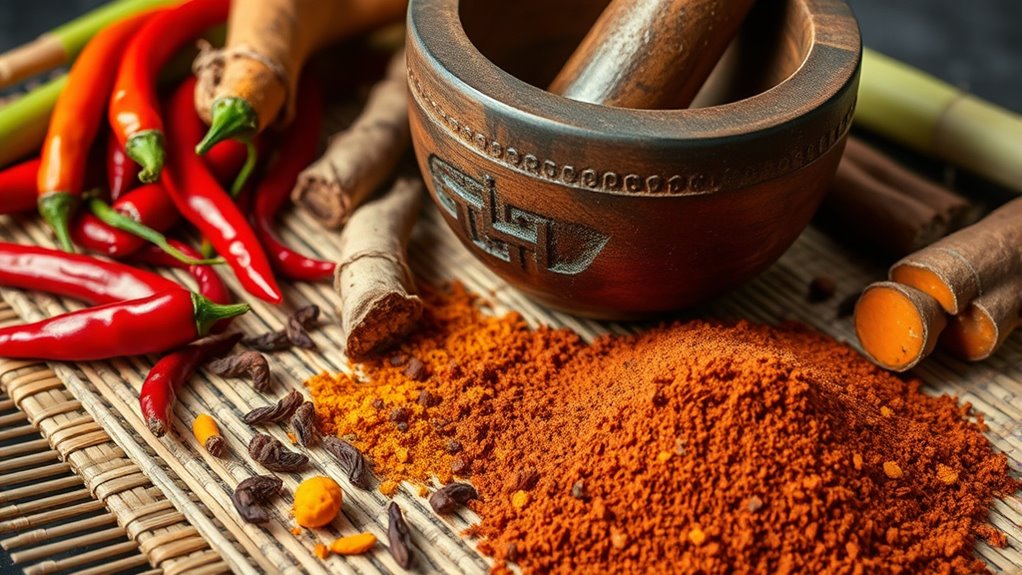
To start, you’ll want to gather your ingredients. Typically, a Balinese spice paste includes ingredients like turmeric, ginger, galangal, shallots, garlic, and chili peppers. Some variations add lemongrass, kaffir lime leaves, or candlenuts for extra depth. The key to traditional cooking is respecting the local ingredients and understanding how each one contributes to the overall flavor profile. Once you have everything ready, the process begins with roasting or frying some of these ingredients slightly to bring out their aroma, especially the spices and shallots. This step enhances the depth of flavor and helps meld the spices together.
Gather ingredients like turmeric, ginger, galangal, shallots, garlic, and chili peppers for authentic Balinese spice paste.
Next, you’ll need to blend your ingredients into a smooth paste. You can use a mortar and pestle for an authentic touch, which allows you to control the texture and ensures the flavors are well combined. Alternatively, a food processor works just fine if you’re pressed for time. The goal is to achieve a paste that’s aromatic, slightly oily, and cohesive. This is where the spice blend variations come into play; some recipes lean more toward fiery heat with extra chili, while others focus on herbal freshness with added lemongrass or kaffir lime. These variations reflect regional preferences and family traditions, giving each spice paste its own character.
Once prepared, you’ll use this spice paste as the base for curries, grilled dishes, or even soups. It’s typically fried in oil at the start of cooking to release its fragrant oils, which then infuse the entire dish. The process of making the paste might seem simple, but the balance of ingredients and understanding of traditional cooking methods is what makes it truly special. Over time, you’ll notice how each spice blend variation imparts a different nuance, allowing you to tailor your dishes to your taste. With practice, creating your own Balinese spice paste becomes a rewarding way to bring authentic flavors into your kitchen, capturing the essence of Bali’s vibrant culinary heritage. Additionally, authentic ingredients are vital to ensuring the flavor remains true to traditional recipes.
Frequently Asked Questions
Can I Substitute Ingredients in Balinese Spice Paste?
Yes, you can substitute ingredients in Balinese spice paste to suit your taste or what’s available. This ingredient flexibility allows for fun flavor variations, so don’t worry if you’re missing something. Keep in mind that substitutions might slightly alter the final flavor, but you’ll still get a delicious dish. Experimenting with different ingredients can help you create unique versions that match your preferences while maintaining the essence of the original flavor.
How Long Does Homemade Spice Paste Last?
Think of homemade spice paste as a vibrant garden—you need to care for it to keep it fresh. Typically, it lasts about 1 to 2 weeks in the refrigerator if stored properly. Use airtight containers and always follow refrigeration tips to extend its storage duration. For longer preservation, consider freezing it in small portions, ensuring your flavorful garden stays lively for months to come.
Is Balinese Spice Paste Suitable for Vegetarians?
Yes, you can enjoy Balinese spice paste as a vegetarian. Many recipes include vegetable-based ingredients, making them suitable for vegetarians. You can also explore vegetarian adaptations or spice paste variations that omit meat or seafood. Just check the ingredients for any animal products, and you’ll find this flavorful paste perfect for vegetarian dishes, adding authentic Indonesian flavors with ease and versatility.
What Are Traditional Dishes Using This Spice Paste?
You’ll find Balinese spice paste in many traditional dishes, showcasing the rich flavors of Balinese cuisine. It’s used in classics like Babi Guling (roast pork), Bebek Betutu (slow-cooked duck), and Lawar (vegetable and meat salad). These dishes highlight the vibrant, aromatic spices that bring authentic traditional flavors to life. Using this paste, you’ll experience the true essence of Bali’s culinary heritage in each flavorful bite.
Can I Freeze Leftover Spice Paste?
Ever wondered if your leftover spice paste can stand the test of time? Yes, you can freeze it! Proper storage tips help preserve its vibrant flavor, so don’t toss it out. Store the paste in airtight containers or ice cube trays for easy portioning. Freezing locks in freshness, allowing you to enjoy its rich aroma and taste whenever you crave authentic Balinese dishes.
Conclusion
Now that you’ve uncovered the secrets behind Balinese spice paste, you hold the key to authentic flavors that can transform any dish. Imagine the aroma filling your kitchen, transporting you straight to Bali’s vibrant markets. With each step, you bring a piece of Bali’s rich culinary soul into your home. So, don’t just cook—create a sensory journey. Are you ready to open the magic and make your meals truly unforgettable? The spice trail awaits you.