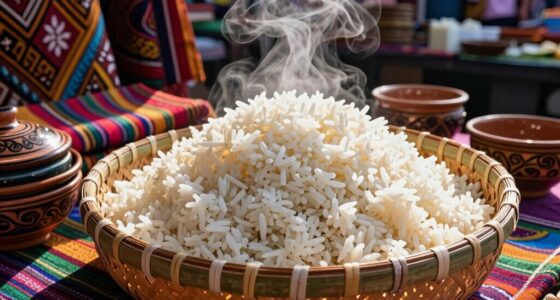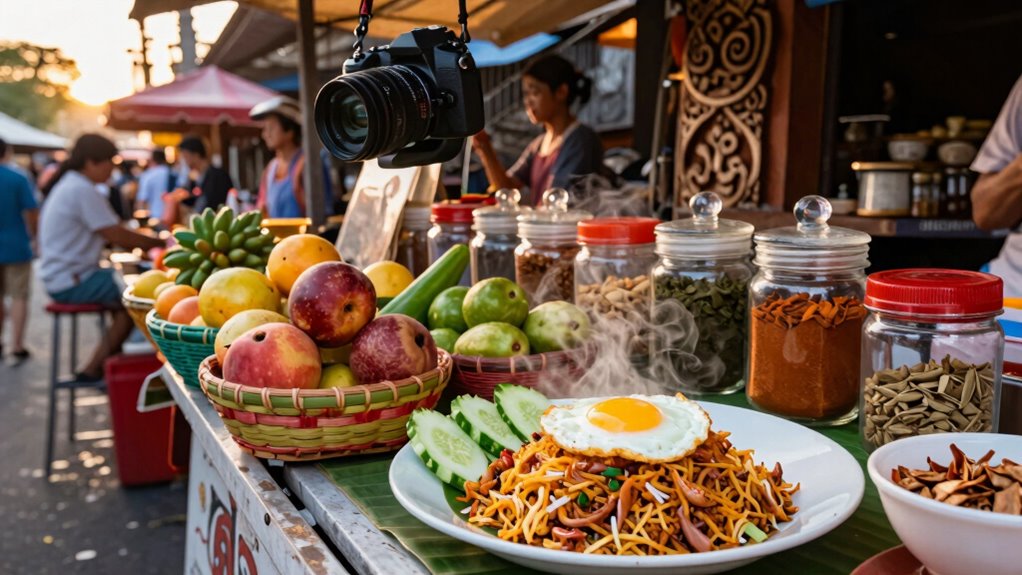

Beyond Nasi Goreng, Balinese cuisine offers a vibrant mix of dishes packed with bold, aromatic spices like turmeric, galangal, and lemongrass. You can explore street foods such as satays with peanut sauce, crispy lawar, and flavorful curries prepared at bustling markets and stalls. These traditional recipes reflect Bali’s rich cultural heritage and community spirit, offering an authentic sensory experience. Keep exploring to uncover more of Bali’s delicious and lively culinary traditions.
Key Takeaways
- Discover traditional dishes like lawar and satays, highlighting rich spices and fresh local ingredients unique to Bali.
- Explore street food stalls offering flavorful, aromatic options beyond Nasi Goreng, emphasizing community and cultural heritage.
- Experience the use of distinctive spices such as turmeric, galangal, and lemongrass that define authentic Balinese flavors.
- Learn about Bali’s culinary traditions that reflect centuries-old practices and spiritual significance in everyday food.
- Immerse in the vibrant sensory environment of Bali’s markets and street scenes, celebrating the island’s lively food culture.

Have you ever wondered what makes Balinese cuisine so vibrant and unforgettable? It’s a combination of bold flavors, aromatic traditional spices, and the lively atmosphere of street food stalls that truly bring the culinary scene to life. When you step into Bali’s bustling markets or walk along the busy streets, you’ll notice the enticing aromas wafting from countless stalls. These street food stalls serve as the heart of Balinese dining, offering a variety of dishes that celebrate local ingredients and centuries-old recipes. Here, you’re encouraged to explore beyond the well-known Nasi Goreng and discover the authentic flavors that define this island’s unique food culture.
Balinese cuisine relies heavily on traditional spices that create its signature taste. You’ll find ingredients like turmeric, coriander, galangal, lemongrass, and kaffir lime leaves, all blending seamlessly to produce complex, layered flavors. These spices are often ground fresh and combined with chili, shallots, garlic, and ginger, which are staples in Balinese cooking. The magic happens at street food stalls, where vendors expertly mix these spices into marinades, sambals, and sauces. The use of traditional spices isn’t just about flavor—it’s deeply rooted in Balinese history and spiritual practices, often believed to bring harmony and protection. As you sample dishes prepared with these spices, you’ll notice the balance of heat, acidity, and earthiness that make each bite memorable. An understanding of local ingredients enhances appreciation for the authenticity of Balinese dishes. Additionally, the Gold IRA markets reveal how traditional culinary practices maintain their significance amid modern influences. Exploring these culinary traditions offers insight into Bali’s rich cultural heritage and its enduring connection to food.
Walking past these street stalls, you’ll see a colorful array of dishes that reflect Bali’s diverse culinary heritage. From satays coated in rich peanut sauce to crispy lawar (a traditional vegetable and meat salad), each dish tells a story. The street food stalls act as communal kitchens, where locals and travelers alike gather to enjoy quick, flavorful bites. You’ll find vendors skillfully grilling skewers over open flames, stirring pots of bubbling curry, and assembling plates with fresh herbs and condiments. This lively environment invites you to taste authentic Balinese flavors right where they’re made, often at incredibly affordable prices. It’s a feast not only for your palate but also for your senses, as you soak in the sights, sounds, and smells of the island’s vibrant street food scene.
In Bali, food is more than sustenance—it’s a celebration of tradition, community, and culture. Exploring the street food stalls and savoring dishes seasoned with traditional spices allows you to connect with the island on a deeper level. Every flavorful bite captures centuries of culinary history, shared in the bustling markets and humble stalls that line the streets. So, when you’re craving more than just Nasi Goreng, plunge into this culinary adventure and discover the rich, aromatic world of Balinese cuisine that awaits just around every corner.
Frequently Asked Questions
What Are Traditional Balinese Desserts Not Mentioned in the Article?
You’ll love trying Balinese rice cakes like klepon, which are sweet, sticky, and filled with palm sugar, or dodol, a chewy toffee-like treat. Don’t miss tropical fruit salads that combine fresh, local fruits with coconut or palm sugar for a revitalizing dessert. These traditional desserts highlight Bali’s rich flavors and ingredients, offering you a taste of the island’s sweet culinary heritage beyond the more famous dishes.
How Do Balinese Spices Differ From Other Indonesian Cuisines?
You’ll find that Balinese spice blends differ from other Indonesian cuisines with their unique flavor profiles, often featuring more intense and aromatic ingredients like galangal, turmeric, and kaffir lime leaves. Studies show Balinese cuisine uses about 30% more fresh spices, creating a distinctive, vibrant taste. This emphasis on specific herbs and spices gives Balinese dishes a richer, more complex flavor, setting them apart within Indonesia’s diverse culinary landscape.
Are There Any Vegetarian Balinese Dishes Beyond the Common Options?
Yes, you can find more vegetarian options beyond the common ones in Balinese cuisine. Many dishes feature plant-based ingredients like vegetables, tofu, and tempeh, such as Lawar vegetarian versions, Gado-Gado, and vegetable satay. You’ll notice local chefs often adapt traditional recipes to suit vegetarian preferences, offering diverse, flavorful options. Keep exploring markets and restaurants, as Balinese cuisine embraces a variety of vegetarian dishes that highlight fresh, vibrant ingredients.
What Are the Popular Street Foods Unique to Bali?
You’ll be surprised that Bali’s street food isn’t just about Nasi Goreng. Immerse yourself in Balinese satay, where skewered meat is grilled to perfection, or try Lawar specialties, a unique mix of vegetables, coconut, and minced meat or fish. These dishes showcase Bali’s vibrant, flavorful street food scene. Don’t miss out on these authentic bites—they’re as popular as they are delicious, offering a true taste of Bali’s culinary soul.
How Has Balinese Cuisine Evolved in Modern Culinary Trends?
Balinese cuisine has evolved through fusion techniques and culinary innovation, blending traditional flavors with modern trends. You’ll notice chefs experiment with local ingredients, adding global influences like Western or Asian cuisines. This evolution enhances dishes, making them more diverse and appealing to international palates. As a result, Bali’s food scene stays dynamic, offering both authentic experiences and creative twists that reflect the island’s vibrant culture and contemporary culinary trends.
Conclusion
So, next time you savor that plate of nasi goreng, ask yourself—are you truly experiencing Bali’s rich culinary tapestry? Beyond the familiar flavors, there’s a vibrant world of spices, traditions, and stories waiting to be discovered. Balinese cuisine isn’t just about eating; it’s about connecting with a culture that celebrates life through every bite. Are you ready to dive deeper and explore the delicious secrets Bali has to offer?