If you’re looking for the healthiest way to cook vegetables, steaming is your best choice. It preserves most nutrients and natural flavors without adding extra fats or calories. Frying, even with healthy oils, can degrade heat-sensitive nutrients and increase fat content. Steaming guarantees vibrant texture and taste while keeping nutritional value intact. Want to discover how combining both methods can benefit your meals? Keep exploring for insightful tips.
Key Takeaways
- Steaming retains more water-soluble vitamins and nutrients, making it a healthier option.
- Frying adds fats and calories, which can reduce health benefits, especially if done excessively.
- Steaming preserves natural flavor and texture without adding unhealthy fats.
- Using healthy oils in frying can be acceptable occasionally but may still lead to nutrient loss.
- Prioritizing steaming maximizes nutrient retention and overall health benefits in vegetable preparation.

When it comes to cooking vegetables, choosing the healthiest method can make a big difference in preserving their nutrients and flavor. Both steaming and frying have their benefits and drawbacks, but understanding how each method impacts nutrient retention and flavor preservation helps you make better choices. Steaming is often regarded as the gentler method because it cooks vegetables with minimal contact with water and at lower temperatures. This process helps retain water-soluble vitamins like vitamin C and B vitamins, which are particularly sensitive to heat and water. By steaming, you preserve more of these nutrients compared to boiling or frying, which can cause leaching and nutrient loss. Additionally, steaming helps maintain the natural taste and texture of vegetables, ensuring they stay crisp and vibrant. This method keeps the flavors fresh and true to their original state, enhancing the overall eating experience. Steaming technology has advanced to allow for more precise temperature control, further improving nutrient preservation and texture. Moreover, steaming can be quicker and more energy-efficient than some traditional methods, making it a convenient choice for healthy cooking.
On the other hand, frying involves cooking vegetables in hot oil at high temperatures, which can lead to significant nutrient loss, especially for heat-sensitive vitamins. While frying can boost flavor through browning and caramelization, it often results in a richer taste that may mask the vegetable’s natural qualities. Frying also introduces additional fats and calories, which might not align with your health goals. However, if done lightly with healthy oils like olive or avocado oil, frying can still be a reasonable method occasionally, especially for adding a crispy texture and deepening flavor. Yet, keep in mind that prolonged frying can degrade nutrients and produce potentially harmful compounds, diminishing the health benefits of your vegetables.
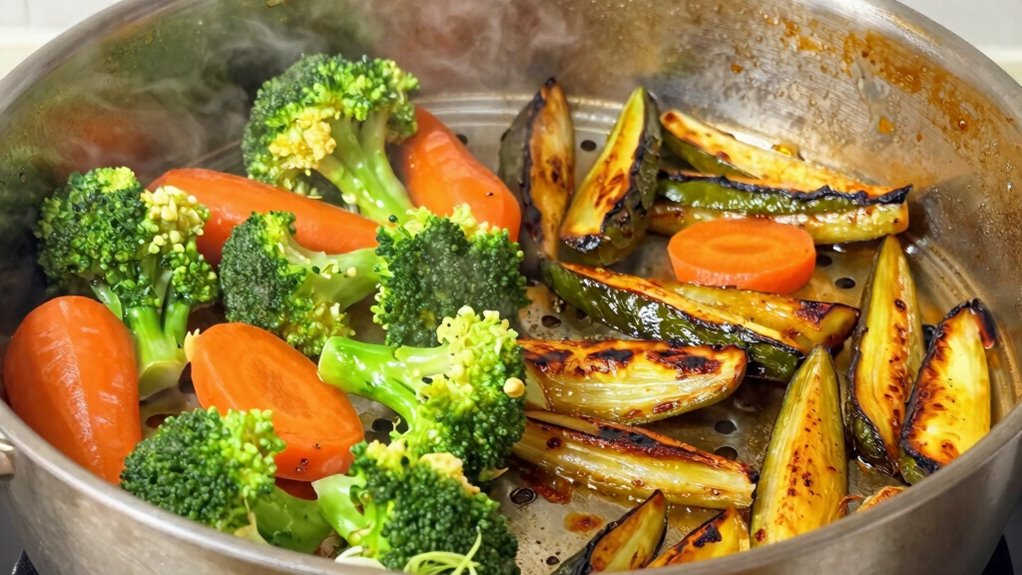
When deciding which method is better for your health, consider your priorities. If nutrient retention and flavor preservation are your main goals, steaming generally comes out ahead. It ensures you get the maximum vitamins and the purest taste without added fats. Conversely, if you’re after a richer flavor and a crispy texture, frying might suit your preferences, but it’s best to do so sparingly. You can also combine techniques—light steaming followed by quick frying—to balance nutrient preservation with enhanced flavor and texture. Ultimately, the key is moderation and mindful preparation. Choosing steaming more often allows you to enjoy vegetables that are both nutritious and delicious, keeping their natural qualities intact while minimizing unnecessary calories and nutrient loss. Incorporating healthy cooking methods into your routine can significantly improve your overall diet and well-being.
Frequently Asked Questions
How Does Cooking Time Affect Nutrient Retention in Steaming Versus Frying?
Cooking duration substantially impacts nutrient retention in both steaming and frying. Longer cooking times lead to increased nutrient loss, especially for heat-sensitive vitamins like C and B. Steaming usually preserves nutrients better because it uses lower temperatures and shorter durations, while frying’s higher heat and longer cooking can cause more nutrient degradation. To maximize nutrients, keep cooking times short and avoid overcooking, regardless of the method.
Are There Specific Vegetables That Retain More Nutrients When Fried?
Some vegetable varieties, like bell peppers and tomatoes, seem almost immune to nutrient loss when fried, as if they dance through the cooking process unscathed. You’ll find that these vegetables retain more nutrients compared to others during frying, thanks to their high water content and unique structures. However, keep in mind that frying generally causes more nutrient loss overall, so choosing the right vegetable variety and cooking method makes a huge difference.
How Do Different Frying Oils Impact Vegetable Health Benefits?
Different frying oils like olive oil and sunflower oil impact vegetable health benefits differently. Olive oil, rich in healthy monounsaturated fats and antioxidants, helps preserve nutrients and adds heart-healthy benefits. Sunflower oil, high in vitamin E, can also be a good choice but may contain more omega-6 fatty acids, which can promote inflammation if overused. Choose olive oil for a healthier option that supports nutrient retention and overall health.
Does Steaming or Frying Produce More Harmful Compounds in Vegetables?
Steaming produces fewer harmful compounds than frying because it avoids high heat that causes chemical formation like acrylamide. Frying, especially at high temperatures, can create potentially harmful chemicals and diminish nutrients. While frying enhances flavor, it often introduces unhealthy compounds. Steaming preserves more nutrients and minimizes chemical formation, making it the healthier choice. For better flavor, consider steaming with herbs or spices instead of frying.
Can Combining Steaming and Frying Optimize Vegetable Nutritional Value?
Combining steaming and frying can certainly optimize your vegetable’s nutritional value. By steaming first, you preserve texture and nutrients, then lightly frying boosts flavor enhancement and adds appealing crunch. This dual approach balances benefits—keeping the vibrant vitamins intact while creating a flavorful, crispy finish. You get the best of both worlds: nutrient preservation and tempting taste, making your vegetables both nutritious and delicious with a perfect texture and flavor.
Conclusion
Think of cooking vegetables like tending a garden. Steaming is like gentle rain, nourishing without stripping away goodness, while frying is like a scorching sun, risking damage. Choosing the healthiest method is like nurturing your garden wisely—preserving the vibrant flavors and nutrients that help you thrive. By opting for steaming, you protect the essence of your vegetables, allowing them to bloom in their full, natural glory. Your health blossoms when you treat your food with care.