
For beginners, mastering spice pairing means balancing flavors and understanding spice groups. Use warm spices like cinnamon and nutmeg to add sweetness, while pungent spices like cumin and paprika bring earthiness. Add spicy ingredients gradually, tasting as you go, to control heat and flavor. Toast spices first for deeper flavor. Keep in mind that small amounts make a big difference. Stick with these tips and explore more to create perfect, harmonious dishes.
Key Takeaways
- Familiarize yourself with basic spice groups: warm spices (cinnamon, nutmeg) and pungent spices (cumin, coriander) for balanced pairings.
- Start with small spice quantities, taste frequently, and adjust gradually to achieve harmonious flavor combinations.
- Use complementary ingredients like honey, vinegar, or yogurt to counteract overpowering or harsh spice flavors.
- Toast spices before adding to deepen flavor and control heat release, enhancing overall spice pairing.
- Combine spices thoughtfully based on their roles and flavor profiles to create well-rounded, beginner-friendly dishes.

Whether you’re a seasoned cook or just starting to explore new flavors, understanding how to pair spices can transform your dishes. One of the first skills to master is flavor balancing, which involves combining spices so that no single flavor overwhelms the others. When you get this right, your dishes will taste more harmonious and appealing, encouraging your guests to keep coming back. Equally important is heat management—knowing how much spice to add and when to add it. Too much heat can overpower a dish, making it unpleasant, while too little might leave it bland. Striking the right balance is key to creating a well-rounded flavor profile.
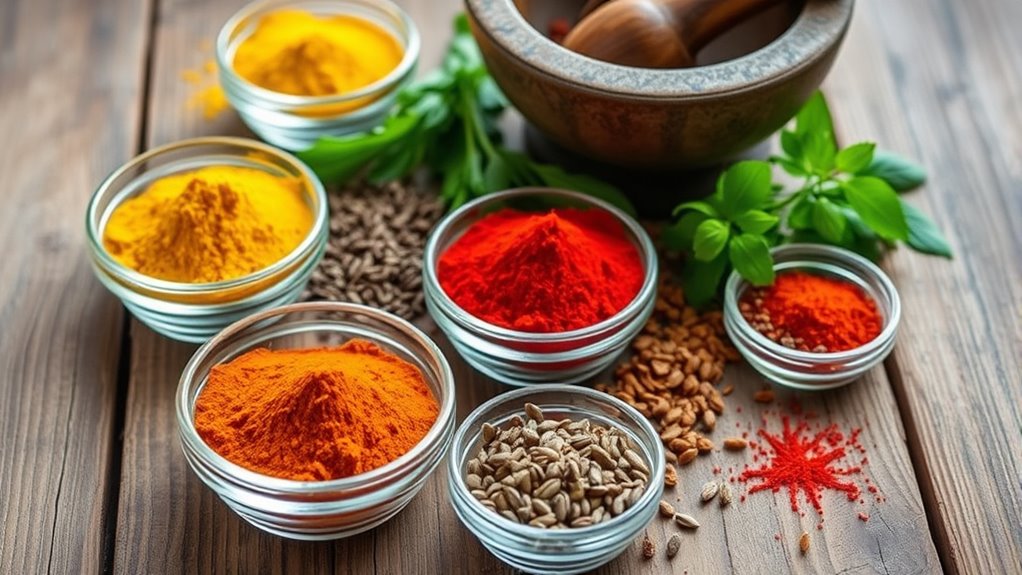
To begin, familiarize yourself with the basic spice groups and their roles. For example, warm spices like cinnamon, nutmeg, and allspice add sweetness and depth, while pungent spices like cumin, coriander, and paprika bring earthiness and warmth. When combining spices, start small—you can always add more, but you can’t take it out once it’s in. This approach helps you control heat levels and avoid overpowering your dish. Remember, some spices are potent, so a pinch can make a big difference.
Familiarize yourself with spice groups; start small, and adjust to balance flavors and control heat effectively.
When it comes to flavor balancing, think about the overall profile you’re aiming for. If your dish is too spicy or pungent, counteract it with ingredients that offer sweetness or acidity, like honey or vinegar. Conversely, if the dish lacks depth, adding spices like cumin or coriander can enhance the complexity without increasing heat. Taste as you go, and adjust accordingly. This continuous tasting process helps you develop an intuitive sense of how different spices interact, ensuring you don’t overdo it.
Managing heat is also about understanding which spices bring heat and how to control their impact. Chili powders, cayenne, and red pepper flakes pack a punch, so add them gradually. For milder heat, consider using fresh chiles or milder spices, and balance them with cooling ingredients such as yogurt or coconut milk. If you crave more heat, add small amounts at a time, tasting after each addition. This incremental approach prevents accidental over-spicing and keeps the flavor profile in check.
Additionally, understanding the impact of spice heat levels on taste allows you to tailor dishes for different preferences. Finally, consider the cooking process itself. Some spices release their flavors early, while others develop only with longer cooking. Toasting spices before adding them can deepen their flavor and help you control heat release. Also, remember that spices tend to mellow as they cook, so you might want to add some at the beginning and others towards the end. With practice, you’ll develop a feel for how different spices behave, enabling you to create dishes that are perfectly balanced and just the right level of heat every time.
Frequently Asked Questions
How Do I Adjust Spice Levels for Sensitive Palates?
You can adjust spice levels for sensitive palates by incorporating mild spice alternatives like milder peppers or using less hot sauce. To better balance heat levels, start with small amounts of spicy ingredients and taste as you go. If it’s too spicy, add dairy or acidity to tone down the heat. This way, you customize dishes to suit your comfort level, ensuring you enjoy flavorful meals without overwhelming heat.
Can I Combine Multiple Spices in a Single Dish?
Think of combining spices like painting a vibrant masterpiece — each hue adding depth and harmony. You can absolutely blend multiple spices in a single dish; it’s like orchestrating a symphony of flavors. Just remember, balancing the spice levels guarantees flavor harmony, so start small and taste as you go. Experiment confidently, and you’ll discover unique, delicious combinations that elevate your cooking to new heights.
Are There Any Common Pitfalls in Spice Pairing?
When you’re experimenting with spice pairings, be aware of common pitfalls like over seasoning mistakes, which can overpower your dish, and flavor clash issues, where spices fight instead of complementing. To avoid these, start with small amounts and taste frequently. Keep balance in mind, and trust your palate. Remember, less is often more, and adjusting gradually helps create harmonious flavors without overwhelming your dish.
How Long Can I Store Spice Blends Safely?
You can typically store spice blends for about 6 months to a year, depending on ingredients. To maintain spice freshness, keep them in airtight containers away from light, heat, and humidity. Proper storage duration helps preserve flavor and potency. Check for signs of spoilage, like loss of aroma or clumping, before using. Regularly revitalizing your spice blends ensures you enjoy vibrant flavors in your dishes.
Which Spices Are Best for Vegetarian or Vegan Dishes?
You might find it surprising, but certain spices truly elevate vegetarian and vegan dishes. Use vegetarian spice blends like cumin, coriander, and paprika to add depth, while vegan friendly seasonings like nutritional yeast or turmeric bring vibrant flavor. These spices create harmony in plant-based meals, making them more satisfying. Embrace these versatile options, and you’ll turn simple ingredients into delicious, memorable dishes that nourish both body and soul.
Conclusion
Now that you have this spice pairing cheat sheet, you’re ready to elevate your cooking. Embrace the boldness, experiment with the flavors, and trust your taste buds. Let the spices inspire your creativity, ignite your passion, and transform your dishes. With these simple pairings, you’ll create memorable meals, impress your guests, and enjoy every step of the culinary journey. Remember, the right spice enhances, the wrong spice distracts—so choose wisely, cook confidently, and savor every bite.