
Using your hand as a guide makes portion control simple and effective. You can use the palm to measure protein, the fist for carbs, and the thumb for fats—all without needing scales or measuring cups. This method encourages mindful eating, helps you listen to hunger cues, and keeps meals balanced. It’s a sustainable approach to managing portions daily. Keep Exploring how your hand can become your best tool for smarter eating habits.
Key Takeaways
- Use your palm to measure a serving of protein, promoting balanced intake without measuring cups or scales.
- Fist size helps control carbohydrate portions like rice, pasta, or bread for balanced meal planning.
- Thumb-sized amounts indicate fats such as butter, oil, or nuts to prevent excess calorie consumption.
- Hand-based portioning encourages mindful eating, slower pace, and awareness of hunger and fullness cues.
- Simplifies meal prep and portion control without additional tools, supporting healthier eating habits daily.
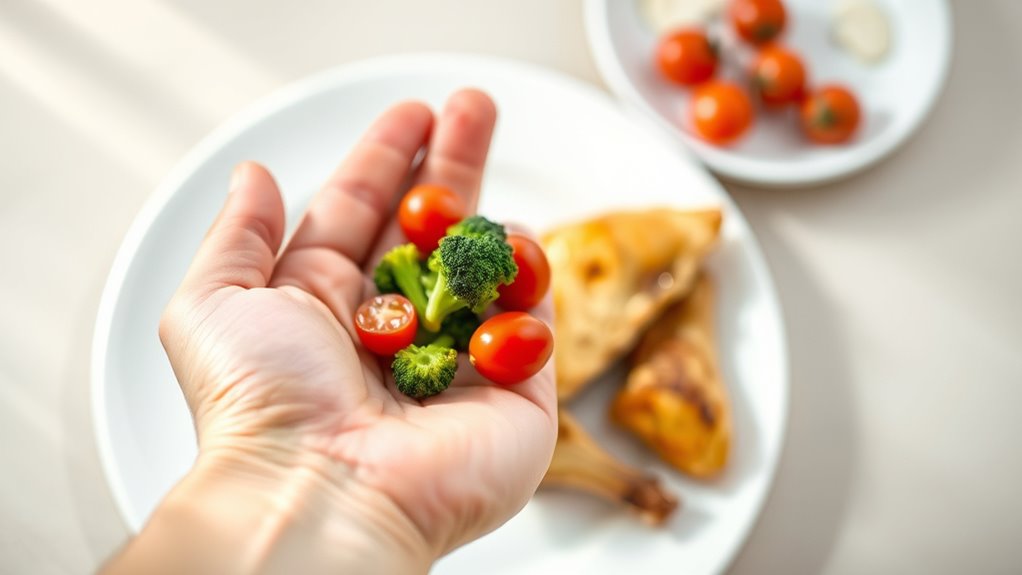
Managing portion sizes doesn’t have to be complicated. One simple way to keep your servings in check is by using your hand as a natural measuring tool. This method promotes mindful eating, helping you tune into your body’s hunger cues and avoid overeating. When you plan your meals, think about how your hand can serve as a guide for each food group, making your portion control more intuitive and less reliant on measuring cups or scales.
Using your hand as a natural measuring tool simplifies portion control and promotes mindful, intuitive eating.
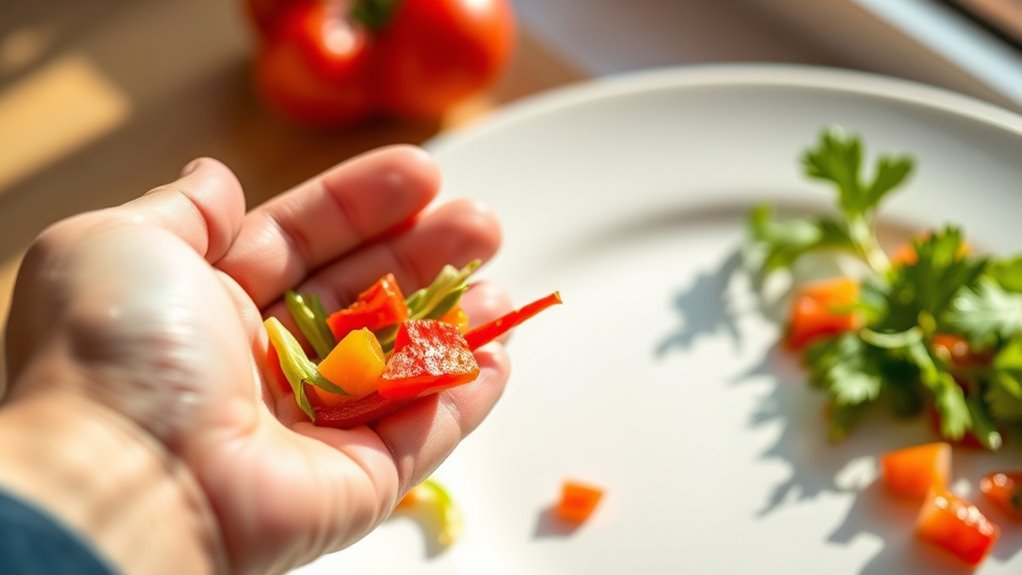
Start with your palm. It’s a good measure for a serving of protein, like chicken, fish, or beans. If you’re aiming for a balanced meal, fill your plate with enough protein to fit comfortably within your palm. This encourages you to focus on quality and quantity without obsessing over exact measurements. Using your hand makes it easier to practice mindful eating because it keeps you aware of how much you’re putting on your plate without overcomplicating the process. You can also use your fist to measure carbs like rice, pasta, or bread. A fist-sized portion is generally a good rule of thumb, helping you control intake without guilt or guesswork.
Your thumb is especially handy for fats. A thumb-sized amount of butter, oil, or nut butter is enough for most recipes. This simple visual cue prevents you from adding extra calories while still allowing flavor and satisfaction. When you think about meal planning, keep these hand-based measurements in mind so you can prepare balanced portions ahead of time. It’s a practical way to stay consistent, especially if you’re trying to eat healthier or lose weight.
Using your hand for portion control supports mindful eating because it keeps you present during meals. Instead of rushing or eating mindlessly from a larger container, you can use your hand to gauge whether you’re eating enough or too much. This encourages slower, more intentional eating, giving your body time to register fullness. Additionally, understanding how contrast ratio influences image quality can help you better appreciate visual presentation in your meals, making eating a more enjoyable experience. Over time, this practice helps you develop a better relationship with food, making it easier to respect your body’s signals and avoid unnecessary overeating.
Incorporating this method into your meal planning can streamline your eating habits. When you prep meals, think about how each food fits into your hand-measurements, ensuring your plate is balanced and satisfying. It’s a simple, effective way to maintain portion control without sacrificing variety or enjoyment. Plus, it’s accessible — no special tools needed, just your own hand. By consistently using your hand as a guide, you’ll find portion control becomes second nature, empowering you to eat mindfully and make healthier choices every day.
Frequently Asked Questions
Can Hand Portion Sizes Vary Based on Age or Activity Level?
You might wonder if your hand portion sizes should change based on age or activity level. While hand size variability is minimal, portion size accuracy can differ for individuals with different activity levels or ages. Active people or growing children may need larger portions, whereas less active adults might require smaller ones. Adjusting your hand portion sizes thoughtfully ensures you meet your nutritional needs without overeating, regardless of age or activity level.
How Do I Adjust Hand Portions for Different Cuisines?
When adjusting hand portions for different cuisines, focus on cultural adaptations to guarantee portion size consistency. For example, you might use your palm for proteins, but vary it depending on the dish’s ingredients and serving style. Keep in mind that different cuisines have unique portion norms, so adapt your hand measurements accordingly. This approach helps you enjoy diverse foods while maintaining balanced, appropriate portion sizes.
Are Hand Portion Techniques Effective for Children?
Think of your hand as a tiny compass guiding your child’s eating habits. Hand portion techniques are quite effective because they adapt to your child’s hand size, ensuring portion accuracy without guesswork. By using your hand as a measuring tool, you help children develop healthy habits early on, making portion control intuitive and manageable. This simple method transforms mealtime into a balanced experience, fostering mindful eating habits that last a lifetime.
What if My Hand Size Isn’t Average?
If your hand size isn’t average, don’t worry—hand size variability can affect portion control accuracy. To adapt, measure serving sizes with a standard measuring cup or scale when precision matters most. Use your hand as a visual guide for everyday portions, but rely on accurate tools for exact needs. Adjust the visual cues based on your hand size, ensuring you maintain healthy portions without over- or under-eating.
Can Hand Portions Help With Specific Dietary Restrictions?
Ever wonder if hand portions can fit your unique dietary needs? They can, despite hand size variations. By using your hand as a guide, you can easily manage specific dietary restrictions—like controlling carbs, fats, or protein intake. It’s a simple, adaptable method that works for everyone, regardless of hand size differences. So, yes, your hand can help you stay within your dietary limits without complicated calculations or counting.
Conclusion
With just your hand, you hold the power to conquer portions and transform your health forever. No more endless calorie counting or confusing scales—your hand is the ultimate secret weapon! By mastering this simple trick, you’ll eat perfectly balanced meals without even thinking twice. Soon, you’ll become a portion control superhero, effortlessly shrinking your waistline and boosting your energy. So, grab your hand and get ready to take control—your new, healthier life is just a hand away!