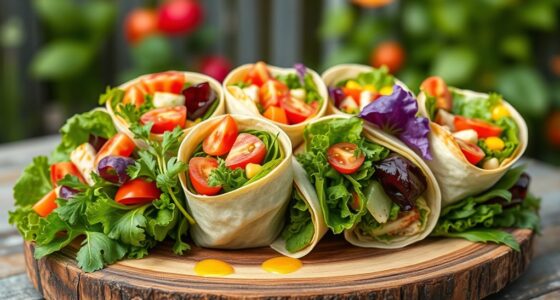
To plan a week of balanced meals, start by selecting a variety of proteins, grains, fruits, and vegetables to guarantee nutrient diversity. Create a detailed shopping list organized by categories to make grocery trips efficient and stick to your budget. Use portion control techniques to prevent waste and support your health goals. Incorporate food safety practices and store leftovers properly to keep meals fresh. Keep these tips in mind to master meal planning and discover more helpful strategies.
Key Takeaways
- Select a variety of proteins, grains, fruits, and vegetables to ensure balanced nutrition throughout the week.
- Create a detailed meal schedule considering flavor, texture, and dietary preferences for each day.
- Develop a categorized grocery list aligned with your meal plan to streamline shopping and reduce waste.
- Use portion control techniques like measuring cups and pre-portioned containers to manage serving sizes effectively.
- Incorporate food safety practices and proper storage to keep leftovers fresh and minimize food waste.

Meal planning is a simple way to save time, money, and stress in your daily routine. When you plan your meals for the week, you eliminate the last-minute scramble to decide what to cook or run to the store multiple times. Instead, you prepare ahead and stick to a clear plan, making grocery shopping more efficient. By creating a detailed shopping list aligned with your weekly menu, you avoid impulse buys and reduce food waste. This focused approach ensures you purchase only what you need, helping you stick to your budget and avoid unnecessary trips to the store.
A key part of effective meal planning is practicing portion control. When you know exactly how much food to prepare and serve, you prevent overeating and help stretch your ingredients further. Proper portion control allows you to enjoy balanced meals without excess calories or waste. It also makes it easier to track your nutritional intake, ensuring you’re getting the right mix of proteins, carbs, and vegetables. By pre-portioning meals or snacks, you can grab them quickly and avoid second servings, which contributes to healthier eating habits.
To plan a balanced week of meals, start by choosing a variety of proteins, grains, fruits, and vegetables. Think about how different flavors and textures can complement each other across your meals. Once you’ve mapped out your menu, create a detailed shopping list. This list should categorize items—produce, dairy, grains, proteins—making your grocery shopping more streamlined. When you head to the store, stick to your list to stay focused and avoid buying things that don’t align with your plan. This disciplined approach keeps your pantry organized and ensures you have everything you need for the week’s meals.
In terms of portion control, consider investing in a set of measuring cups, a food scale, or pre-portioning containers. These tools help you measure servings accurately, whether it’s a scoop of rice or a piece of chicken. For leftovers or bulk ingredients, divide them into individual portions right after cooking to make grab-and-go meals easier. This way, you can avoid overeating and ensure each meal is appropriate in size. Consistent portion control not only supports your health goals but also minimizes food waste, as you won’t be preparing more than you need. Additionally, incorporating food safety practices when storing leftovers helps prevent spoilage and keeps your meals fresh longer.
Frequently Asked Questions
How Do I Accommodate Food Allergies in Meal Planning?
You should start by identifying your allergy-friendly ingredients and avoiding known allergens. Use safe meal substitutions, like dairy-free milk or gluten-free grains, to guarantee meals are safe. Always read labels carefully and double-check ingredient lists. Planning ahead helps you create balanced meals that accommodate allergies without sacrificing nutrition. Keep a list of substitute ingredients handy, and consider consulting a nutritionist for personalized advice.
What Are Quick Healthy Meal Ideas for Busy Weekdays?
Imagine you’re rushing out the door, but you already have a healthy breakfast ready. For busy weekdays, try quick healthy meals like overnight oats or a veggie-packed wrap. Snack prep is key—prep cut fruits, nuts, or yogurt in advance. Use simple meal prep tips to save time, like batch-cooking grains or proteins. These strategies keep nutritious options handy, ensuring you stay energized and well-fed, even on hectic days.
How Can I Reduce Food Waste During Meal Prep?
To reduce food waste during meal prep, focus on smart food storage tips like using airtight containers and labeling leftovers for freshness. Practice portion control to avoid excess, and get creative with leftovers. Consider composting techniques for vegetable scraps and peels to minimize waste further. By staying organized and mindful of storage, you’ll cut down on spoiled food and make the most of your ingredients.
What Budget-Friendly Ingredients Are Best for Balanced Meals?
You find yourself surprised by how often budget-friendly proteins like eggs, beans, or canned tuna, and economical vegetables such as carrots, spinach, and frozen peas, can create balanced meals. These ingredients stretch your dollar without sacrificing nutrition. Incorporate grains like rice or oats, which are affordable and versatile. With a little planning, you can enjoy nutritious, delicious meals that stay within your budget and satisfy your cravings.
How Do I Adjust Meal Plans for Different Dietary Preferences?
To modify your meal plans for different dietary preferences, you should create customized meal plans that cater to each person’s needs. Focus on incorporating dietary flexibility by substituting ingredients or adjusting portion sizes. You can add plant-based proteins, gluten-free grains, or low-sodium options as needed. This approach ensures everyone’s nutritional needs are met while keeping meal planning simple and adaptable to various preferences.
Conclusion
Now that you’ve got the essentials, meal planning becomes your trusted compass on this delicious journey. With a little prep, you’ll navigate each week with confidence, steering clear of last-minute scrambles. Remember, it’s like planting seeds for nourishing meals that blossom into health and happiness. Embrace these basics, and watch your kitchen transform into a haven of balanced, satisfying bites—your secret weapon for a happier, healthier you.