To create flavorful low-sodium meals, focus on using herbs, spices, and acidity like lemon juice or vinegar to boost taste without salt. Experiment with herb blends and spice combinations such as garlic, pepper, and cumin to add complexity. Gradually reduce salt while layering flavors through techniques like toasting spices or adding herbs early in cooking. Keep exploring these methods to enjoy satisfying, health-friendly dishes—that’s just the beginning of maximizing flavor without salt.
Key Takeaways
- Use fresh herbs and spices like basil, thyme, cumin, and paprika to add natural, aromatic flavor without salt.
- Incorporate acidity from lemon juice or vinegar to brighten dishes and enhance taste profiles.
- Apply flavor layering techniques, such as toasting spices and adding herbs early, to deepen and meld flavors.
- Reduce reliance on salt gradually by increasing herbal and spice use, allowing taste buds to adapt over time.
- Combine seasoning strategies like garlic, pepper, and herb blends to create complex, satisfying flavors with less sodium.
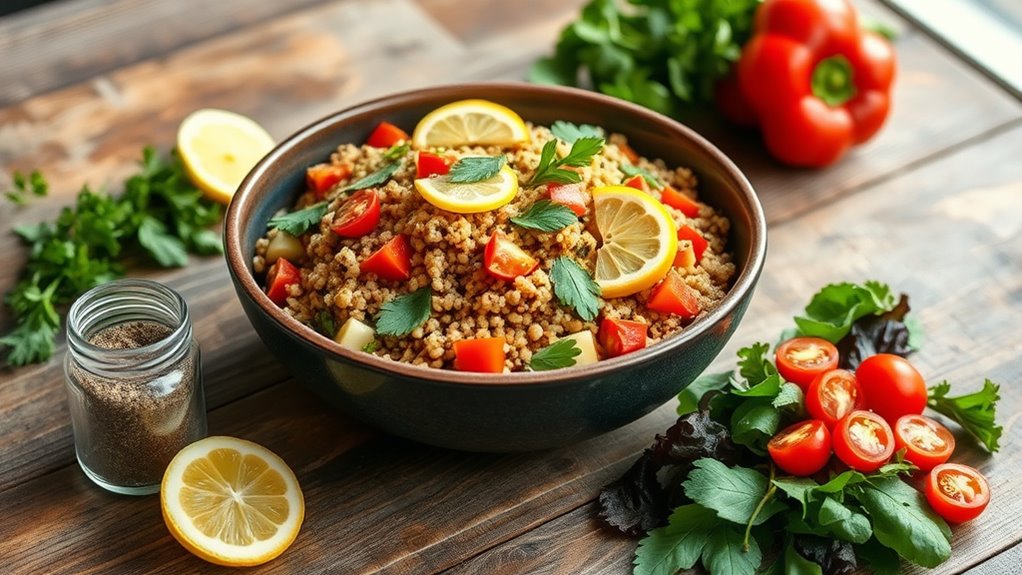
Reducing sodium in your meals can considerably improve your health, especially if you’re managing blood pressure or heart disease. Instead of relying on salt to boost flavor, you can turn to herb combinations and spice blends that add richness and complexity to your dishes. These natural flavor enhancers allow you to enjoy vibrant meals without the health risks associated with high salt intake. When you’re experimenting in the kitchen, think about mixing herbs like basil, thyme, rosemary, and oregano to create your own unique herb combinations. These herbs not only bring fresh, aromatic qualities but also help mask the absence of salt, making your dishes taste full-bodied and satisfying. You might also consider blending spices such as cumin, paprika, turmeric, and coriander into custom spice blends. These can serve as a flavorful foundation for many recipes, from roasted vegetables to grilled meats, providing warmth and depth without added sodium.
Start by choosing herbs and spices that complement each other. For instance, a combination of garlic powder, black pepper, and Italian herbs can elevate pasta sauces or marinades. Experiment with different proportions until you find a flavor profile that suits your palate. Keep in mind that dried herbs and spices are often more concentrated than fresh, so use them judiciously. You’ll find that gradually decreasing your reliance on salt and increasing your use of these blends will help you develop a more sophisticated palate over time. You don’t need to sacrifice flavor; instead, you’re enhancing your meals with ingredients that add layers of taste naturally. Incorporating herb combinations can also support your overall well-being by reducing your sodium intake. Additionally, understanding food chemistry can help you optimize the balance of flavors in your dishes. Exploring flavor layering techniques can further enhance the richness of your meals without salt. Moreover, applying combination principles can assist in creating harmonious and balanced flavor profiles, making your dishes more appealing. Using techniques such as toasting spices before adding them to dishes can also boost their aromatic qualities.
When preparing meals, sprinkle herb combinations and spice blends early in the cooking process to allow their flavors to meld and intensify. For example, adding a spice rub to chicken before roasting or mixing herbs into a soup can create a well-rounded taste experience. Using techniques for flavor enhancement can help amplify the natural tastes of your ingredients and make the absence of salt less noticeable. Don’t forget that acidity can also compensate for salt—try adding a splash of lemon juice or vinegar to brighten your dishes. This technique, combined with your herbal and spicy seasonings, can make your low-sodium meals as delicious as their salty counterparts. Remember that proper seasoning techniques, including layering flavors, are key to achieving satisfying results without excess salt.
Ultimately, embracing herb combinations and spice blends gives you the power to cook healthier without sacrificing flavor. You’ll find that over time, your taste buds adapt to less salt, making it easier to enjoy naturally seasoned meals. It’s a simple, effective way to support your health while still savoring flavorful, satisfying dishes every day.
Frequently Asked Questions
How Can I Enhance Flavor Without Adding Salt?
You can enhance flavor without adding salt by using flavor balancing techniques like adding acidity from lemon or vinegar, and incorporating herbs and spices to boost taste. Experiment with salt substitutes such as potassium chloride, but guarantee they suit your health needs. These methods add depth and richness, making your meals satisfying without relying on salt. Try different combinations to find what best elevates your dishes naturally.
Are There Specific Herbs and Spices That Work Best?
You can enhance flavor by using herb combinations like basil, oregano, and thyme, which add depth without salt. Spice blends such as cumin, paprika, and turmeric also boost taste and aroma. Experiment with these to create complex flavors, and don’t forget fresh herbs for brightness. Combining herbs and spices in different ways helps you enjoy flavorful meals while keeping sodium low.
Can Low-Sodium Cooking Still Be Suitable for Picky Eaters?
Can low-sodium cooking still win over picky eaters? Absolutely. Think of flavor as a chameleon—adapting seamlessly to different tastes. By using herbs, spices, and natural ingredients, you can craft meals that satisfy even the most selective palates. Focus on flavor adaptation, making dishes enticing without extra salt. Picky eaters may surprise you with their newfound appreciation for vibrant, well-seasoned low-sodium meals.
What Are Common Pitfalls to Avoid in Low-Sodium Recipes?
You should avoid over-seasoning mistakes, which can make dishes taste salty despite using less salt. Be cautious with ingredient substitutions, as some replacements may add extra sodium or alter flavor. Tasting your meals frequently helps you balance flavors without overdoing it. Also, steer clear of relying solely on salt substitutes that may contain hidden sodium. Instead, use herbs, spices, and acids like lemon juice to enhance flavor naturally.
How Do I Adjust Cooking Times When Reducing Salt?
Did you know that reducing salt can sometimes change how quickly flavors develop? When you cut back on salt, you might need to extend cooking times slightly to allow flavors to fully deepen. Keep an eye on your dish and taste frequently; adjusting cooking times helps balance flavor without overcooking. Remember, salt reduction may require patience, but it guarantees a healthier meal without sacrificing taste.
Conclusion
By choosing low-sodium cooking, you’re opening the door to a healthier, more vibrant life. Every flavorful bite becomes a brushstroke on the canvas of wellness, proving that less salt doesn’t mean less taste. With each meal, you craft a symphony of fresh ingredients dancing in harmony. Embrace these simple changes, and watch your health blossom like flowers in spring. Your journey to flavorful, heart-friendly meals starts now—let your kitchen be the garden of your well-being.