
TL;DR

Get kitchen staples and gadgets delivered free with Prime
- Fast, free delivery on millions of items
- Prime Video, Amazon Music and more included
- Member-only deals all year
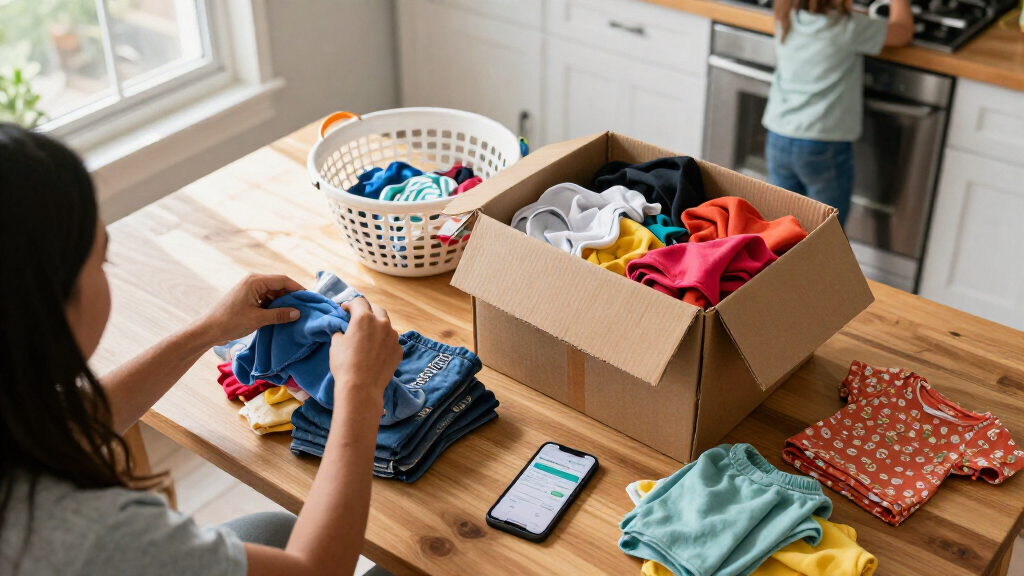
A Good Housekeeping report lists ways families can pass on or sell children’s outgrown clothes, including brand trade-in programs, online resale platforms, local consignment shops and donation organizations. The best option depends on whether a family values convenience, potential earnings or direct donation; payout and acceptance rules vary.
A Good Housekeeping report has outlined ways families can clear out children’s outgrown clothes by selling them online or through local shops, returning eligible pieces to some brands, or donating them to thrift stores and nonprofits. The options can help parents make closet space while potentially recouping some money or directing usable clothing to other families.
Some children’s clothing brands accept their own previously purchased items through trade-in or resale programs. Good Housekeeping lists Hanna Andersson’s Hanna-Me-Downs, where sellers create listings using a style ID, describe an item’s condition, upload photos and set a price. The report says sellers can receive about 70% of the sale in cash or choose 100% of the sale amount as store credit. Tea Collection’s Tea Rewear accepts mailed-in clothing and provides $5 off a future purchase for each accepted piece.
The report also describes programs with different rules and rewards. Jakalo’s TradeUp inspects mailed-in clothes and issues gift cards for accepted items; it also accepts items from other brands. Its listed payouts vary by clothing type, including $15 for pants, dresses, coveralls, uniforms and outerwear, and $7 for T-shirts. Manymoons offers store credit worth 20% of an item’s purchase price for eligible pieces from its own line. Program terms and acceptance criteria may change, so families should check with each company before sending anything.
For families who prefer an online resale service, ThredUp handles inspection, photography, listing and shipping after a seller mails in a bag of clothes. That convenience may come with modest returns. Good Housekeeping Senior Parenting and Relationships Editor Marisa LaScala reported earning $18.50 after 18 items sold in her latest bag. On Poshmark and eBay, sellers have more responsibility for listing and selling items; Poshmark provides prepaid shipping labels, while eBay offers a large marketplace. Depop is presented as a possible outlet for trendy or designer pieces, but sellers must create listings and supply images.
Choosing Between Cash and Convenience
The practical difference between these options is the balance of time, effort and return. A mail-in service can take a large bundle at once and handle much of the sales process, but the reported ThredUp experience shows that proceeds may be limited. Marketplaces that let sellers set prices can offer greater control, while requiring them to photograph, describe, list and ship each item.
Donation and direct hand-me-downs offer another route for clothes that remain wearable but may not be worth listing individually. The report says thrift stores, nonprofits serving families, friends and relatives, and local Buy Nothing groups may accept or find homes for children’s clothing. It also cites the Environmental Protection Agency’s most recent data as showing that clothing and footwear account for around 13 million tons of textile waste per year. That figure describes clothing and footwear waste overall, not children’s clothes alone, and the report does not quantify how much any one reuse option reduces landfill waste.
Products Worth Considering

Ninja Fireside360 Propane Fire Pit and Outdoor Heater, 80,000 BTU, 3 Modes, Cyberspace

Breville Bambino Espresso Machine, Brushed Stainless Steel

Philips 3300 Series Fully Automatic Espresso Machine with Milk Frother, Grinder, Hot and Iced Coffee Presets, SilentBrew, 15-Bar Pressure (E
As an affiliate, we earn on qualifying purchases.
How the Resale Options Differ
The report groups choices into brand take-back programs, online selling, brick-and-mortar resale, and donations. Brand programs can be straightforward when families know where an item came from, but eligibility and compensation differ: some offer cash or credit, others give a fixed discount or inspect items before issuing a reward. Families should compare the likely return with shipping, eligibility limits and any credit restrictions.
Online marketplaces place more of the work on the seller, while local consignment shops may offer an in-person alternative where available. The supplied source material names several online platforms and brand programs but does not include the full details of its brick-and-mortar and nonprofit listings. It does identify friends, family and local Buy Nothing groups as additional ways to pass clothing along without a conventional sale.
““It was so easy to just mail in a big bag of clothes, but I wouldn’t consider it a viable money-making side-hustle.””
— Marisa LaScala, Good Housekeeping senior parenting and relationships editor
Payouts and Acceptance Rules Vary
The report does not establish how much a typical family will earn, how quickly items will sell, or which items each service will accept. LaScala’s $18.50 from 18 sold items is her personal experience, not a general benchmark. Brand programs may inspect clothing, and availability, rewards and terms can change. The source also does not provide complete details about specific local stores or donation organizations, whose rules can differ by location.
The EPA figure cited in the report covers clothing and footwear waste overall; it does not break out children’s clothing or specify how much waste is diverted by resale and donation. Families should check current program conditions and local donation requirements before packing or shipping items.
Check Terms Before Clearing Closets
Families can start by sorting outgrown pieces by condition, brand and season, then decide whether a quick donation, a bulk mail-in service or individual listings best fits their time and goals. Before sending items, check each program’s current eligibility, payout and shipping rules; for a local donation, confirm what the organization accepts and whether it is taking clothing at that time.
The report offers options rather than announcing a new policy or service, and it does not identify a single best choice for every household. The next step for readers is to compare the available local and online routes against the condition of the clothes and the effort they are prepared to spend.
Key Questions
What is the easiest way to sell a bundle of children’s clothes?
Good Housekeeping describes ThredUp as a low-effort option: the seller mails in a bag, and the service handles inspection, photos, listings and shipping. The report also notes that proceeds can be modest.
Which programs pay cash for used children’s clothes?
According to the report, Hanna-Me-Downs offers sellers a choice of about 70% of a sale in cash or 100% in store credit. Other programs may provide discounts or gift cards, and their terms and item acceptance rules differ.
Can I sell clothes from one brand through another brand’s program?
The report says Jakalo’s TradeUp accepts items from other brands, subject to inspection and acceptance. Other brand programs described focus on items originally bought from that brand.
Where can I donate children’s clothes?
The report points to thrift stores, nonprofits that serve families, friends and relatives, and local Buy Nothing groups. Check with a store or organization first because what it accepts may vary.
Source: goodhousekeeping.com