
TL;DR

Get kitchen staples and gadgets delivered free — and shop member deals
- Fast, free delivery on millions of items
- Access to Prime Big Deal Days deals on October 6–7
- Prime Video, Amazon Music and more included
Norway has become the world’s largest salmon exporter, boosting its economy. However, environmental concerns and regulatory issues are emerging as consequences of this growth.
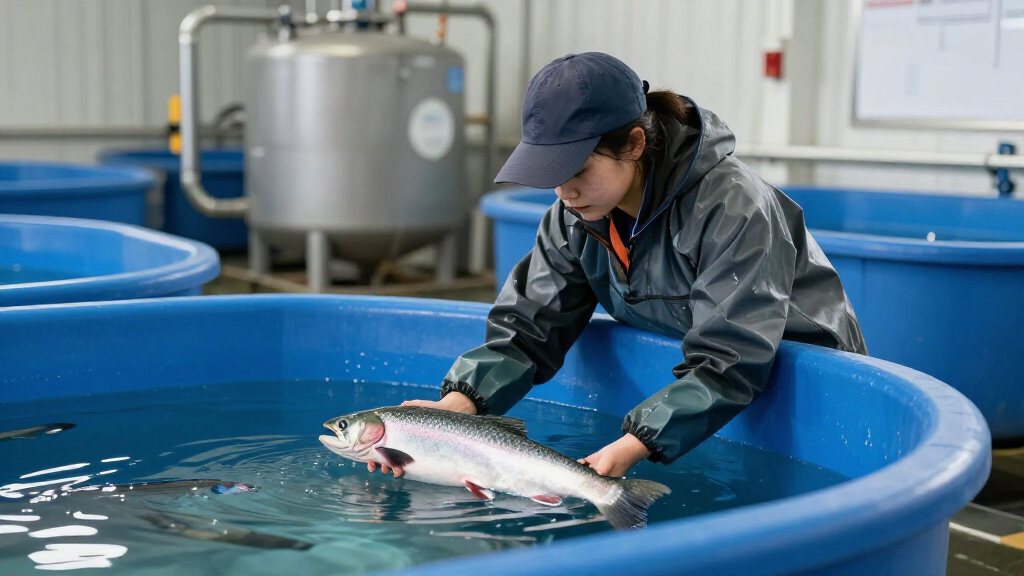
Norway has established itself as the world’s leading exporter of farmed salmon, transforming its economy and global food markets. However, this rapid growth is now prompting environmental and regulatory concerns, with experts warning of potential long-term consequences. This development matters because it impacts Norway’s economy, global food security, and environmental sustainability.
Over the past decade, Norway’s salmon farming industry has expanded rapidly, making it the largest producer globally. According to the Norwegian Seafood Council, the country exported over 2.7 million tonnes of salmon in 2022, generating billions in revenue and supporting thousands of jobs. This growth was driven by rising global demand for salmon, especially in markets like the United States, China, and Europe.
Recently, environmental groups and scientists have raised concerns over the ecological impacts of intensive salmon farming, including water pollution, disease spread, and genetic risks to wild salmon populations. Norwegian authorities have acknowledged these issues, with some regulators proposing stricter controls and environmental monitoring. Nonetheless, critics argue that economic interests have often taken precedence over environmental safeguards.
Economic Growth and Environmental Risks of Salmon Industry
The expansion of Norway’s salmon industry has significantly contributed to the country’s economy, making it a major player in global seafood markets. However, the environmental costs—such as water pollution, disease outbreaks, and impacts on wild salmon—pose risks to biodiversity and long-term sustainability. The balance between economic benefits and ecological health is now a central concern for policymakers and stakeholders.
As an affiliate, we earn on qualifying purchases.
Norway’s Salmon Industry Growth and Regulatory Response
Since the early 2010s, Norway’s salmon farming sector has grown rapidly, supported by technological advances and favorable trade agreements. The industry now accounts for a substantial share of Norway’s exports, with the government promoting it as a key economic pillar. In response to mounting environmental concerns, regulators have introduced measures such as stricter farm site regulations and increased environmental monitoring, but enforcement remains inconsistent.
Past incidents, including disease outbreaks and escape events, have heightened scrutiny of the industry. Critics argue that economic incentives have often overshadowed environmental considerations, leading to calls for more sustainable practices and stricter oversight.
“We are committed to balancing economic growth with environmental sustainability, and we are working on stronger regulations to protect our waters.”
— Norwegian Fisheries Minister
As an affiliate, we earn on qualifying purchases.
Unclear Long-Term Environmental and Regulatory Outcomes
It is still unclear how effective new regulations will be in mitigating environmental damage. The industry’s future growth may depend on technological innovations and stricter enforcement, but whether these measures will be sufficient remains uncertain. Additionally, the long-term ecological impacts of widespread salmon farming are still being studied, and some experts warn that current data may underestimate future risks.
As an affiliate, we earn on qualifying purchases.
Next Steps in Industry Regulation and Sustainability Efforts
Norwegian authorities are expected to implement more comprehensive environmental regulations over the coming months, including stricter farm siting and disease control measures. Industry stakeholders are also investing in sustainable farming technologies, such as land-based farms and closed containment systems. Monitoring reports and environmental impact assessments will be critical in shaping future policies and industry practices.
As an affiliate, we earn on qualifying purchases.
Key Questions
Why has Norway become the leading salmon exporter?
Norway’s favorable climate, advanced aquaculture technology, and strong global demand for salmon have driven its industry growth, making it the top exporter worldwide.
What are the main environmental concerns linked to salmon farming?
Concerns include water pollution from waste, spread of diseases to wild fish, genetic impacts from escaped farmed salmon, and habitat disruption.
Are Norwegian regulators taking steps to address these issues?
Yes, regulators have introduced stricter rules and monitoring, but critics argue enforcement and industry compliance still need improvement.
What might happen if environmental issues are not addressed?
If unchecked, ecological damage could threaten wild salmon populations, reduce biodiversity, and lead to stricter international trade restrictions on Norwegian salmon.
Source: hn
Fall Picks
fall essentials
As an affiliate, we earn on qualifying purchases.