Drone deliveries and robot servers are revolutionizing how you get your food by offering faster, contactless options that boost safety and convenience. Autonomous systems navigate safely around obstacles with advanced sensors and GPS, making deliveries more efficient. While regulations are still evolving to guarantee safety and privacy, many companies are already testing these technologies. If you keep exploring, you’ll discover how these innovations are shaping a smarter, more seamless future for food service.

Get kitchen staples and gadgets delivered free with Prime
- Fast, free delivery on millions of items
- Prime Video, Amazon Music and more included
- Member-only deals all year
Key Takeaways
- Autonomous drones and robots enable faster, safer, and contactless food delivery and service in various environments.
- Regulatory frameworks are evolving to address safety, privacy, and airspace management concerns for autonomous delivery systems.
- Industry collaborations and technological advancements are improving obstacle avoidance and navigation accuracy for autonomous vehicles.
- Increased adoption of robotic and drone delivery options will enhance convenience, efficiency, and customer experience.
- Future developments depend on balancing innovation with regulatory standards to ensure safe, reliable, and widespread deployment.
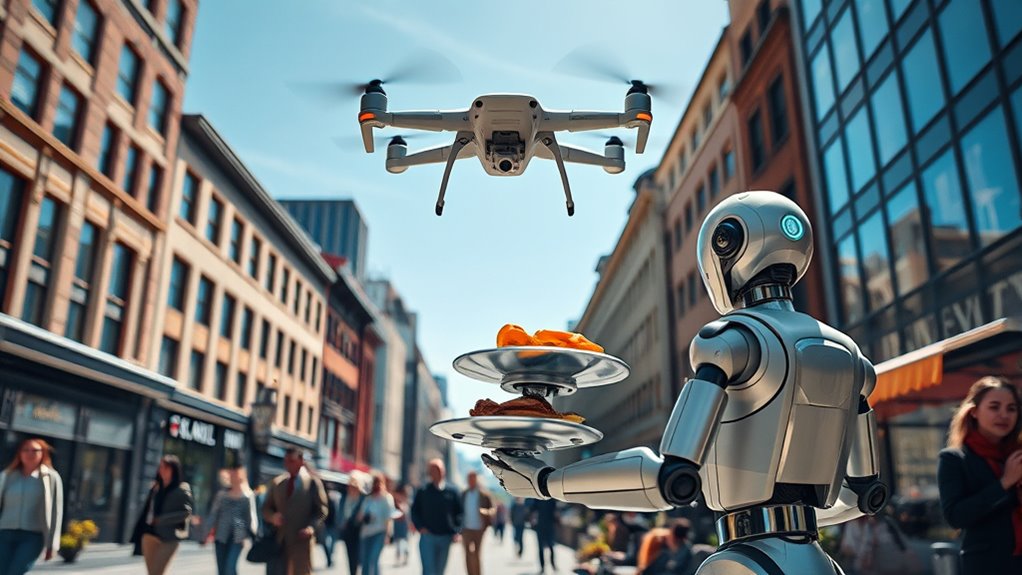
As technology advances, drone deliveries and robot servers are transforming the way we receive goods and dine out. You might soon notice drones buzzing overhead, dropping packages at your doorstep, or robot servers zipping through restaurant floors, bringing your orders with efficiency. These innovations rely heavily on autonomous movement, which allows machines to move safely and accurately without human intervention. Autonomous movement involves sophisticated sensors, GPS, and real-time data processing, enabling drones and robots to avoid obstacles, adapt to changing environments, and reach their destinations reliably. This technology promises faster deliveries and a more seamless dining experience, but it also comes with its own set of hurdles.
Autonomous movement enables drones and robots to deliver goods and serve food safely and efficiently.
One of the biggest challenges you’ll encounter with deploying these systems is managing regulatory challenges. Governments and local authorities are still developing rules to oversee drone flights and robot operations in public spaces. These regulations aim to guarantee safety, privacy, and airspace management but often lag behind technological progress. For example, restrictions on drone altitude, flight zones, and noise levels can limit how and where drones operate. Similarly, robot servers must comply with local health and safety codes, accessibility standards, and liability rules. These regulatory hurdles can delay implementation and create uncertainty for businesses eager to adopt these innovations.
Despite these challenges, companies are making significant strides. They’re working closely with regulators, testing autonomous movement systems under real-world conditions, and refining their models to meet safety standards. Many regions are establishing dedicated air corridors or designated zones for drone deliveries, which helps streamline operations and reduce regulatory friction. Likewise, restaurants are exploring ways to integrate robot servers smoothly into their workflows, ensuring they follow local laws and customer expectations. As these systems become more sophisticated, they’ll better handle complex environments, from crowded city streets to busy restaurant floors.
You can expect that as regulations evolve and autonomous movement systems improve, drone deliveries and robot servers will become more common. They’ll offer rapid, contactless service, which is especially valuable in the current health-conscious climate. However, the changeover will require ongoing collaboration between tech developers, regulators, and consumers. You’ll likely see a mix of traditional and robotic delivery options for some time, with ongoing adjustments to regulations as safety and efficiency are prioritized. Ultimately, the success of these innovations depends on balancing technological capabilities with regulatory frameworks designed to protect everyone involved. This careful integration will shape a future where receiving goods and dining out are faster, safer, and more convenient than ever before. Additionally, advancements in high-precision autonomous movement technology will play a crucial role in overcoming existing obstacles and expanding operational capabilities.
Frequently Asked Questions
How Secure Are Drone and Robot Delivery Systems From Hacking?
Drone and robot delivery systems face cybersecurity vulnerabilities that could be exploited by hackers, so they’re not entirely foolproof. You should be aware of privacy concerns, as sensitive data might be intercepted or misused. While companies implement encryption and security protocols, ongoing threats mean these systems aren’t completely secure yet. Staying informed and trusting providers with strong cybersecurity measures can help protect your deliveries and personal information.
What Are the Environmental Impacts of Drone and Robot Deliveries?
Imagine a drone soaring overhead, like a bird on a mission. Drone and robot deliveries can reduce your food’s carbon footprint by cutting down on traditional vehicle emissions. However, they might disturb local wildlife, much like a loud thunderstorm. While they save energy overall, you should consider their impact on ecosystems and wildlife disturbance, ensuring that technology benefits the environment rather than harms it.
How Do Weather Conditions Affect Drone and Robot Delivery Efficiency?
You’ll find that weather conditions greatly impact delivery efficiency. Rain disruption can reduce visibility and interfere with drone sensors, causing delays or cancellations. Wind interference makes navigation difficult, especially for drones with lighter frames, leading to instability and slower delivery times. Robots on the ground also face challenges with slippery surfaces and debris. To guarantee timely deliveries, companies need to monitor weather closely and adapt their operations accordingly.
What Regulations Govern Drone and Robot Food Deliveries in Different Regions?
You need to follow regional regulations governing drone and robot food deliveries. These include regulatory compliance with local aviation authorities and licensing standards for operating autonomous vehicles. In some areas, you might require permits or certifications to guarantee safety and legality. Staying updated on regional rules helps you avoid fines, ensure smooth operations, and maintain customer trust as drone and robot deliveries become more common.
How Do Delivery Robots Navigate Crowded or Complex Environments?
Imagine you’re in a bustling city street, much like a scene from a sci-fi movie. You’ll find that delivery robots navigate crowded or complex environments by using advanced sensors and cameras for obstacle avoidance. They constantly analyze navigation challenges, adjusting their paths in real-time to avoid pedestrians, vehicles, and other obstacles. This smart technology guarantees safe, efficient deliveries, even amid chaos, making your food arrive smoothly no matter the environment.
Conclusion
As you can see, drone deliveries and robot servers are transforming how we get our food. With over 60% of consumers open to using robots for food delivery, it’s clear this technology is here to stay. Imagine ordering dinner and having it arrive within minutes, thanks to sleek drones or friendly robots. Embracing these innovations means faster, more efficient service, making your future meals more convenient than ever before. The food delivery landscape is truly taking off—are you ready?
Halloween Picks
halloween
As an affiliate, we earn on qualifying purchases.