
You’ve probably noticed pickled foods everywhere because they’re flavorful, convenient, and good for your health. Modern fermentation techniques boost probiotic benefits and add complex flavors, making them more appealing than ever. Plus, they help extend shelf life, reduce food waste, and preserve seasonal produce. As popularity grows, so do creative ideas and varieties. If you want to uncover the secrets behind this fermenting frenzy, keep exploring how these tangy treats are taking over kitchens worldwide.
Key Takeaways
- Growing interest in probiotics and gut health has boosted popularity of fermented pickled foods.
- Modern culinary trends favor artisanal, homemade pickling for unique flavors and customization.
- Pickling offers practical, long-lasting preservation, reducing food waste and enabling year-round enjoyment.
- The rise of food culture and social media has increased awareness and experimentation with pickling techniques.
- Health-conscious consumers seek nutrient-rich, flavorful options, making pickled foods a trendy, versatile addition to diets.
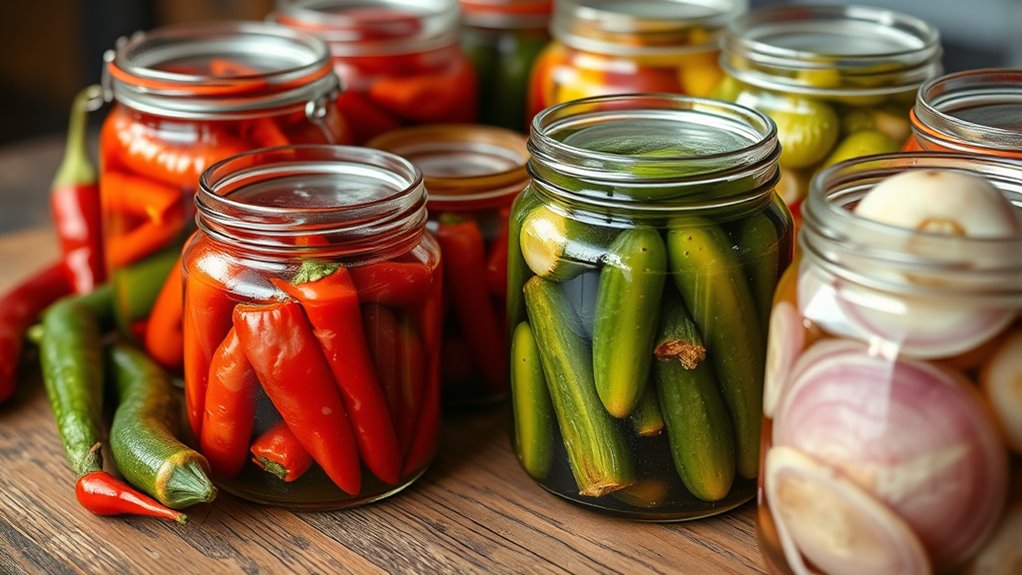
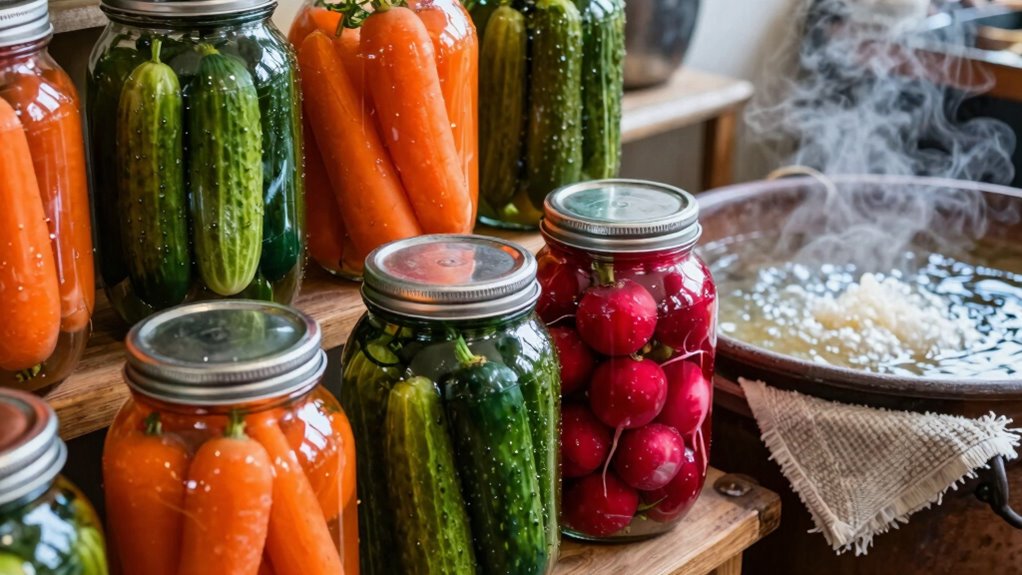
Pickled foods are a popular way to preserve vegetables, fruits, and even some meats, extending their shelf life while adding unique flavors. When you choose pickling, you’re not just preventing spoilage; you’re also creating a product with impressive shelf stability. This means you can enjoy your favorite pickled items long after their harvest or purchase, making them a practical addition to your pantry. The process involves immersing the ingredients in a brine or vinegar solution, which inhibits bacteria growth and preserves the food. Because of this, pickled foods are excellent for meal prep, snacks, or side dishes, especially when fresh produce isn’t in season. The preservation method also lends itself well to storage without the need for refrigeration, further boosting their shelf stability, which is particularly appealing for those looking to reduce waste or stockpile essentials. Additionally, free floating fermentation techniques can be used to develop complex flavors and beneficial probiotics in certain pickled products. These fermentation methods rely on natural bacteria present in the environment, contributing to the distinct tastes and health benefits of the final product. Moreover, understanding the fermentation process can help you craft more flavorful and healthful pickled foods at home. Exploring fermentation techniques can also unlock new flavor profiles and probiotic benefits that enhance your culinary creations.
Furthermore, modern techniques such as controlled fermentation can help optimize flavor development and probiotic content, making home pickling both easier and more consistent.
Beyond preservation, pickled foods bring a remarkable flavor enhancement to your meals. The acidity from vinegar or fermentation creates a tangy, complex taste that can elevate simple dishes. You might find yourself reaching for pickled cucumbers to add crunch and zest to sandwiches or tossing pickled onions into salads for a burst of sharpness. The fermentation process, especially when it involves natural bacteria, can develop deeper, more nuanced flavors over time, making each batch unique. *Additionally*, pickling spices—like dill, garlic, mustard seeds, or chili flakes—add layers of flavor that complement a variety of foods, transforming ordinary ingredients into extraordinary accompaniments. This flavor enhancement is one reason pickled foods have become so trendy; they’re versatile, easy to incorporate into different cuisines, and deliver a punch of taste that enhances the overall dining experience. The preservation process is also a key factor in maintaining the nutritional value of vegetables and fruits, making them a healthy addition to your diet. Using high-quality ingredients and traditional methods can further elevate the nutritional benefits of your homemade pickles.
You might also notice that pickled foods are gaining popularity in health circles, thanks to their probiotic qualities. Fermentation not only preserves food but also encourages the growth of beneficial bacteria, which can promote gut health. As a result, many people are turning to pickled vegetables and fruits as a tasty way to support digestion. Plus, because pickling often involves minimal ingredients—mainly vegetables, vinegar, salt, and spices—you can customize flavors to suit your preferences or dietary needs. Whether you’re making spicy kimchi, sweet bread-and-butter pickles, or tangy sauerkraut, the process offers endless possibilities for flavor experimentation. Overall, pickled foods serve as an excellent example of how preservation techniques can enhance flavor, extend shelf life, and even contribute to your health, which explains their widespread popularity today.
Frequently Asked Questions
How Long Do Homemade Pickled Foods Last?
You can usually enjoy homemade pickled foods for about 2 to 6 months if kept properly stored in the refrigerator, thanks to fermentation storage. To maximize their pickling shelf life, guarantee your jars are sealed tight and stored in a cool, dark place. Always check for signs of spoilage like mold or off smells before eating. Proper fermentation storage helps keep your pickled goodies fresh and safe longer.
Are Store-Bought Pickled Foods Healthier Than Homemade?
Store-bought pickled foods aren’t necessarily healthier than homemade options, but they often contain added preservatives or sugars. When comparing nutritional content, homemade pickles can be more nutrient-dense and free of additives, giving you better control over ingredients. If you make them yourself, you can customize the flavors and ensure they’re probiotic-rich. So, your choice depends on your health goals and preference for ingredient transparency.
Can Pickled Foods Help With Gut Health?
Pickled foods are like tiny treasure chests of probiotic benefits that can boost your gut health. They provide digestive support by introducing beneficial bacteria that help balance your gut flora. Consuming pickled foods regularly can improve digestion, reduce bloating, and strengthen your immune system. So, yes, adding pickled foods to your diet can be a simple and tasty way to support your gut health naturally.
What Are the Best Vegetables for Pickling?
You should pick vegetables like cucumbers, carrots, radishes, and cauliflower for pickling, as they hold up well to fermentation techniques. Start with proper vegetable preparation by washing and slicing them evenly to guarantee consistent fermentation. These vegetables are versatile, flavorful, and absorb the brine’s tang, making them perfect for a tasty, crunchy pickle. Their natural texture and flavor make them ideal choices for your next fermentation project.
Are There Any Health Risks Associated With Eating Pickled Foods?
Think of pickled foods as a treasure chest—delicious, but you must guard it. While they’re generally safe, improper food safety practices can lead to bacterial contamination. Consuming contaminated pickles might cause foodborne illnesses, so always guarantee proper fermentation, storage, and hygiene. If you notice off smells or mold, discard them. Enjoy the health benefits, but stay vigilant against potential risks to keep your pickling journey safe and flavorful.
Conclusion
You can’t ignore the rise of pickled foods—they’re more than just a trend. In fact, the global fermented food market is projected to reach $28.8 billion by 2027, showing how much people are craving these tangy, probiotic-rich options. So, next time you see those jars, remember it’s not just about flavor; it’s about boosting your gut health and being part of a larger, delicious movement toward nourishing, fermented foods.