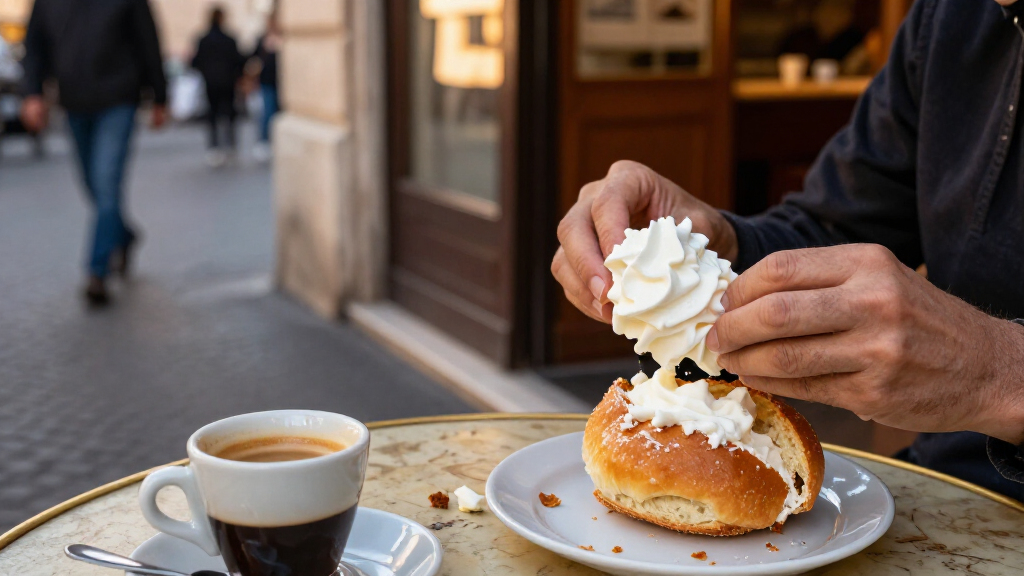
🔍 Read the full analysis: Maritozzi Con La Panna: Rome’s Cream-Filled Bun on Mad Tasting

Get kitchen staples and gadgets delivered free with Prime
- Fast, free delivery on millions of items
- Prime Video, Amazon Music and more included
- Member-only deals all year
TL;DR
Maritozzi con la panna are soft, lightly sweet Roman buns split and filled with whipped cream, often eaten with espresso or cappuccino at breakfast. Recipes vary, but a fresh plain bun with chilled, fresh-tasting cream is a useful reference point; the pastry is best eaten soon after assembly.
Maritozzi con la panna—soft Roman buns split open and filled with whipped cream—are a familiar breakfast pastry in Rome, commonly paired with espresso or cappuccino. A food guide from Mad Tasting describes the plain cream-filled bun as a useful classic reference point, while noting that recipes vary by bakery and family.
The pastry’s defining contrast is between tender, mildly sweet bread and cool, airy cream. The bun is cut lengthwise so the filling can be spread or shaped inside. Its restrained sweetness leaves room for the dairy, while the bread gives the cream enough structure to make the result a pastry rather than a topping on its own.
At a Roman bar or pastry shop, the bun is often served in the morning with coffee. Mad Tasting suggests espresso for a sharper contrast with the rich filling, or cappuccino for a gentler pairing. Because the cream-filled bun can be messy and fragile, it is usually easiest to eat soon after it is assembled, before the cream warms and the bread softens where they meet.
For a straightforward version, the guide recommends looking for bread that feels soft and springy rather than dry or dense, alongside cream that tastes fresh and is not excessively sweet. A golden top or citrus aroma may be appealing, but appearance alone does not establish freshness or quality. The guide says fillings and dough ingredients differ, so customers can ask a bakery whether its recipe includes raisins, candied citrus or other additions.
Maritozzi con la panna Rome’s cream-filled bun
A soft, lightly sweet bun meets cool whipped cream in a familiar Roman breakfast pastry. Recipes vary, but the plain cream-filled version offers a useful reference point.
What makes the classic
The name means “with cream.” Its appeal is the balance between tender bread and airy filling.
Soft and springy
Look for bread that is mildly sweet, not dry or dense.
Fresh whipped cream
A fresh-tasting, lightly sweet cream complements the bread.
Cream, not excess
The goal is a harmonious filling, not the tallest mound.
A Roman breakfast pairing
The pastry is commonly enjoyed at a bar or pastry shop with coffee.
- A sharper contrast with the rich filling.
- A gentler coffee-and-cream combination.
Recipes leave room for variation
Bakers and families use different doughs and fillings; no single recipe is established here.
Choose and enjoy it fresh
A few simple questions can help diners find the version that suits them.
Check whether it is freshly filled and what the dough contains.
Follow the bakery’s storage advice, especially if saving it for later.
The pastry is fragile; prompt serving helps preserve the bread-and-cream contrast.
A Practical Guide to Rome’s Breakfast Pastry
For visitors, the maritozzo is a recognizable part of a Roman breakfast, but the guide’s practical value is in explaining what to expect: a mild bun with a generous cream filling, rather than a uniformly sweet cake. Knowing that contrast can help diners choose between the plain version and bakery variations, and decide whether espresso or cappuccino better suits the richness.
The advice also helps set expectations about freshness and serving. A bun filled to order may offer a clearer contrast between bread and cream, but can be less convenient to carry. The pastry’s dairy filling means it should not be treated like an unrefrigerated bread roll for an extended period. The guide recommends keeping the cream chilled until serving and eating the assembled bun promptly.
Products Worth Considering

Le Creuset Alpine Enameled Cast Iron Fondue Set, 2.5 qt., Nuit

Weber Lumin Portable Electric Grill, Black

KitchenAid Artisan 5-Quart Tilt-Head Stand Mixer, KSM150PS, Almond Cream
As an affiliate, we earn on qualifying purchases.
How Bun and Filling Became a Roman Pair
Maritozzi are associated with Rome and the wider Lazio region, and the source describes a history of recipes that differ between bakers and families. Older or alternative versions may include raisins, pine nuts or candied fruit. Dough recipes can also vary, including the choice of olive oil or butter, as well as eggs, sugar and flavorings such as citrus zest.
The cream-filled version is presented as a celebrated Roman pastry-shop favorite, but the source does not identify one fixed recipe as the sole authentic version. For the con la panna style, the central features are a soft bun and whipped cream; fruit or other ingredients are variations rather than requirements. The name means “with cream,” referring here to whipped cream.
The source also recounts a popular story linking the name maritozzo to marito, the Italian word for husband. In the folklore version, young men gave the buns to their fiancées, sometimes hiding a ring inside. That account is presented as a story, not as established history, and the supplied material does not provide evidence to verify it.
“A fresh bun filled with plain cream is the classic reference point.”
— Mad Tasting
Recipes and Origins Still Vary
The source does not identify a single standardized recipe, a definitive origin date or evidence establishing the engagement-ring story. It describes the folklore as a popular account, so it should not be read as confirmed history. Ingredients and preparation differ, and the guide does not name specific bakeries or provide a survey of how common particular versions are.
It also gives no exact refrigeration time or temperature for the cream-filled buns. Its practical instruction is to keep the dairy cream chilled until serving and eat the assembled pastry soon after it is filled. Readers with dietary restrictions should ask the bakery about ingredients, since recipes may contain dairy, wheat and eggs, and some versions include dried or candied fruit.
Choosing and Serving a Fresh Bun
For diners in Rome, the next step is straightforward: ask whether the bun is freshly filled and what the dough contains, then choose the plain whipped-cream version to try the traditional flavor balance described in the guide. A soft crumb and fresh-tasting filling are more useful signs than an especially large portion. Pair it with espresso for contrast or cappuccino for a milder coffee-and-cream combination.
If buying maritozzi to eat later, keep the cream chilled and avoid leaving the pastry warm for an extended period. The source offers no specific safe holding time, so a bakery’s storage advice is the best guide. Variations with pistachio, chocolate, custard or seasonal fruit can be tried afterward, with the understanding that they give the bun a different flavor from the plain cream-filled version.
Key Questions
What is a maritozzo con la panna?
It is a soft, lightly sweet Roman bun split lengthwise and filled with whipped cream. The name means “with cream.”
Is it usually eaten for breakfast?
Yes. The guide describes it as a familiar Roman breakfast pastry, often served at a bar or pastry shop with espresso or cappuccino.
What should I look for when choosing one?
Look for bread that is soft and springy, not dry or dense, and cream that tastes fresh and lightly sweet. Ask about ingredients if you want to avoid raisins, candied citrus or other additions.
Does an authentic maritozzo have to be plain?
No single recipe is established in the source. The plain cream-filled bun is offered as a classic reference point, but doughs and fillings vary among bakeries and families.
How should cream-filled maritozzi be stored?
Keep the dairy cream chilled until serving and eat the assembled bun soon after filling. The source does not specify an exact safe storage time or temperature.
Source: Mad Tasting