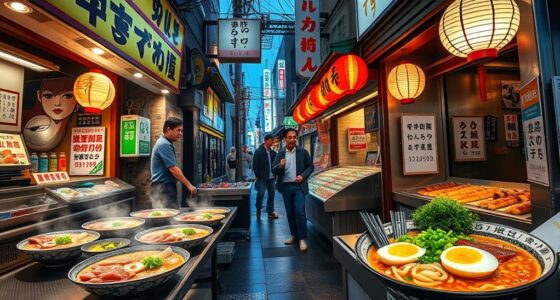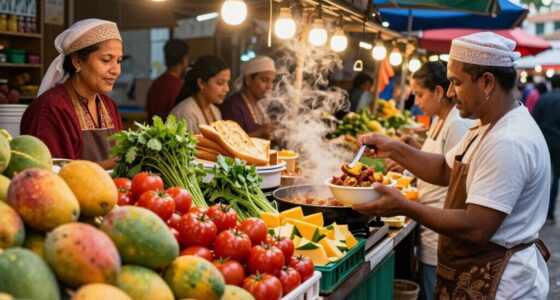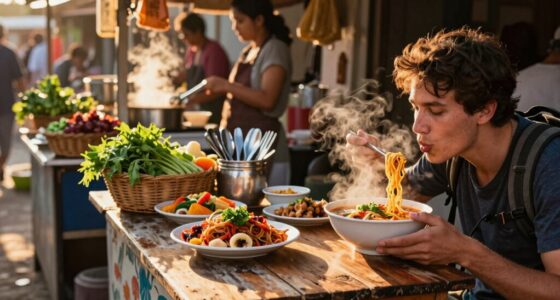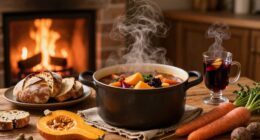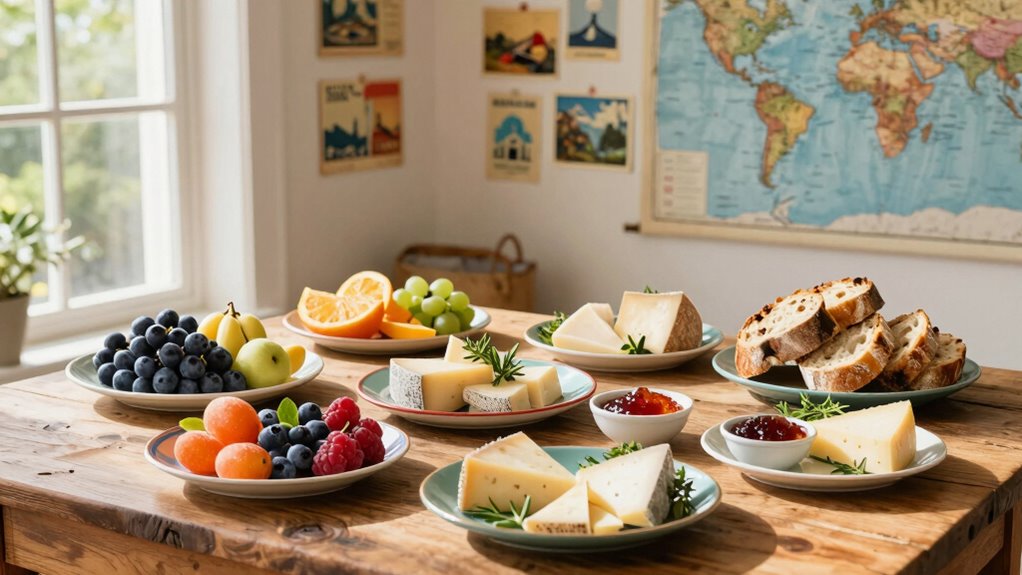
To build better travel food photo setups, incorporate local culture by using regional textiles, ceramics, and symbols to tell a story. Choose versatile gear like a 24-70mm lens and a tripod to adapt to different environments. Use reflectors to bounce natural light, highlighting textures and details. Pay attention to weather and surroundings to craft authentic scenes that resonate. If you want to learn how to seamlessly blend these elements into your shoots, keep exploring the tips ahead.
Key Takeaways
- Incorporate local cultural elements like textiles, ceramics, and symbols to create authentic and storytelling-rich setups.
- Choose versatile equipment such as a 24-70mm lens and reflectors to adapt to varying lighting and environmental conditions.
- Use environmental cues and ambiance-specific decor to enhance authenticity and connect the food to its cultural context.
- Prioritize lightweight, durable gear and consider sustainability to ensure mobility and eco-friendly practices.
- Recognize weather and natural light conditions to adjust your setup for optimal composition and visual appeal.
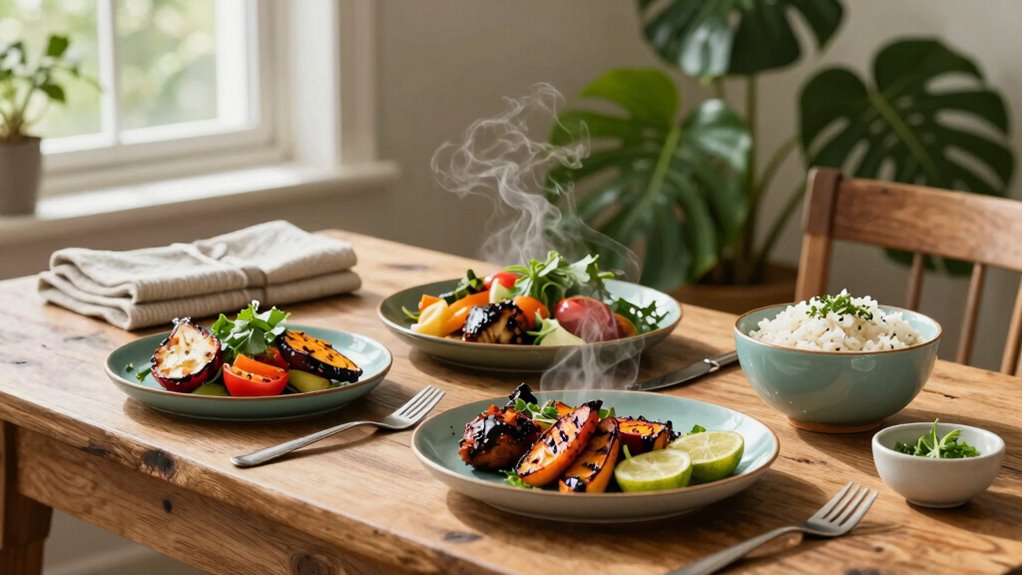
Capturing stunning food travel photos requires more than just good camera skills; it’s about creating inviting setups that showcase both the dish and the destination. Your approach should reflect the cultural influences that make each location unique. Think about how local traditions, colors, and textures can enhance your composition. For example, if you’re photographing a dish in Thailand, incorporate vibrant textiles or traditional ceramics to add authenticity. These elements help tell a story and give your audience a sense of place, making your photos more engaging and memorable.
Create authentic travel food photos by showcasing local traditions, colors, and textures that tell a compelling story.
When it comes to equipment selection, choose gear that aligns with your style and the environment. A versatile lens, like a 24-70mm, allows you to capture wide scenes and close-up details without changing lenses constantly. A tripod is essential for stability, especially in low-light situations or when you want consistent framing. Don’t forget a reflector or diffuser to control natural light, which can make or break the mood of your shot. Packing lightweight, durable equipment ensures you can move easily through bustling markets or quiet cafes without feeling weighed down. Remember, the goal isn’t to carry every gadget imaginable but to select tools that elevate your ability to depict food and surroundings authentically.
You should also consider how equipment influences your setup. For instance, a fast lens with a wide aperture lets you create beautiful background blur, drawing focus directly to the food while softly hinting at the ambiance. On the other hand, a macro lens can highlight intricate details, like the texture of a crust or the glisten of sauce. Using a reflector helps bounce light onto the dish, reducing harsh shadows and emphasizing the food’s appeal. Your choice of equipment should help you adapt quickly to different environments, whether you’re shooting under bright sunlight or in a dimly lit restaurant. Additionally, understanding cultural influences can help you craft photos that resonate more deeply by incorporating local elements that tell a richer story. Being mindful of sustainable practices in your gear choices and setup can also contribute to a more eco-friendly approach to travel photography. Incorporating local materials into your setup can further enhance authenticity and respect for the environment. Moreover, considering environmental conditions such as weather and lighting can ensure your setup remains effective and adaptable across various locations. Recognizing the importance of local traditions can inspire you to include specific elements that highlight the cultural context of your food, enriching your visual narrative.

Sony SEL2470GM E-Mount Camera Lens: FE 24-70 mm F2.8 G Master Full Frame Standard Zoom Lens
SONY EMOUNT LENS: 35mm full frame format, instant auto / manual focus selection, focus hold button. The minimum…
As an affiliate, we earn on qualifying purchases.
As an affiliate, we earn on qualifying purchases.
Frequently Asked Questions
What Are the Best Lighting Conditions for Food Travel Photography?
You should aim for natural light, especially during the golden hour, to capture warm, inviting food photos while traveling. This time, just after sunrise or before sunset, provides soft, diffused lighting that enhances colors and textures. Avoid harsh midday sun, which can cause unwanted shadows. Using natural light during these ideal times helps your food look fresh and appealing, making your travel photos truly stand out.
How Do I Choose the Right Background for Food Photos Abroad?
Think of choosing a background as setting the stage for a story; it should tell something about the place. You’ll want to incorporate cultural influences and local market options to make your food photos feel authentic. Look for colorful textiles, rustic wooden surfaces, or vibrant street scenes that complement your dish. By blending these elements, your photos will capture the spirit of the location and make viewers crave a taste.
What Camera Settings Work Best for Outdoor Food Shots?
For outdoor food shots, use a wide aperture like f/2.8 to f/4 for a soft background, highlighting your dish. Set your focal length around 35-50mm to avoid distortion and capture details. Experiment with camera angles—overhead, eye level, or 45 degrees—to find what best showcases your food. Adjust ISO for natural light and keep your shutter speed fast enough to prevent blur, especially if there’s movement or breeze.
How Can I Efficiently Pack Food Photography Gear for Travel?
You should pack a compact, sturdy camera bag with essential gear, including a lightweight portable tripod for steady shots on the go. Select versatile lenses like a macro and a wide-angle to cover various shots without overloading your bag. Keep your gear organized and protected with padded compartments, and choose multi-use accessories to save space. This way, you’re always ready to capture stunning food photos during your travels efficiently.
What Props Enhance Food Presentation in Travel Photos?
You should focus on food styling and thoughtful prop selection to enhance your travel photos. Use rustic boards, textured linens, and natural elements like herbs or flowers to add depth. Keep props simple yet complementary to your dish’s colors and theme. Avoid clutter, and choose items that guide the viewer’s eye toward the food. This approach creates a visually appealing, inviting presentation that captures the essence of your travel experience.

Amazon Basics 50-inch Lightweight Portable Camera Tripod Stand with Quick-Release Plate, Adjustable Height, Aluminum, for Travel Photography, Champagne
Camera mount tripod stand with zippered storage bag
As an affiliate, we earn on qualifying purchases.
As an affiliate, we earn on qualifying purchases.
Conclusion
By experimenting with different angles, lighting, and props, you can turn your travel food photos into mesmerizing stories. Think of your setup like a recipe—you get to mix and match until it’s just right. Keep practicing, stay curious, and don’t be afraid to try new things. Before you know it, your photos will shine brighter than a lantern in a night market, drawing viewers in and making them crave your delicious discoveries.

NEEWER 43 Inch/110 Centimeter Light Reflector Diffuser 5 in 1 Collapsible Multi Disc with Bag – Translucent, Silver, Gold, White, and Black for Studio Photography Lighting Outdoor
43" 110CM 5 in 1 Collapsible Multi Disc Light Reflector
As an affiliate, we earn on qualifying purchases.
As an affiliate, we earn on qualifying purchases.

Xenvo Pro Lens Kit for iPhone and Android, Macro and Wide Angle Lens with LED Light and Travel Case Black
✔ COMPATIBLE WITH ALL SMARTPHONES, TABLETS, and LAPTOPS including ALL iPhone models, Samsung Galaxy and Note, Google Pixel,…
As an affiliate, we earn on qualifying purchases.
As an affiliate, we earn on qualifying purchases.