Begin a culinary journey through the Caribbean Islands, where bold spice blends like allspice, nutmeg, and cinnamon create authentic flavors. You’ll discover traditional techniques such as grilling, slow-cooking, and marinating that bring out the richness of fresh local ingredients like seafood, tropical fruits, and root vegetables. Each island’s unique methods and flavors tell vibrant stories of culture and history. Continue exploring to uncover the secrets behind these unforgettable Caribbean tastes.

Get kitchen staples and gadgets delivered free — and shop member deals
- Fast, free delivery on millions of items
- Access to Prime Big Deal Days deals on October 6–7
- Prime Video, Amazon Music and more included
Key Takeaways
- Explore authentic Caribbean spice blends like allspice, nutmeg, and cinnamon that define island-specific flavors.
- Discover traditional cooking techniques such as grilling, slow-cooking, and marinating that enhance local dishes.
- Experience the use of fresh, tropical ingredients like seafood, fruits, and root vegetables.
- Learn how cultural practices and history influence Caribbean culinary methods and flavor profiles.
- Appreciate the vibrant culinary legacy that celebrates island traditions through flavorful, time-honored recipes.
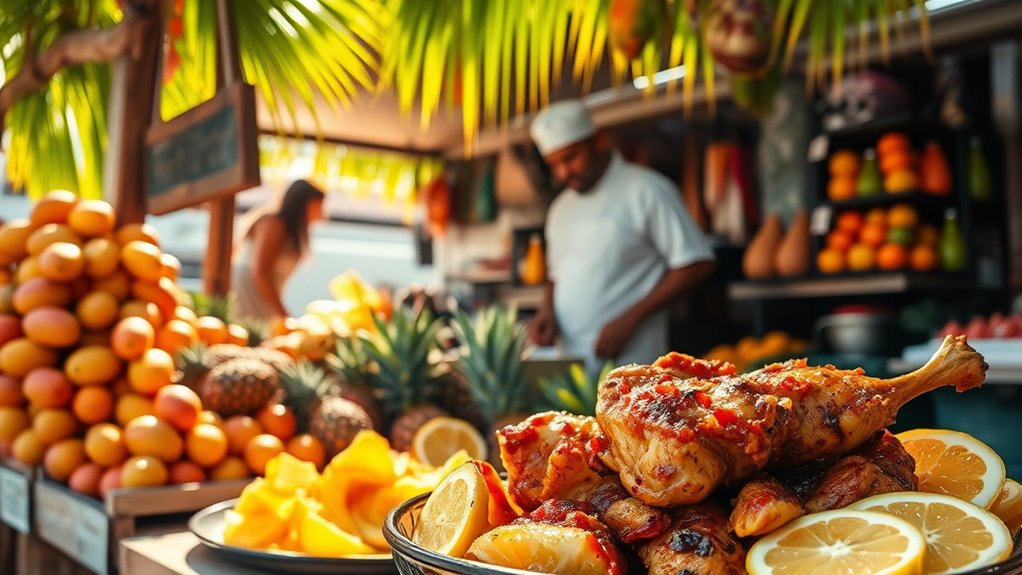
Beginning a culinary journey through the Caribbean Islands reveals a vibrant tapestry of flavors, traditions, and fresh ingredients. As you explore each island, you’ll discover how local spice blends form the backbone of many dishes, creating bold, distinctive tastes that define Caribbean cuisine. These spice mixes often combine ingredients like allspice, nutmeg, cinnamon, cloves, and dried herbs, blending them in unique proportions that vary from island to island. By learning to recognize and use these blends, you can bring authentic flavors into your own kitchen, whether you’re preparing jerk chicken, pepper pot stew, or curried goat. The art of developing these spice blends has been passed down through generations, and they continue to serve as the essence of Caribbean cooking.
Discover how vibrant Caribbean spice blends define bold, authentic flavors across island cuisines.
In addition to the spices, you’ll find that traditional cooking techniques are vital to capturing the true spirit of Caribbean dishes. Grilling over open flames infuses meats with smoky richness, while slow-cooking stews tenderize tough cuts and meld flavors beautifully. Many recipes rely on marinating meats for hours with local spice blends and citrus juices, which tenderizes the protein and enhances its flavor profile. You’ll also notice that cooking methods like frying, steaming, and roasting are employed to achieve specific textures and tastes. For example, fried plantains are a staple side, their crispy exterior contrasting with soft, sweet interior, all achieved through simple yet effective techniques.
As you embrace these traditional methods, you start to see how they preserve the island’s culinary identity. The use of fresh, local ingredients like seafood, tropical fruits, and root vegetables is fundamental, but it’s the traditional techniques that elevate these ingredients into authentic dishes. You’ll find that many recipes are rooted in resourcefulness—using what’s available and maximizing flavor through time-honored practices. For instance, a hearty callaloo stew might be slow-cooked with a blend of spices and herbs to deepen its savory taste, or a spicy jerk marinade might be applied to chicken and grilled to perfection, locking in smoky, spicy goodness.
Immersing yourself in these culinary traditions allows you to appreciate the skill and history behind Caribbean cooking. With each dish you prepare, you’re not just following a recipe—you’re carrying forward a legacy of vibrant flavors, local spice blends, and time-tested techniques. As you continue your journey, you’ll come to understand that Caribbean cuisine isn’t just about ingredients; it’s about the stories, culture, and passion woven into every bite.
Frequently Asked Questions
What Are the Must-Try Traditional Caribbean Dishes?
You should definitely try jerk chicken, a Caribbean street food classic with bold, spicy flavors. Don’t miss conch fritters or fried plantains for authentic bites. For fusion seafood dishes, sample shrimp cooked in coconut milk or lobster seasoned with Caribbean spices. These dishes showcase vibrant flavors and local ingredients, giving you a true taste of Caribbean cuisine. Enjoy exploring these must-try traditional dishes on your culinary journey!
How Do Caribbean Spices Influence Local Cuisine?
You might think Caribbean spices are just for heat, but they actually define regional flavor profiles. Caribbean spice blends, often a mix of allspice, nutmeg, and fiery peppers, influence dishes by adding depth and complexity. These vibrant spices elevate traditional recipes, creating bold, memorable flavors. They’re essential to Caribbean cuisine, helping each island develop its unique taste while uniting the broader Caribbean culinary identity.
Which Caribbean Island Has the Most Diverse Culinary Scene?
You’ll find Puerto Rico boasts the most diverse culinary scene, blending cultural fusion and rich seafood specialties. You’ll experience a mix of Spanish, African, and Taino influences, creating a vibrant food culture. From crispy bacalaitos to flavorful mofongo, you get a taste of history and innovation. This island’s dynamic cuisine invites you to explore a variety of dishes, making it a true culinary melting pot in the Caribbean.
Are There Vegetarian or Vegan Options in Caribbean Cuisine?
Yes, you’ll find plenty of plant-based options and vegan-friendly dishes in Caribbean cuisine. Many restaurants cater to vegetarians and vegans, offering dishes like beans and rice, fresh tropical fruits, and vegetable stews infused with local spices. You can enjoy flavorful plant-based options that showcase the islands’ vibrant ingredients. Just ask your server about vegan-friendly dishes, and you’ll discover tasty, satisfying meals that fit your dietary preferences during your Caribbean culinary journey.
How Has Caribbean Cuisine Evolved With Modern Culinary Trends?
You’ll notice Caribbean cuisine now embraces modern culinary trends by blending fusion flavors and applying contemporary techniques. Chefs experiment with local ingredients, creating innovative dishes that honor tradition while appealing to global palates. You might find Caribbean-inspired sushi, plant-based options, or dishes with molecular gastronomy elements. This evolution makes the cuisine more diverse, exciting, and accessible, inviting you to explore new tastes while respecting Caribbean culinary heritage.
Conclusion
As you savor the vibrant flavors of the Caribbean, you’re like a traveler discovering hidden treasures at every turn. Each dish tells a story, blending spices and traditions into a symphony that dances on your palate. The islands’ rich culinary tapestry invites you to return, enthusiastic to explore more. Just as the waves endlessly kiss the shore, your love for these bold tastes will keep growing, forever pulling you back to the Caribbean’s irresistible culinary embrace.
Fall Picks
fall essentials
As an affiliate, we earn on qualifying purchases.