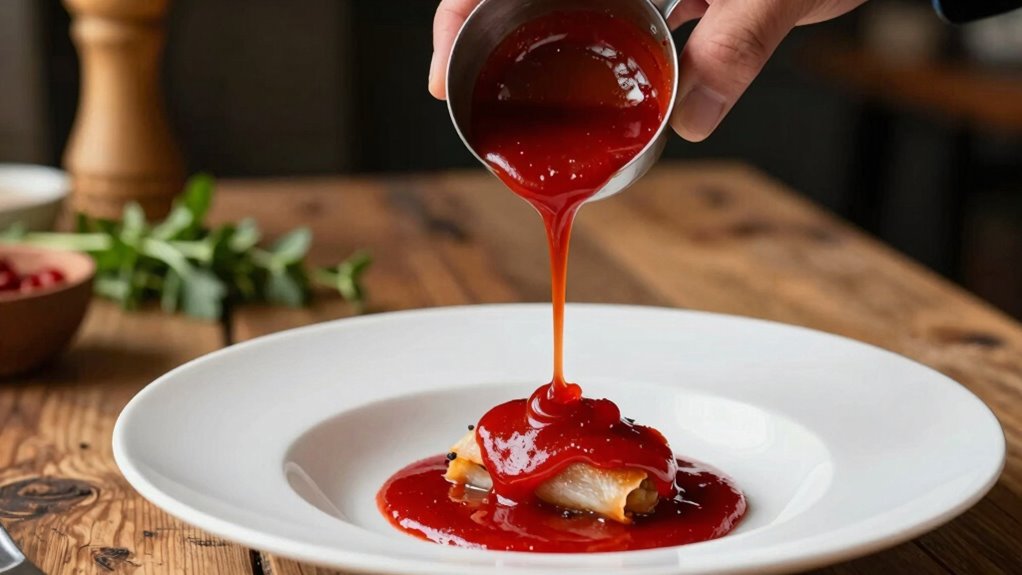

Reducing sauces for a few extra minutes is worth it because it intensifies flavors and improves texture without adding extra ingredients. As the liquid evaporates, your sauce becomes richer, thicker, and more velvety, creating a more luxurious finish. It also helps you control the balance of tanginess or saltiness, ensuring each bite is perfectly seasoned. Spend a few extra minutes now, and you’ll elevate your dish to a more flavorful, satisfying level—plus, you’ll discover how simple techniques make a big difference.

Get kitchen staples and gadgets delivered free with Prime
- Fast, free delivery on millions of items
- Prime Video, Amazon Music and more included
- Member-only deals all year
Key Takeaways
- Reducing thickens the sauce, enhancing texture and making it more visually appealing.
- It intensifies flavors, creating a richer, more concentrated taste without extra ingredients.
- The process is quick and simple, offering significant flavor improvements with minimal effort.
- It allows better control over seasoning and flavor balance for a harmonious final dish.
- Reduced sauces cling better to food, improving presentation and overall eating experience.
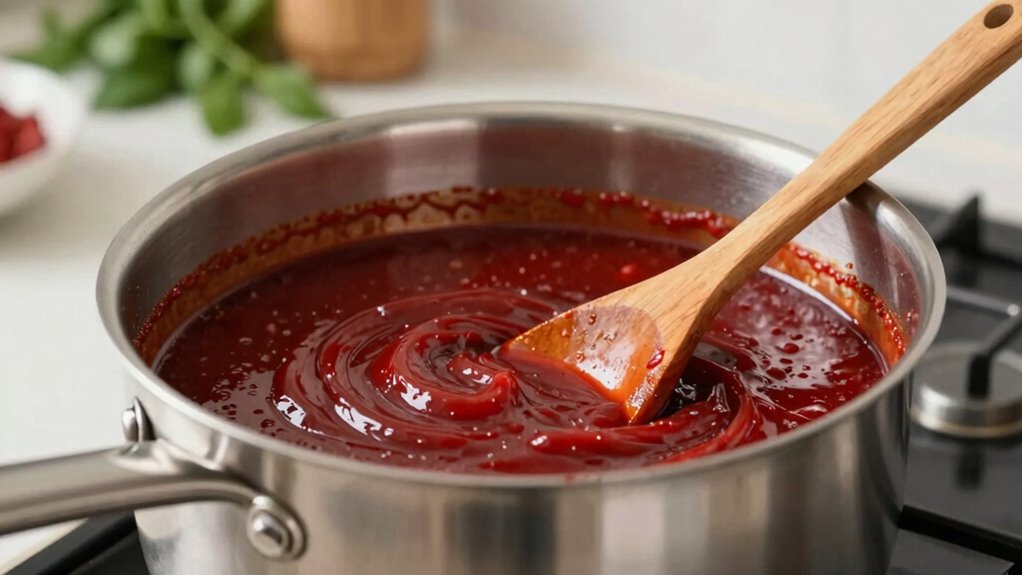
Have you ever wondered how to intensify the flavor of your sauces? Reducing sauces is one of the quickest ways to do just that. When you simmer a sauce over low heat, the water evaporates, leading to a higher ingredient concentration. This process enhances flavor because the flavors of the ingredients become more concentrated and pronounced. Rather than serving a thin, watery sauce, reducing it transforms it into a rich, velvety complement that elevates your dish.
Reducing sauces concentrates flavors, transforming thin liquids into rich, velvety complements that elevate your dishes.
The beauty of reducing sauces lies in its simplicity and effectiveness. As you let the sauce simmer, you’re actively working to intensify its flavor profile. The more water you evaporate, the more dominant the natural flavors of the herbs, spices, and other ingredients become. This is especially true for sauces with ingredients like wine, stock, or fruit juices, which naturally intensify as they reduce. The process fundamentally amplifies the taste without adding extra salt or other seasonings, allowing you to control the overall flavor balance precisely. Understanding flavor concentration can help you better appreciate the benefits of this technique.
Reducing a sauce also offers the benefit of adjusting its texture. As the liquid evaporates, the sauce thickens, giving it a luxurious, sauce-like consistency that clings beautifully to your food. This not only improves the presentation but also ensures each bite is flavorful and satisfying. Plus, it can help to meld the flavors together, creating a more harmonious and well-rounded taste that’s often missing in thinner, less concentrated sauces. Understanding flavor concentration can help you better appreciate the benefits of this technique. Additionally, being mindful of simmering techniques can help prevent over-reduction or burning.
Another advantage is that reducing a sauce doesn’t take a lot of extra time. It’s a straightforward process that adds significant flavor without requiring complicated techniques or additional ingredients. You simply simmer, stir occasionally, and wait until the sauce reaches your desired consistency. This extra few minutes can make a noticeable difference in the final dish, turning a simple sauce into a rich, flavorful component that truly complements your meal. Moreover, consistent stirring during reduction ensures the sauce develops a smooth, cohesive texture.
You might also find that reducing allows you to better balance the seasoning. Sometimes, a sauce can be too tangy or too salty, but simmering can mellow or intensify those flavors, giving you more control. It’s a quick step that can elevate your cooking, making your sauces more vibrant and memorable. So next time you’re preparing a sauce, remember that taking a few extra minutes to reduce it can make all the difference in flavor and texture, making your dish a standout.
As an affiliate, we earn on qualifying purchases.
Frequently Asked Questions
Can Reducing Sauces Change Their Flavor Profile Significantly?
Reducing sauces can markedly change their flavor profile by increasing flavor concentration and thickening the sauce. As you simmer, excess water evaporates, intensifying the taste and making it richer. This process also affects sauce thickness, giving it a more velvety texture. You’ll notice deeper, more complex flavors, which can elevate your dish. Just remember to keep an eye on it to prevent burning or over-reduction, ensuring the flavor remains balanced.
What Types of Sauces Benefit Most From Reduction?
You’ll notice that rich, tomato-based sauces and pan gravies benefit most from reduction. As they simmer, their flavors intensify, creating a burst of flavor enhancement, while the sauce thickens, gaining a velvety texture that clings beautifully to your dish. The process transforms a simple sauce into a luxurious, concentrated masterpiece, making every bite more satisfying and full-bodied. It’s like turning a good sauce into an unforgettable one.
How Do I Prevent Sauces From Burning During Reduction?
To prevent sauces from burning during reduction, keep the heat at a gentle simmer and stir frequently. This guarantees even heat distribution, preventing sauce thickening from sticking to the bottom and burning. Using a heavy-bottomed pan also helps control temperature. Regular stirring maintains consistent heat, allowing flavor concentration without scorching. This method preserves the sauce’s richness, ensuring a smooth texture and ideal flavor without the risk of burnt bits.
Is Reducing Sauces Suitable for All Cooking Methods?
Reducing sauces isn’t suitable for all cooking methods. You can think of it as tailoring your sauce’s thickness to match your dish’s needs, enhancing its flavor and consistency. For versatile cooking techniques like simmering or stovetop reduction, it works perfectly. However, in methods like grilling or roasting, reducing sauces might not be practical, as it requires continuous attention and isn’t compatible with high heat. Adjust your approach based on your desired sauce thickness and cooking style.
How Do I Know When a Sauce Has Been Reduced Enough?
You’ll know a sauce has been reduced enough when it thickens slightly and coats the back of a spoon, indicating ideal consistency control. The texture enhancement becomes evident as it gains a richer, more concentrated flavor. Keep an eye on it to prevent over-reduction, which can make it too thick or even burn. Stir occasionally to guarantee even reduction, and trust your senses—taste and texture tell you when it’s just right.
As an affiliate, we earn on qualifying purchases.
Conclusion
By reducing sauces, you’re not just thickening a dish—you’re shaping its soul. Every simmer whispers patience, transforming simple ingredients into a rich, unified masterpiece. In that gentle simmering, you’re forging a bond between time and flavor, turning a quick meal into an act of care. So, let that extra few minutes be a quiet reminder: sometimes, the most profound moments come from the smallest, most intentional acts. Your dish, like life, is richer when you take the time to reduce.
As an affiliate, we earn on qualifying purchases.
As an affiliate, we earn on qualifying purchases.
Columbus Day / Indigenous Peoples' Day Picks
long weekend sales
As an affiliate, we earn on qualifying purchases.