TL;DR

Get kitchen staples and gadgets delivered free with Prime
- Fast, free delivery on millions of items
- Prime Video, Amazon Music and more included
- Member-only deals all year
Bakery experts cited by Guardian Life advise keeping bread at room temperature in its paper bag, since refrigeration can speed staling. For bread you will not eat within a few days, they recommend slicing and freezing it; older bread can also be reheated or turned into croutons and breadcrumbs.
Bakery experts recommend keeping bread at room temperature in a paper bag and freezing any loaf that will not be eaten within a few days. Their advice, reported by Guardian Life, challenges the common habit of refrigerating bread: cold storage can make it stale faster, while freezing helps preserve it for later.
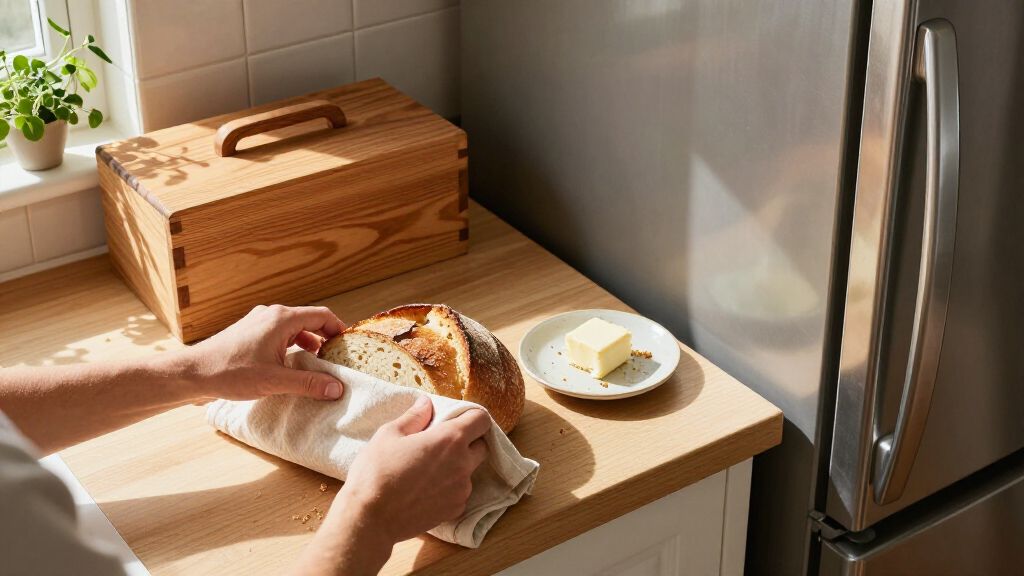
Sophia Handschuh, co-founder of London bakery Sourdough Sophia, says bread begins to dry as soon as it leaves the oven because its starch structure loses moisture. She stores loaves at room temperature in the greaseproof paper bag used to bring them home. She says beeswax wrap can also be used, but considers it an unnecessary expense for this purpose.
Rachel Morgan, co-founder of Edinburgh bakery Twelve Triangles, also prefers paper and advises against a bread bin. She says a bin may trap moisture, leaving the crust soft and creating conditions that encourage mould. Florin Grama of north London’s Tarn Bakery gives a stronger warning about the refrigerator, saying bread can stale within about a day.
For bread intended to last longer, Grama recommends slicing it, wrapping it tightly and freezing it, so people can take out only the portions they need and toast them from frozen. Handschuh says a whole loaf can also be frozen, then defrosted and warmed in a low oven at about 160C. For a loaf that is already a few days old, she suggests heating it in the oven for five to 10 minutes; she says it should then stay fresh for another day or two.
Kitchen guide · Storage science
Should You Keep Bread In The Fridge?
Bakery experts recommend room-temperature storage in a paper bag for bread you’ll eat soon. For a longer pause, slice and freeze the loaf. Refrigeration can speed staling, while stale bread still has a second life in the oven or in recipes.
“That’s probably the best way – no plastic.”
Sophia Handschuh · Sourdough SophiaKeep the loaf in its paper bag.
Slice, wrap tightly, take portions as needed.
Try a short oven reheat, if there is no mould.
2026 · Guardian Life
01 / The storage choice
Where bread keeps its best texture
The experts’ advice separates two different concerns: staling is a texture change as bread dries, while trapped moisture can soften crust and encourage mould. Storage conditions and freshness vary by loaf and home.
Paper bag at room temperature
Handscheruh and Morgan favour paper for bread likely to be eaten within a few days. A greaseproof bakery bag works; beeswax wrap is another option, though Handschuh sees it as unnecessary.
Cold can speed staling
Grama warns that bread may stale in about a day. That is his guidance, not a universal timeline for every loaf or household refrigerator.
Watch for trapped moisture
Morgan says a bin may hold moisture, softening the crust and encouraging mould. Staling and mould are distinct; mouldy bread should be discarded.
02 / At a glance
Storage methods compared
Choose based on when you expect to eat the loaf. The report does not give a guaranteed freshness or food-safety period.
| Method | Best for | What to do | Expert view |
|---|---|---|---|
| Paper bag · room temperature | Eating within a few days | Leave the loaf in its bakery paper bag. | Recommended |
| Freezer | Keeping bread for later | Slice and wrap tightly; toast portions from frozen. | Recommended |
| Refrigerator | Not recommended for bread storage | Cold storage may speed the loss of softness. | Avoid |
| Bread bin | Depends on airflow and moisture | Be alert to a softened crust and signs of mould. | Use judgement |
03 / A simple routine
From counter to freezer to table
Make the storage decision before the loaf starts to dry out, then use only the portions you need.
Keep it in paper
Store at room temperature if you expect to eat the bread within a few days.
Slice and wrap
Pack slices tightly before freezing to help preserve them for later.
Toast from frozen
Take out only the portions you need. A whole loaf can also be thawed.
Warm or repurpose
Try a brief oven reheat, croutons, crisp slices or breadcrumbs.
04 / Why the fridge is different
Cold storage and the staling comparison
The report cites an experiment described by food writer Harold McGee in On Food & Cooking. It compares bread held at two specific temperatures; it is not a test of every bread or home refrigerator.
One day at 7°C matched six days at 30°C
The comparison illustrates how quickly bread staled at 46°F (7°C) relative to 86°F (30°C) under the experiment’s conditions.
“Your bread will go stale in about a day.”
Florin Grama · Tarn Bakery“That can trap moisture, so the bread gets a bit sweaty…”
Rachel Morgan · Twelve Triangles“Warming bread enables the water to evaporate and for the starch to reactivate.”
Sophia Handschuh · Sourdough Sophia“It begins to dry as soon as it leaves the oven.”
Starch structure loses moisture over time05 / Give stale bread another use
Refresh, crisp, or turn it into crumbs
Warm in the oven
Handschuh suggests heating bread for five to 10 minutes. She says it may stay fresh for another day or two; results can vary.
Make croutons or thin crisps
Toss torn pieces with olive oil, salt, garlic and thyme for croutons. Or slice thinly, add olive oil and bake until crisp.
Make breadcrumbs
Morgan uses stale ends for pasta toppings, schnitzels, fritters, meatballs or cakes.
06 / Key questions
What to know before storing a loaf
Should bread go in the refrigerator?
The quoted bakery experts advise against it because refrigeration can make bread stale faster. The “about a day” estimate is not universal.
What is the recommended everyday method?
Keep bread at room temperature in its paper bag if you expect to eat it within a few days.
How should I freeze bread?
Slice, wrap tightly and freeze. Take out what you need and toast slices from frozen; a whole loaf can also be thawed and warmed in a low oven.
Does reheating make stale bread safe?
Reheating may improve texture, but the report does not say it makes mouldy bread safe. Discard bread that shows mould.
How Storage Changes Bread
The choice of storage affects both texture and shelf life. Bread’s soft crumb and crust can lose moisture after baking, and the experts say refrigeration speeds the process of staling. For households trying to avoid wasting food, freezing offers a practical way to keep extra bread for later without relying on a refrigerator.
The advice also separates staling from mould. Morgan’s concern about a bread bin is that trapped moisture can soften crust and encourage mould, while the refrigerator warning focuses on bread going stale quickly. The report does not provide a single storage time that applies to every loaf, so readers should not treat the suggested few days as a guarantee of freshness or safety.
Older bread still has uses. Handschuh recommends making croutons from bread that is nearly past its best, while Morgan saves stale ends for breadcrumbs. These options can make a loaf useful after its original texture has faded, though bread showing mould should not be treated as merely stale.
As an affiliate, we earn on qualifying purchases.
From Oven to Storage
The recommendations are based on comments from three bakery professionals quoted in Guardian Life’s answer to a reader’s question about the best way to store bread. Handschuh explains that bread’s crumb becomes soft and fluffy as starch in the flour takes in water during baking. Once the loaf leaves the oven, she says, it begins to dry when exposed to air.
The report also cites an experiment described by food writer Harold McGee in his book On Food & Cooking. Bread held at 46F (7C) in the refrigerator reportedly staled as much in one day as bread held at 86F (30C) did in six days. That comparison is specific to the experiment’s temperatures and conditions; the report does not describe it as a test of every bread type or household refrigerator.
““That’s probably the best way – no plastic.””
— Sophia Handschuh, co-founder of Sourdough Sophia
As an affiliate, we earn on qualifying purchases.
What Shelf Life Depends On
The advice does not specify how long each type of bread will stay fresh in a paper bag or how storage results vary with a loaf’s ingredients, size, humidity or the temperature of a home. The refrigerator comparison is attributed to a particular experiment at stated temperatures, and its conditions are not fully detailed in the report.
The report also does not set a food-safety timeline or give a method for judging every loaf. Staling is a change in texture; mould is a separate concern. Readers should not assume that reheating makes mouldy bread safe to eat.
As an affiliate, we earn on qualifying purchases.
Use, Freeze or Repurpose
For bread likely to be eaten within a few days, the experts’ recommended routine is to keep it at room temperature in its paper bag. If it will take longer, slice and tightly wrap the loaf before freezing, then toast portions as needed. A whole loaf can be defrosted and warmed in a low oven, according to Handschuh.
For bread that has begun to go stale, the report suggests a short oven reheat or repurposing it. Handschuh recommends tossing torn pieces with olive oil, salt, garlic and thyme to make croutons, or slicing bread thinly, adding olive oil and baking it until crisp. Morgan suggests turning stale ends into breadcrumbs for pasta toppings, schnitzels, fritters, meatballs or cakes. These are practical uses for stale bread; readers should discard bread that has mould.
Source: Guardian Life
As an affiliate, we earn on qualifying purchases.
Key Questions
Should bread be kept in the refrigerator?
The bakery experts quoted by Guardian Life advise against it, saying refrigeration can make bread stale faster. Grama says it can stale in about a day, though the report does not establish that as a universal timeline.
What is the recommended way to store bread?
Handschuh and Morgan recommend keeping bread at room temperature in a paper bag. Morgan says a bread bin may trap moisture and soften the crust.
How should bread be frozen?
Grama recommends slicing the loaf, wrapping it tightly and freezing it, then taking out only the portions needed and toasting them from frozen. Handschuh says a whole loaf can also be frozen, defrosted and warmed in a low oven.
Can stale bread be made fresh again?
Handschuh suggests heating bread in the oven for five to 10 minutes; she says it may stay fresh for another day or two. The report does not say this makes mouldy bread safe to eat.
What can be made with stale bread?
The experts suggest croutons, thin baked crisps and breadcrumbs. Breadcrumbs can be used for pasta toppings, schnitzels, fritters, meatballs and cakes.
Source: Guardian Life
Halloween Picks
halloween
As an affiliate, we earn on qualifying purchases.