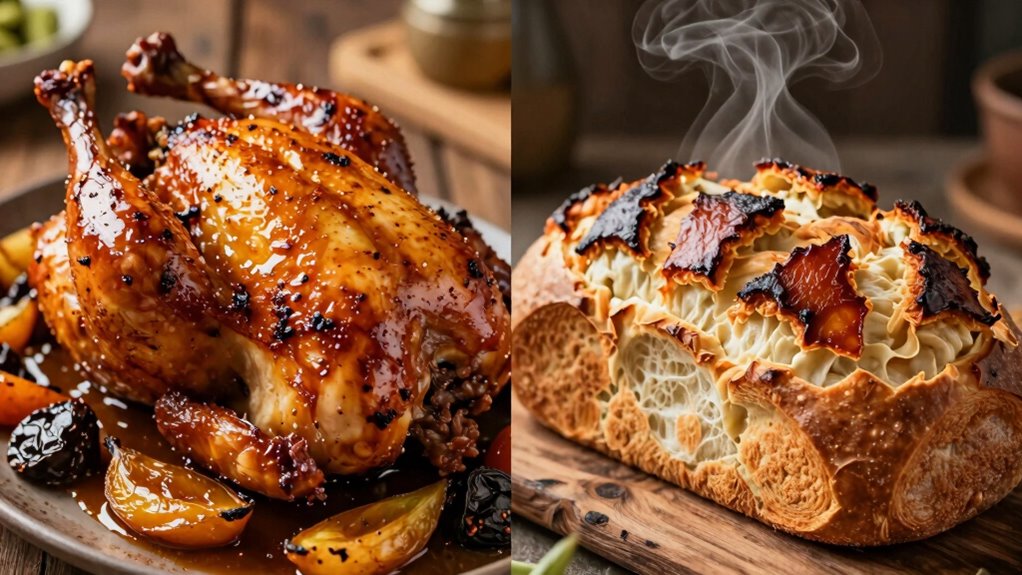
The main difference between roasting and baking is the temperature and the types of food each method suits. Roasting uses higher temps (375°F–450°F) to develop crispy textures and rich flavors, ideal for vegetables, meats, and poultry. Baking employs lower temps (325°F–375°F) for delicate baked goods like bread and cakes, focusing on even rising and setting. If you want to master these techniques, understanding how temperature and seasoning react offers the key to better results.
Key Takeaways
- Roasting uses higher temperatures (375°F–450°F) for browning and caramelization, while baking uses lower temps (325°F–375°F) for gentle cooking.
- Roasting enhances natural flavors with bold seasonings, whereas baking often involves more delicate seasoning and batter/dough integration.
- The difference lies in technique: roasting emphasizes browning and crispy textures, baking focuses on rising and even setting.
- Temperature control and monitoring are critical for both; improper regulation affects texture, doneness, and flavor development.
- Most beginners miss that heat impact on seasonings varies, affecting flavor potency and texture differently in roasting versus baking.
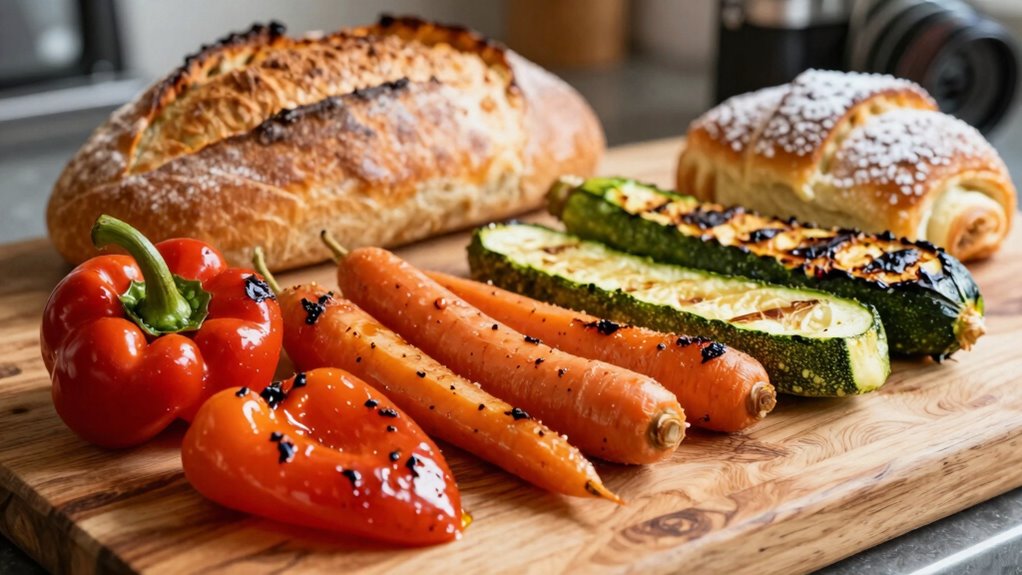
Understanding the difference between roasting and baking can help you choose the right method for your culinary creations. One common mistake beginners make is assuming these terms are interchangeable, but they actually involve different techniques, especially when it comes to seasoning techniques and temperature control. When you roast, you’re generally cooking foods like vegetables, meats, or poultry at higher temperatures, often between 375°F and 450°F. Baking, on the other hand, usually involves lower temperatures, typically between 325°F and 375°F, and is used for bread, cakes, and other baked goods. Recognizing these distinctions allows you to adjust your seasoning techniques and temperature control accordingly, guaranteeing better results every time. Proper temperature regulation is essential for achieving the desired texture and doneness in both methods. Seasoning techniques play a crucial role in both roasting and baking, but they’re applied differently. When roasting, you want to enhance the natural flavors of the ingredients, so you often use bold seasonings like herbs, spices, and marinades that can withstand high heat. You might rub spices directly onto meat or toss vegetables with oil and seasonings before roasting, giving them a crispy, flavorful exterior. Baking, however, benefits from more delicate seasoning approaches, especially since some spices and herbs can lose their potency at lower temperatures. For baked goods, you rely on precise measurements and incorporation into the batter or dough to create a balanced flavor profile. Additionally, understanding how seasonings react to heat can help prevent flavor loss and ensure your dishes taste as intended. Knowing when and how to season during roasting versus baking ensures your dishes develop the intended taste and texture. Temperature control is where many beginners stumble. Roasting requires a higher, steady heat to caramelize sugars and develop a crispy crust. You need to monitor your oven temperature carefully, using a good thermometer if possible, to avoid burning or undercooking. Baking demands more precise temperature regulation, especially for items like bread or cakes that depend on controlled heat to rise and set properly. If your oven fluctuates or if you don’t preheat adequately, your baked goods could turn out dense or uneven. Understanding how to manage these temperatures — whether by adjusting racks, preheating thoroughly, or using an oven thermometer — makes a significant difference in the final outcome.

Hotloop Digital Oven Thermometer Heat Resistant up to 572°F/300°C, LCD
EASY READING: you can see the actual temperature that your oven is registering with the digital LCD display,…
As an affiliate, we earn on qualifying purchases.
As an affiliate, we earn on qualifying purchases.
Frequently Asked Questions
Can You Roast and Bake the Same Food?
Yes, you can roast and bake the same food, but the flavor enhancement and cooking times differ. Roasting typically involves higher heat, giving foods a richer, caramelized flavor, while baking uses moderate heat for even cooking. Your choice affects taste and texture, so adjust cooking times accordingly. For example, vegetables roasted at high heat develop more flavor, whereas baked goods need precise time to rise and set properly.
Which Method Preserves More Nutrients?
Roasting generally preserves more nutrients than baking because it uses higher heat for shorter periods, which helps retain vitamins and minerals. Cooking methods that involve less water and shorter cooking times, like roasting, tend to maintain better nutrient retention. Baking, with its lower temperatures and longer durations, can sometimes lead to nutrient loss, especially in water-soluble vitamins. Your choice of method influences the nutritional quality of your food.
Do Ovens Need Different Settings for Roasting vs. Baking?
Ovens don’t necessarily need different settings for roasting versus baking, but adjusting the oven temperature and cooking duration can improve results. For roasting, you typically set a higher oven temperature and cook for a shorter time to develop browning and flavor. Baking often involves lower temperatures and longer cooking times for even heat distribution. Tailoring these settings helps you achieve the perfect texture and doneness for each method.
How Does Moisture Affect Roasting and Baking?
Moisture greatly impacts both roasting and baking by affecting moisture retention and flavor development. In roasting, less moisture escapes, which helps keep meats juicy and enhances flavor. Baking, especially bread, benefits from moisture retention to create a tender crumb. To control moisture, you can cover foods or use steam. Proper moisture management ensures your dishes stay flavorful and moist, making your cooking more delicious and satisfying.
Are There Specific Foods Better Suited for Roasting or Baking?
Did you know that 80% of home cooks prefer roasting vegetables and meats for flavor? You’ll find that hearty foods like potatoes, roasts, and root vegetables are better suited for roasting, thanks to their longer cooking duration and seasoning techniques that develop rich flavors. Baking, on the other hand, is ideal for delicate items like bread, cakes, and pastries, which need precise timing and gentle heat to achieve perfect textures.

My Secrets Peggy’s Food Spice It Up Pack Seasoning Jars Set of 6 – Ultimate Kitchen Set for Grilling Roasting or Baking – Set Gift Box – Complete Culinary Spice Kit
THE COMPLETE SEASONING KIT – With a seasoning blend for every recipe and dish you can think of,…
As an affiliate, we earn on qualifying purchases.
As an affiliate, we earn on qualifying purchases.
Conclusion
Now that you know the real difference between roasting and baking, you’ll never be caught off guard in the kitchen again. Remember, understanding these techniques helps you cook with confidence and finesse. It’s all about knowing which method suits your dish best—after all, don’t put all your eggs in one basket. Keep experimenting and trust your instincts, because the proof of the pudding is in the eating. Happy cooking!

Viking Premium 13 x 9-Inch Nonstick Ceramic Roasting Pan, Made without PFAS, Heavy Gauge Aluminized Steel Baking Pan Sheet with Reinforced Iron Frame, Even Heating Cookware, Oven Safe to 475F, Silver
PROFESSIONAL ROASTING PAN: Upgrade your kitchen with Viking's nonstick oven roasting pan; ideal for meats, casseroles, vegetables and…
As an affiliate, we earn on qualifying purchases.
As an affiliate, we earn on qualifying purchases.

Baking Stone for Bread – 15 inch Baking Stone for Oven with Handles and Dough Tool – Rectangular Bread Stone – High Heat Durable, Easy Transfers with Handles, Natural Cordierite Stone
BAKE ARTISAN BREAD AT HOME: Elevate your baking with our premium bread baking stone. It transforms your home…
As an affiliate, we earn on qualifying purchases.
As an affiliate, we earn on qualifying purchases.