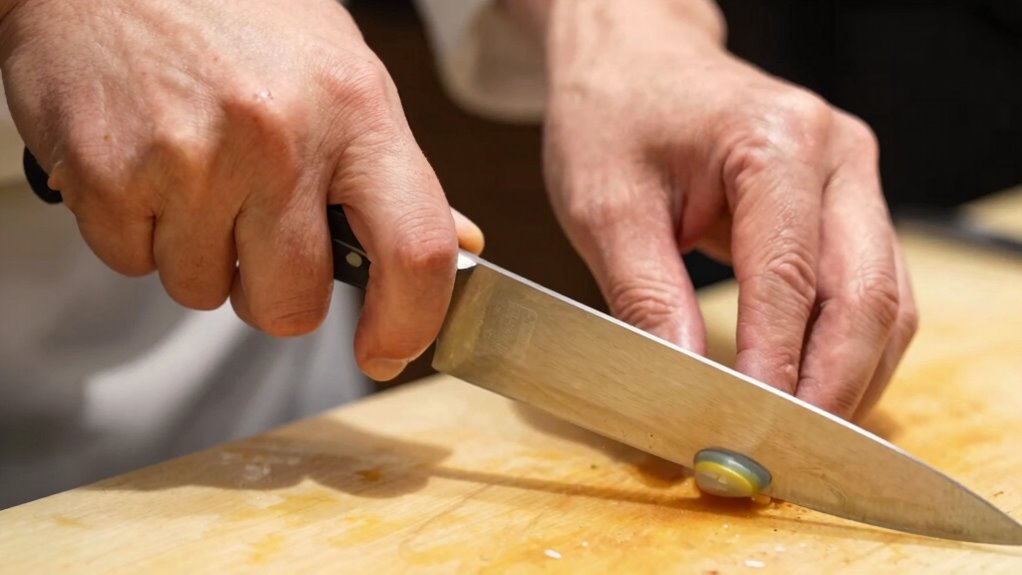

Using a proper knife grip does more than just boost your speed; it enhances your safety, control, and precision in the kitchen. By holding the knife correctly, you reduce the risk of slips, cuts, and uneven cuts, making your work safer and more consistent. It also helps prevent hand fatigue and increases comfort during long prep sessions. Mastering this technique allows you to work efficiently and confidently, so if you keep going, you’ll discover how to elevate your overall culinary skills.

Get kitchen staples and gadgets delivered free with Prime
- Fast, free delivery on millions of items
- Prime Video, Amazon Music and more included
- Member-only deals all year
Key Takeaways
- Proper grip ensures safety, reducing the risk of cuts regardless of speed.
- It enhances control, leading to more precise cuts and better food presentation.
- A correct grip minimizes fatigue and discomfort during prolonged chopping sessions.
- It builds muscle memory for consistent, efficient techniques beyond just rushing.
- Proper technique promotes responsible cooking, preventing accidents and promoting sustainable practices.

Using the correct knife grip is essential for safe and efficient cutting in the kitchen. When you focus on your grip, you’re not just aiming for speed—you’re prioritizing control and safety. Proper knife safety means minimizing the risk of slips or accidents, and grip ergonomics plays a big role in achieving that. A well-formed grip helps you maintain better control over the knife, reducing the chance of cutting yourself or damaging the food. It also allows you to work longer without hand fatigue, which is often overlooked in the rush to chop quickly.
A proper knife grip enhances safety, control, and comfort for safer, more efficient cooking.
Many home cooks think that speed is the main goal when using a knife, but rushing often compromises safety. If your grip is awkward or unreliable, you might find yourself making hurried, imprecise cuts that increase the likelihood of slips. A proper grip ensures that your movements are deliberate and controlled, which is especially important when working with sharp blades. When you hold the knife correctly, you develop a more natural feel for it, allowing you to make precise cuts without forcing your hand or wrist into uncomfortable positions. This results in better grip ergonomics—less strain on your hand and wrist, and more comfort during extended prep sessions.
Having a consistent, proper grip also builds muscle memory. Once you master it, your cuts become steadier and more uniform, helping you work faster because you’re not hesitating or adjusting your hold. The key is to grip the handle firmly but not so tightly that your hand cramps. Your grip should allow for fluid motion, giving you the balance between control and flexibility. This way, you can easily adjust your pressure and angle as needed, especially when slicing or dicing tricky ingredients. The improved grip not only enhances safety but also boosts your confidence, encouraging you to work more efficiently without sacrificing precision. Developing proper technique can significantly improve your overall proficiency in the kitchen.
Additionally, understanding knife control enhances your ability to execute complex cuts and techniques, making your prep work more precise and efficient. Proper grip ergonomics also contribute to better cutting accuracy, which is crucial for professional-level results and safety. When you are aware of the importance of grip ergonomics, you can prevent fatigue and discomfort during prolonged prep sessions. Recognizing how biodiversity and sustainable practices influence your tools and techniques can further elevate your approach to cooking and food preparation. Ultimately, fixing your knife grip isn’t about rushing to get things done faster; it’s about establishing a safer, more comfortable, and more effective technique. When your grip is ergonomic and secure, you’re less likely to make mistakes, and you’ll find yourself working more quickly because your movements are more natural. Proper knife safety and grip ergonomics go hand in hand—they allow you to cut smarter, not just faster. So, take the time to adjust your hold, and you’ll see how a small change can make a big difference in your cooking experience.
As an affiliate, we earn on qualifying purchases.
Frequently Asked Questions
How Do I Know if My Grip Is Correct?
You can tell if your grip is correct by checking if your hand feels secure and comfortable, allowing you to control the knife without strain. A proper knife grip improves knife safety and enhances grip endurance, preventing fatigue over long use. If your grip causes slipping or discomfort, it’s likely wrong. Practice maintaining a firm, steady hold that allows precision and safety, ensuring you’re using your knife efficiently and reducing the risk of accidents.
Can a Proper Grip Prevent Hand Fatigue?
A proper grip acts like a steady anchor, preventing hand fatigue by promoting ergonomic comfort and grip consistency. When your grip is correct, you avoid unnecessary tension and strain, letting your hand work smoothly and efficiently. This reduces fatigue over time, making longer tasks feel less taxing. Keep your grip balanced and relaxed, and you’ll notice less discomfort, allowing you to cut with confidence and ease, like a skillful sailor steering through calm waters.
Does Grip Style Vary for Different Knives?
Yes, your grip style should vary for different knives, considering knife handle ergonomics and grip pressure techniques. For precision tasks with paring knives, use a delicate grip to control pressure. For chopping with larger knives, adopt a firmer, more stable grip to guarantee safety and efficiency. Adjust your grip based on the knife’s design and task demands, optimizing comfort and control while reducing fatigue.
How Long Does It Take to Master a Proper Grip?
You can master a proper knife grip in just a few days with consistent practice. Focusing on knife grip ergonomics helps you find comfort and control, reducing hand muscle tension. As you practice, you’ll develop muscle memory that improves your precision and safety. Remember, patience and mindful adjustments are key. Over time, your grip becomes natural, enhancing your chopping efficiency and decreasing fatigue, making food prep smoother and more enjoyable.
Are There Common Mistakes to Avoid When Gripping a Knife?
You might find yourself slipping into common mistakes when gripping a knife, like gripping too tightly or positioning your hand incorrectly. Keep your hand relaxed and guarantee your fingers wrap around the handle naturally. Avoid improper hand positioning, which can lead to fatigue or injury. The right knife grip isn’t just about speed; it’s about control and safety, so stay mindful of how your hand and fingers align for better efficiency.
As an affiliate, we earn on qualifying purchases.
Conclusion
Gripping your knife properly isn’t just about safety or speed — it’s about becoming one with your tool, like a dancer finding perfect harmony with their partner. When your hand moves confidently, slicing effortlessly through ingredients, you’re harmonizing with the task, transforming chaos into precision. Remember, mastery isn’t built in haste but in mindful connection. So, hold your knife with intention, and watch how your skills sharpen, turning every cut into an act of artistry.
As an affiliate, we earn on qualifying purchases.
As an affiliate, we earn on qualifying purchases.
NFL season / tailgating Picks
team gear
As an affiliate, we earn on qualifying purchases.