
If your KitchenAid Artisan Series 5 Quart Tilt Head Stand Mixer is making a grinding noise, it can be a sign of mechanical issues or debris interfering with its operation. Addressing these problems promptly can prevent further damage and restore smooth functioning.

Get kitchen staples and gadgets delivered free with Prime
- Fast, free delivery on millions of items
- Prime Video, Amazon Music and more included
- Member-only deals all year
In this guide, you’ll find clear, step-by-step instructions to identify the cause of the noise and fix common issues safely and effectively.
Key Takeaways
| Identify the noise source | Grinding sounds may originate from the attachment, gears, or internal components. |
| Regular maintenance helps prevent issues | Cleaning and inspecting your mixer regularly can avoid grinding noises. |
| Safety first | Always unplug the mixer before attempting repairs. |
| Check attachments and gears | Loose or worn attachments and gears are common causes. |
| Seek professional help if needed | Complex internal problems may require expert repair. |
Step 1: Unplug and Prepare
- Ensure the mixer is unplugged to prevent accidental starting or injury.
- Remove any attachments, such as beaters, whisks, or grinders.
Step 2: Inspect Attachments and Accessories
- Check for debris, buildup, or damage on attachments and the attachment hub.
- Clean attachments with warm, soapy water and dry thoroughly.
- Ensure attachments are properly seated and locking in place.
Step 3: Examine Gears and Internal Components
- Remove the mixer’s head by loosening the tilt lock and lifting it up carefully.
- Inspect the gear mechanisms for signs of wear, debris, or misalignment.
- Clean gears with a dry brush or compressed air, avoiding lubricant unless specified by the manufacturer.
Step 4: Test the Mixer
- Reassemble the mixer securely.
- Plug it back in and run on a low speed to observe if the grinding noise persists.
- If noise continues, proceed to further inspection or contact a professional.
Tips and Warnings
- Always unplug the mixer before disassembly or cleaning.
- Use only manufacturer-approved parts and attachments.
- Do not attempt internal repairs beyond cleaning unless qualified.
- If unsure, consult a professional repair service to avoid voiding your warranty.
The Products in This Guide
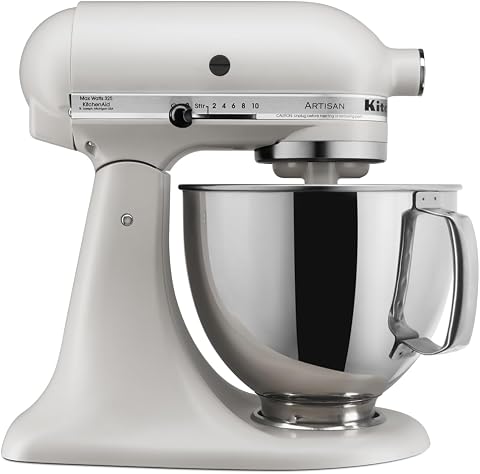
KitchenAid Artisan Series 5 Quart Tilt Head Stand Mixer
- ✔ Weight: 26 pounds
- ✔ Dimensions: 14 x 8 x 14 inches
- ✔ Warranty: 1 year

KitchenAid Stand Mixer Attachment
- ✔ Weight: 9 pounds
- ✔ Size: 8 x 6 x 12 inches
- ✔ Warranty: Limited
KitchenAid Artisan Series 5 Quart Tilt Head Stand Mixer
The KitchenAid Artisan Series 5 Quart Tilt Head Stand Mixer is built with durable metal construction, designed to handle a variety of tasks. Its tilt-head feature provides easy access for cleaning and attachment changes, making it a versatile kitchen essential.
Pros:
- Solid metal build
- Powerful 10-speed motor
- Fits a 5-quart bowl
- Wide color selection
Cons:
- Can be heavy to move
- Price may be higher than basic models
- Requires regular maintenance for longevity
Best for: Home bakers and cooking enthusiasts seeking durability and versatility
Not ideal for: Small kitchens with limited counter space
Bottom line: A highly durable mixer perfect for versatile baking and cooking tasks.
KitchenAid Stand Mixer Attachment
The KitchenAid Metal Food Grinder attachment expands your mixer’s capabilities, allowing you to grind meats, vegetables, and more with precision. Its solid metal construction and included plates make it a versatile and durable addition.
Pros:
- Multiple grinding plates
- Sturdy metal build
- Easy to attach
- Large food tray
Cons:
- Requires pre-chilling for best results
- Additional purchase needed
- Cleaning can be a bit time-consuming
Best for: Home cooks wanting fresh, homemade ground ingredients
Not ideal for: Heavy-duty commercial grinding needs
Bottom line: A robust attachment for fresh grinding needs in your kitchen.
Frequently Asked Questions
Why is my KitchenAid mixer making a grinding noise?
Grinding noises can be caused by debris, worn gears, or attachments not properly seated. Regular cleaning and inspection can often resolve the issue.
Can I fix the grinding noise myself?
Yes, if the cause is debris or loose attachments, you can clean and reassemble the mixer safely. For internal gear issues, professional service is recommended.
How often should I maintain my mixer to prevent noise?
Regularly inspect and clean the attachments and gears every few months to keep your mixer running smoothly and quietly.
Is it safe to open my KitchenAid mixer for repairs?
Only proceed if the mixer is unplugged and you are comfortable with basic disassembly. For internal repairs or complex issues, seek professional help.
Keep Your KitchenAid Running Smoothly
By following these troubleshooting steps, you can often resolve grinding noises yourself, saving time and money. Regular maintenance and careful use will ensure your mixer remains a reliable part of your kitchen for years to come. If problems persist, professional repair services are your best option to prevent further damage.
Affiliate disclosure: As an Amazon Associate we earn from qualifying purchases. Prices and availability are accurate as of the time of publishing.
Halloween Picks
halloween
As an affiliate, we earn on qualifying purchases.