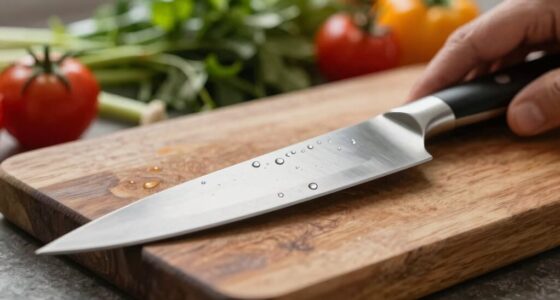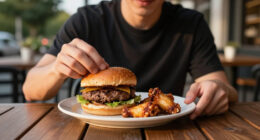

Learning to judge meat doneness by sight helps you cook with more confidence and precision. By recognizing visual cues like color, surface, and shape changes, you rely less on timers or thermometers. This skill improves your intuition and lets you make quick adjustments for perfect results every time. Over time, you’ll develop a sharper eye for detail, making your dishes look and taste better. Keep exploring, and you’ll discover even more ways to master your cooking instincts.
Open a free Amazon Business account
Business pricing, bulk buying and tax-exempt orders.
As an affiliate, we earn on qualifying purchases.
Key Takeaways
- Visual cues enable precise judgment of meat doneness, reducing reliance on timers or thermometers.
- Recognizing color, texture, and surface changes improves cooking confidence and skill.
- Developing sight-based assessment fosters intuition and consistency in preparing perfectly cooked dishes.
- Observing visual signals helps prevent overcooking or undercooking, preserving flavor and tenderness.
- Enhancing visual awareness cultivates a deeper understanding of ingredient behavior and culinary techniques.
Mastering doneness by sight is a skill that can elevate your cooking from good to great. When you learn to judge a dish’s doneness visually, you gain a deeper understanding of meat texture and how it changes during cooking. You don’t have to rely solely on timers or thermometers; instead, you develop an instinct for recognizing visual cues that signal the perfect point. It’s a skill that improves with practice, making you more confident and precise in the kitchen.
Mastering visual cues transforms cooking confidence, making every dish perfectly cooked and more intuitive through practice.
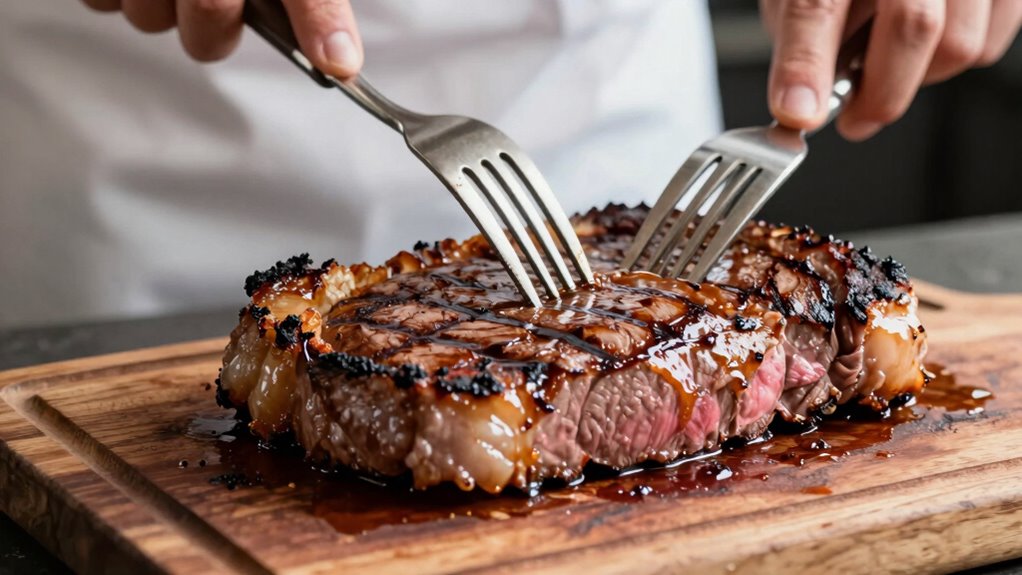
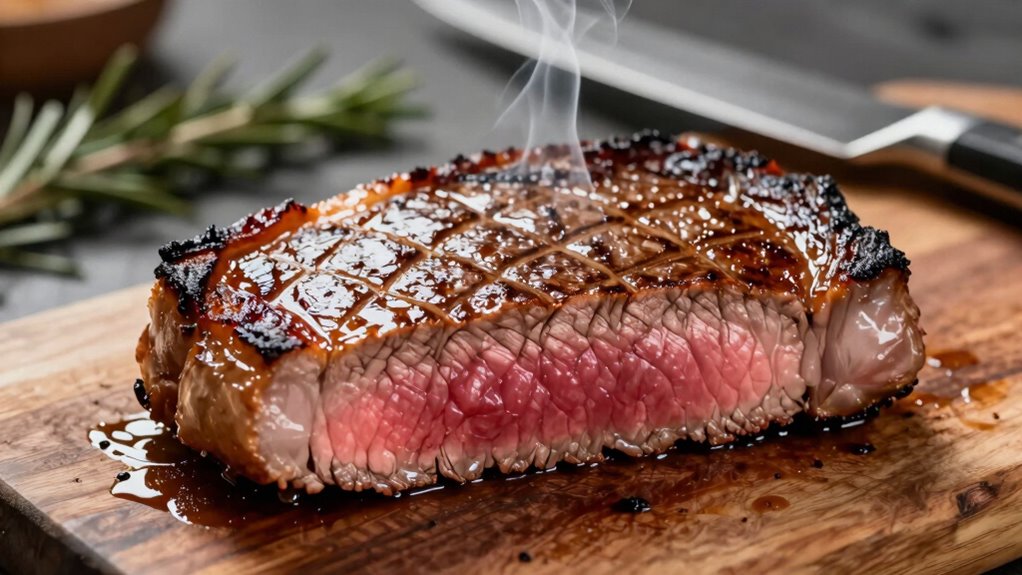
Imagine you’re preparing a steak. Instead of constantly checking a thermometer, you observe the meat’s surface and how it responds to heat. You notice the color shifts from bright red or purple to a more muted, pinkish hue. The surface begins to develop a slight caramelization or crust, which indicates the Maillard reaction at work. As the steak cooks, you see the juices start to pool and bubble, signaling that it’s approaching your preferred level of doneness. These visual cues give you immediate feedback, allowing you to make adjustments on the fly.
Understanding meat texture is key here. As meat cooks, its fibers contract, and moisture content shifts. This results in visible changes in firmness and appearance. For example, a rare steak will be soft and cool in the center, with a deep red color, while a well-done piece will be firmer and uniformly brown. Recognizing these differences through visual cues helps you judge doneness more accurately than relying on touch alone. It also means you can prevent overcooking or undercooking, preserving the meat’s tenderness and flavor. Developing a visual awareness of these cues can help you become a more intuitive cook overall. Additionally, understanding how different cooking methods influence visual changes can deepen your culinary knowledge and enhance your overall skills.
Developing this skill involves paying close attention to subtle visual details. Look for color changes, surface texture, and moisture levels. Do the edges darken slightly? Does the meat’s surface develop a crust? How does the meat’s shape change? These cues tell you a lot about the internal state of the meat without cutting into it. Over time, you’ll start to associate specific visual patterns with the doneness you prefer, making your cooking more intuitive and consistent.
Learning to judge doneness visually also boosts your overall confidence. Instead of second-guessing with a thermometer, you learn to trust your eyes and instincts. It allows you to cook more efficiently, especially when entertaining or in situations where tools aren’t available. This skill transforms you from a cook who follows recipes blindly into someone who truly understands their ingredients. With practice, you’ll find yourself developing a more nuanced sense of timing, texture, and visual appearance—making your dishes not only delicious but also beautifully cooked every time.
As an affiliate, we earn on qualifying purchases.
Frequently Asked Questions
Can Sight Be Reliable for All Types of Meat Doneness?
Sight can be reliable for some meats, but not all. Color cues and texture changes help you gauge doneness, especially with steaks or roasts. However, for poultry or seafood, visual cues alone might be misleading because internal temperature is vital for safety. Trust your eyes for visual signs, but always verify with a thermometer when precise doneness and safety are essential.
How Does Lighting Affect Judging Doneness Visually?
Lighting profoundly impacts how you judge doneness visually, as it alters color change and texture cues. Bright, natural light reveals true meat color, while dim or yellowish lighting can make it harder to see pinkness or browning. You might overcook or undercook if lighting distorts these cues. To improve accuracy, check doneness under consistent, natural light or use a thermometer alongside visual cues for better results.
Is Experience Necessary to Accurately Judge Doneness Visually?
You don’t need extensive experience to accurately judge doneness visually, but developing your cooking intuition and sensory skills helps immensely. As you practice, you’ll start recognizing subtle cues like color, texture, and firmness. Over time, your eye becomes more reliable, making you more confident in your cooking. Consistent practice trains your senses, gradually sharpening your ability to judge doneness by sight without relying solely on experience.
Can Visual Cues Replace Using a Thermometer Entirely?
Sure, visual cues can sometimes fool you into thinking you’re a master chef, but relying solely on sight is like trusting a psychic’s predictions. Visual intuition and sensory judgment are helpful, yet a thermometer offers precision no eye can match. While experience sharpens your instincts, don’t toss the thermometer—use both to guarantee your meat’s perfectly cooked, not just “looks” done.
How Do Different Ingredients Influence Visual Doneness Indicators?
Different ingredients influence visual doneness through color variation and texture changes. For example, meat turns from red to brown as it cooks, while vegetables soften and become more vibrant or translucent. Fish develops opaque flesh, and baked goods golden-brown. Recognizing these cues helps you judge doneness accurately without a thermometer. By observing color and texture changes, you gain confidence and improve your cooking skills, ensuring perfect results every time.
cooking meat without thermometer
As an affiliate, we earn on qualifying purchases.
As an affiliate, we earn on qualifying purchases.
Conclusion
By learning to judge doneness by sight, you become more confident and intuitive in the kitchen. You’ll notice subtle changes in texture, color, and shape that tell you exactly when your food is perfect. Isn’t it satisfying to rely on your senses rather than just a timer? As you practice, you’ll cook more consistently and develop your skills even further. So, why not start observing more closely today and discover your full cooking potential?
As an affiliate, we earn on qualifying purchases.
As an affiliate, we earn on qualifying purchases.
Pool season Picks
robotic pool cleaners
As an affiliate, we earn on qualifying purchases.