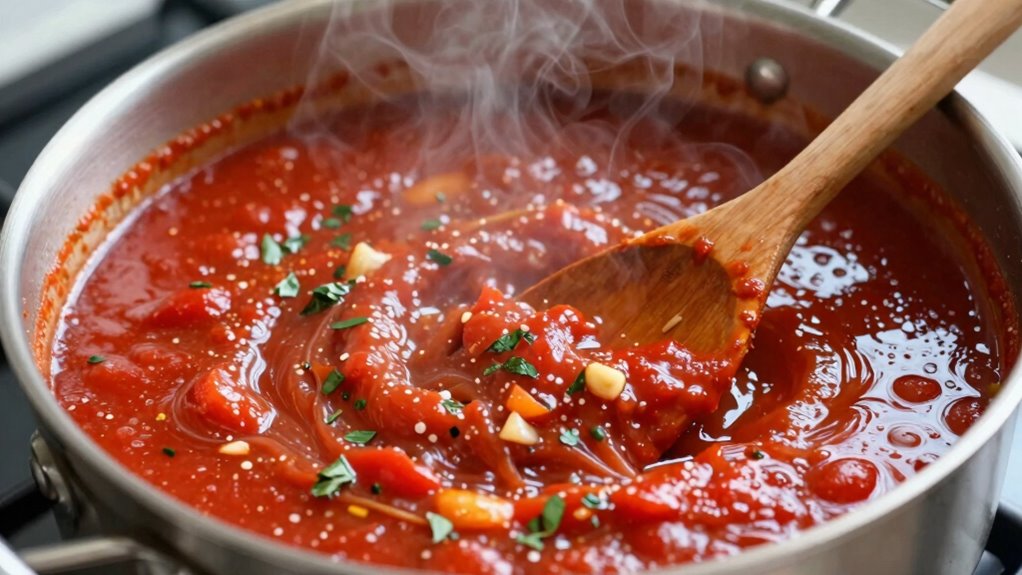

To build great sauces, start with a marinade to infuse deep flavor, then layer ingredients in stages—beginning with aromatics like garlic and onions, followed by acids like vinegar or citrus for brightness. Add liquids gradually, taste often, and balance sweetness, acidity, and salt for harmony. Adjust the texture by simmering or thinning, ensuring each element enhances the others. Mastering this method will elevate your cooking—keep exploring to reveal even more flavor-building secrets.

Get kitchen staples and gadgets delivered free with Prime
- Fast, free delivery on millions of items
- Prime Video, Amazon Music and more included
- Member-only deals all year
Key Takeaways
- Start with marinades to infuse deep, layered flavors before building the sauce.
- Add ingredients in stages—aromatics, acids, liquids—for complex flavor development.
- Balance flavors with sweetness, acidity, salt, and herbs, adjusting gradually and tasting often.
- Incorporate foundational flavors to achieve harmony and vibrancy in your sauce.
- Refine the texture by simmering or thinning to enhance overall flavor and consistency.

Creating a flavorful sauce from scratch might seem intimidating, but with a simple method, you can elevate your home cooking effortlessly. The key lies in understanding how to build your sauce step by step, starting with a solid foundation of flavors. One effective approach is to focus on marinade techniques, which are not just for tenderizing meat but also for infusing deep, complex flavors into your sauce. When you marinate ingredients, you’re fundamentally pre-loading them with taste, making the final sauce richer and more layered. Think of marinade techniques as the initial flavor-building step that sets the tone for everything that follows.
Start with marinades to infuse deep, layered flavors and set a flavorful foundation for your sauce.
From there, you want to practice flavor layering—adding ingredients in stages to develop complexity without overwhelming the palate. For instance, start with aromatics like garlic, onions, or shallots, sautéing them gently to release their fragrance. Then, incorporate your acids—vinegar, citrus, or wine—to add brightness. Follow that with your base liquids, such as broth, tomato purée, or coconut milk, which serve as the core of your sauce. As you add each component, taste and adjust seasonings like salt, pepper, herbs, or spices. This step-by-step process ensures that each flavor component has its moment to shine and melds seamlessly with the others.
Another vital element in the sauce-building method is balancing flavors—sweet, sour, salty, and bitter. Use sugar, honey, or fruit to introduce sweetness if needed, and balance it with acidity to brighten the sauce. Salt is your flavor enhancer, so don’t shy away from tasting as you go. Herbs and spices should be added thoughtfully, either at the beginning to develop their flavors or near the end for freshness. The idea is to layer flavors gradually, tasting frequently to ensure harmony. Additionally, understanding the foundation of flavors is essential for creating well-rounded sauces. Incorporating a balance of flavors ensures your sauce is both vibrant and harmonious, making each ingredient’s role clear. Developing your palate for seasoning can also help you recognize when a sauce needs more of a particular flavor to achieve perfect balance.
Finally, consider the sauce’s texture. If it’s too thin, simmer it gently to reduce and concentrate flavors. If it’s too thick, thin it out with a splash of liquid. This final step in the sauce-building method is about refining until you reach the perfect consistency and taste. By mastering marinade techniques and embracing flavor layering, you’ll transform simple ingredients into sauces that elevate any dish. Once you get comfortable with this approach, making delicious, complex sauces becomes second nature, and your home cooking will reach new heights.
As an affiliate, we earn on qualifying purchases.
Frequently Asked Questions
Can I Use Alternative Thickeners Instead of Flour or Cornstarch?
Yes, you can use alternative thickeners instead of flour or cornstarch. Gluten-free thickeners like arrowroot, tapioca starch, or potato starch work well, especially if you’re gluten intolerant. Plant-based alternatives such as pureed vegetables, soaked chia seeds, or ground flaxseed can also thicken sauces naturally. Just remember to adjust quantities and cooking times, as some thickeners may require different preparation methods for the best results.
How Do I Fix a Sauce That Has Become Too Salty?
If your sauce’s too salty, start by adjusting the seasoning—add a splash of acidity like lemon juice or vinegar to balance the saltiness. You can also enhance sweetness with a bit of honey or sugar. If needed, dilute the sauce with a bit of water or unsalted broth. Remember, taste as you go to make sure you’re achieving the right flavor balance while fixing the saltiness.
What Are Common Mistakes to Avoid When Building a Sauce?
When building a sauce, avoid common mistakes like overusing ingredient substitutions, which can alter flavor and texture. Don’t rush the process—add ingredients gradually and taste as you go. Be mindful of storage tips; refrigerate sauces promptly to preserve freshness without compromising quality. Also, resist the urge to skip seasoning steps. These habits help you develop a balanced, flavorful sauce that enhances your dish.
How Can I Make a Sauce Vegetarian or Vegan?
You can easily make a sauce vegan or vegetarian by transforming it into a flavor-packed masterpiece! Use plant-based proteins like lentils, tofu, or tempeh to add richness and texture. Opt for dairy-free bases such as coconut milk, almond cream, or tomato puree to keep it creamy without dairy. These substitutions create a vibrant, satisfying sauce that’s both delicious and cruelty-free, elevating your cooking game instantly!
What Are Some Quick Tips for Balancing Flavors in a Sauce?
To balance flavors in a sauce, focus on flavor layering by adding ingredients gradually and tasting often. Adjust acidity by incorporating a splash of vinegar, lemon juice, or wine to brighten the sauce. If it’s too tangy, add a touch of sweetness like honey or sugar. Remember, balancing acidity is key, so taste as you go and tweak each element to create a harmonious, well-rounded sauce that excites the palate.
As an affiliate, we earn on qualifying purchases.
Conclusion
Mastering the sauce-building method transforms your cooking into an artful symphony. Think of it like painting—each ingredient adds a brushstroke, creating depth and flavor. I once made a simple pasta with a basic tomato sauce, but applying this method turned it into a rich, memorable dish. Once you grasp this technique, you’ll see every meal as a canvas, ready for bold flavors and personal flair. Start building those sauces—you’re about to elevate your home cooking to new heights.
As an affiliate, we earn on qualifying purchases.
As an affiliate, we earn on qualifying purchases.
Fall Picks
fall essentials
As an affiliate, we earn on qualifying purchases.