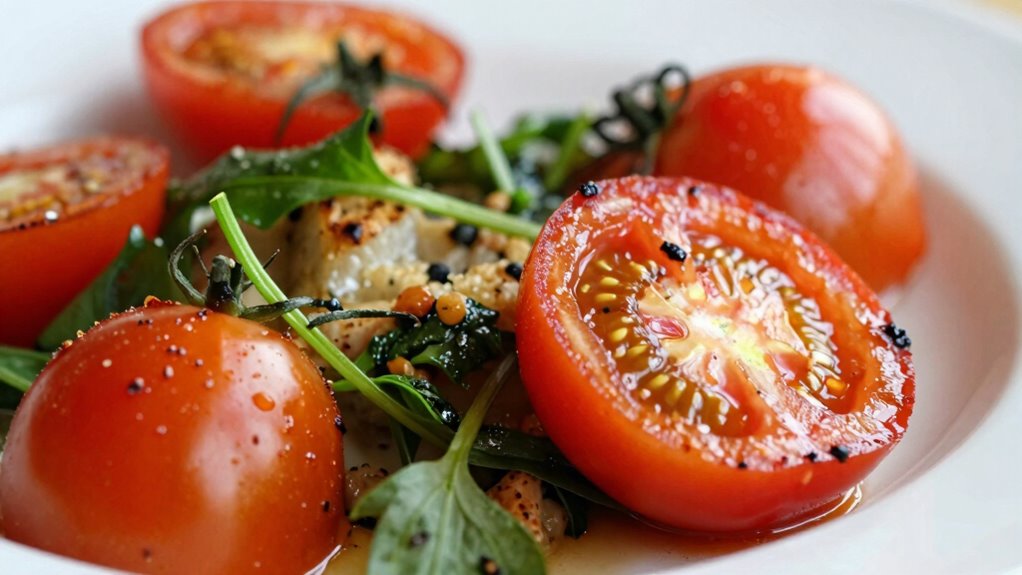

To make food look more real and less flat, focus on good lighting and thoughtful composition. Use natural diffused light or bounce artificial light to highlight textures and vibrant colors, avoiding harsh shadows. Compose your shot with the rule of thirds, layer elements for depth, and eliminate distractions from the background. Adding props and garnishes subtly guides the viewer’s eye. Keep practicing these techniques, and you’ll discover even more ways to make your food photos irresistibly appealing.

Get kitchen staples and gadgets delivered free with Prime
- Fast, free delivery on millions of items
- Prime Video, Amazon Music and more included
- Member-only deals all year
Key Takeaways
- Use soft, natural or diffused lighting to highlight textures and vibrant colors without creating harsh shadows.
- Apply the rule of thirds and crop strategically to emphasize the main food elements and remove distractions.
- Incorporate layered props and depth techniques to add dimension and a three-dimensional feel.
- Focus on capturing the dish at the right angle to showcase its textures and details vividly.
- Ensure consistent, well-balanced lighting and composition to evoke a realistic, appetizing sensory experience.

Have you ever wondered how some food photos look so tempting and professional? The secret often lies in mastering basic photography techniques that bring your dishes to life. To start, understanding lighting techniques is essential. Natural light is your best friend; it creates soft, even illumination that highlights textures and colors without harsh shadows. Position your food near a window during the day, and avoid direct sunlight that can cause overexposed spots. If you’re shooting indoors or when natural light isn’t enough, use diffused artificial lighting or bounce light off a reflector to fill in shadows. Proper lighting accentuates the vibrancy of ingredients, making your food look fresh and appealing. Experiment with angles and light sources to find what best enhances your dish, and remember, less is often more—overly bright or uneven lighting can flatten the image rather than add depth.
Alongside lighting, applying good composition principles can considerably improve the impact of your food photos. Composition guides the viewer’s eye across the image, emphasizing the most attractive parts of your dish. Use the rule of thirds: imagine your frame divided into nine equal sections, and place your main elements along these lines or at their intersections. This creates a balanced, engaging image rather than a static, centered shot. Pay attention to framing; crop out unnecessary background elements that distract from the food. Incorporate props and garnishes thoughtfully to add context and interest, but don’t let them overshadow the main subject. Leading lines, such as a spoon or drizzled sauce, draw the viewer’s eye toward the focal point, making the food appear more dynamic. Maintain a sense of depth by layering items—placing some elements closer and others farther away—to create a three-dimensional feel that prevents the photo from looking flat. Understanding lighting techniques and how they influence mood can make a significant difference in portraying your dish authentically. Additionally, paying attention to color harmony can further enhance the visual appeal of your images. Knowing how to manipulate depth and perspective can also add a professional touch that elevates your photography even further.
Additionally, a good understanding of composition principles can help you craft more visually appealing images that highlight your food’s best features. Ultimately, combining effective lighting techniques with strong composition principles breathe life into your food photography. Clear, well-lit images show off textures and colors vividly, making your dishes look mouthwateringly real. Thoughtful composition ensures your viewer’s attention stays on the food, guiding their eye naturally through the shot. Practice these basics regularly, and you’ll start to see your photos become more engaging and professional. Remember, the goal isn’t just to capture a picture but to evoke the sensory experience of tasting that delicious meal. With patience and attention to detail, your food photos will stop looking flat and start telling a compelling story of flavor and freshness.
As an affiliate, we earn on qualifying purchases.
Frequently Asked Questions
How Does Lighting Affect Food Texture in Photos?
Lighting considerably influences how food texture appears in photos. Natural light highlights details and creates a soft, inviting look, making textures more vivid and appealing. Shadow play adds depth, emphasizing crisp edges and moist surfaces. You should position your light source carefully to enhance these textures, ensuring the food looks fresh and enticing. Avoid harsh shadows or overly flat lighting, as they can diminish the food’s realistic appeal.
What Camera Settings Are Best for Capturing Vibrant Food Colors?
To capture vibrant food colors, set your camera’s color saturation higher to enhance richness, but avoid overdoing it to prevent unnatural looks. Adjust the white balance to match your lighting conditions—use daylight or cloudy settings for natural tones, or customize for precise color accuracy. These settings help your photos pop with true-to-life, vivid hues, making your dishes look irresistible and more appealing to viewers.
How Can I Create Depth and Dimension in Food Photos?
To create depth and dimension in your food photos, focus on plate composition and color contrast. Use foreground elements to lead the viewer’s eye, arrange food to showcase layers and textures, and incorporate contrasting colors to add visual interest. Play with lighting angles to emphasize shadows and highlights, enhancing the three-dimensional feel. By balancing these techniques, you’ll make your food appear more vibrant, appealing, and full of life.
What Props Enhance the Realism of Food Images?
You can enhance realism by incorporating authentic props like rustic wooden boards, ceramic dishes, and textured linens. These natural textures add depth and make your food appear more inviting. Avoid overly polished or plastic-looking items, as they reduce authenticity. Use props that complement the food’s colors and textures, creating a harmonious scene. This approach helps your audience connect with the image, making it feel genuine and appetizing.
How Do Post-Processing Techniques Improve Food Photography?
Post-processing techniques act like a magic wand, bringing your food photos to life. You can enhance color correction to make dishes appear more vibrant and inviting, while background blending helps create a seamless, professional look. These adjustments remove distractions and emphasize textures, making your food look delicious and real. With thoughtful editing, your images jump off the screen, enticing viewers and making them crave what you’ve captured.
diffused artificial light for food photos
As an affiliate, we earn on qualifying purchases.
As an affiliate, we earn on qualifying purchases.
Conclusion
By mastering these photography basics, you can make your food look irresistibly real and vibrant. Remember, lighting, angles, and textures are your best friends in creating mouth-watering images. So, next time you snap a shot, ask yourself: are you showcasing your food’s true essence? If not, tweak your approach. With a little practice, you’ll turn simple dishes into stunning, crave-worthy photos that truly capture their deliciousness. Are you ready to make your food pop off the screen?
As an affiliate, we earn on qualifying purchases.
As an affiliate, we earn on qualifying purchases.
Fall Picks
fall essentials
As an affiliate, we earn on qualifying purchases.