When you cover a pot, it traps heat and moisture, making your dishes tender, juicy, and full of flavor. It creates a humid environment that promotes even cooking and helps ingredients soften slowly. Uncovering the pot allows liquids to evaporate, concentrating flavors and developing crispy textures or thicker sauces. This method sparks browning and caramelization. To master different results, understanding how each approach affects moisture and flavor will give you better control over your cooking techniques.
Open a free Amazon Business account
Business pricing, bulk buying and tax-exempt orders.
As an affiliate, we earn on qualifying purchases.
Key Takeaways
- Covered cooking traps heat and moisture, creating a humid environment that promotes tender, evenly cooked dishes with concentrated flavors.
- Uncovered cooking allows moisture to evaporate, leading to thicker sauces and more caramelized, crispy textures.
- Covering retains natural juices and prevents drying, ideal for slow-cooking and flavor melding.
- Uncovering encourages evaporation, which intensifies flavors and helps develop browning and crispiness.
- The choice between covered and uncovered methods depends on desired moisture retention, flavor development, and texture.
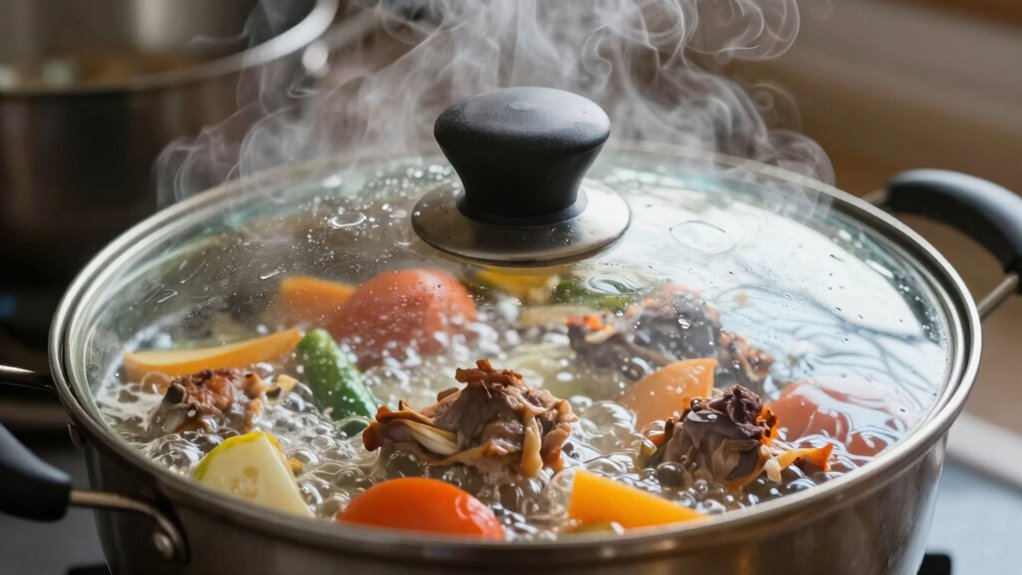
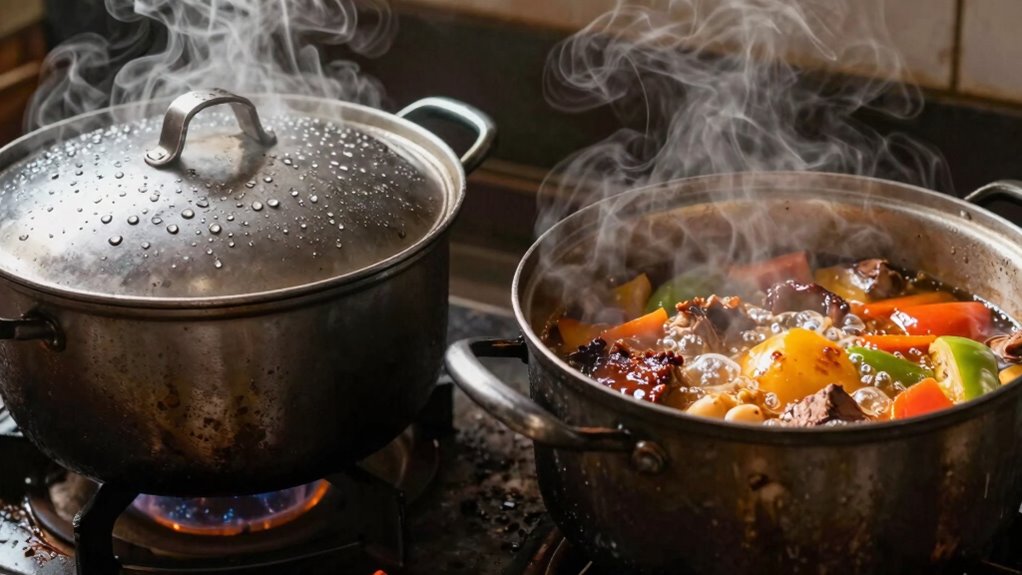
When you cook with a pot covered, the heat and moisture stay trapped inside, which can substantially alter the cooking process compared to leaving it uncovered. This method creates a sealed environment that intensifies the flavors and keeps the ingredients moist. As a result, dishes tend to develop a richer, more concentrated flavor profile because the steam helps extract and meld the flavors from herbs, spices, and other ingredients. The moisture retention also means your food stays tender and juicy, preventing it from drying out during the cooking process. This is especially useful for braises, stews, and slow-cooked dishes where you want the ingredients to soften and absorb flavors over time. Additionally, the sealed environment created by covering can help reduce cooking times and improve energy efficiency. Proper heat distribution within a covered pot also ensures more uniform cooking, which can be crucial for delicate dishes.
On the other hand, when you leave the pot uncovered, the moisture escapes into the air, which significantly impacts the cooking outcome. Without the lid trapping steam, some of the liquid evaporates, reducing overall moisture in the dish. This evaporation can lead to a thicker, more concentrated sauce or broth, but it also means your food might dry out if you’re not careful. The continuous loss of moisture discourages flavor concentration, so dishes may end up tasting less intense compared to their covered counterparts. However, cooking uncovered is ideal when you want to reduce liquids into a thicker consistency, such as when making a gravy or sauce, or when you want to develop a crispy or caramelized exterior on ingredients like roasted vegetables or meats. Properly controlling evaporation can also influence the texture and appearance of your dish, adding to its visual appeal.
The choice between covered and uncovered cooking hinges on what you aim to achieve. If your goal is to preserve the natural moisture and maximize flavor concentration, covering the pot is your best bet. It creates a humid environment that promotes even cooking and enhances the dish’s richness. Conversely, if you want to tighten up a sauce or develop a browned, crispy surface, leaving the pot uncovered allows excess moisture to evaporate, intensifying flavors through reduction and creating a desirable texture. Knowing how moisture retention impacts the overall outcome can help you make more informed cooking decisions.
In essence, understanding how moisture retention and flavor concentration are affected by covering or uncovering your pot gives you control over your dish’s final taste and texture. Covering traps heat and moisture, boosting flavor and tenderness, while uncovering encourages evaporation and concentration, perfect for finishing or reducing sauces. Knowing when to use each method helps you craft better, more nuanced dishes tailored to your culinary goals.
As an affiliate, we earn on qualifying purchases.
Frequently Asked Questions
How Does Altitude Affect Covered vs. Uncovered Cooking?
Altitude effects can make a big difference in cooking, whether covered or uncovered. At higher altitudes, the air pressure is lower, causing faster cooking evaporation and reducing boiling points. Covering your pan traps moisture and heat, helping to compensate for these effects. Uncovered cooking speeds up evaporation even more, which can dry out food or extend cooking times. So, at high altitudes, covering your food generally helps achieve better, more consistent results.
Can Covering Change the Nutritional Content of Food?
You might think covering food changes its nutrients, but ironically, it actually helps preserve them. Covering traps steam and heat, boosting cooking efficiency and locking in moisture and nutrients that might otherwise escape. So, while it seems like a simple trick, covering your food during cooking can be a smart way to maximize nutrient preservation, ensuring you get more vitamins and minerals with every meal.
Does Pan Material Impact Cooking Outcomes Differently When Covered?
Yes, pan material impacts cooking outcomes when covered. Different materials, like cast iron or stainless steel, conduct heat differently, affecting heat distribution and cooking speed. A good heat conductor guarantees even cooking, especially when covered, trapping heat and moisture effectively. Poor conductors may cause uneven results. So, choosing the right pan material helps you control heat better, ensuring your food cooks thoroughly and consistently whether covered or uncovered.
How Does Moisture Retention Vary Between Covered and Uncovered Methods?
When you cover your pan, steam retention increases because the lid traps moisture, reducing evaporation rate. This keeps the food moist and helps flavors meld, especially in braises or stews. Conversely, uncovered cooking allows moisture to escape, leading to a higher evaporation rate. This method is ideal for reducing sauces or achieving crisp textures, but it can dry out your dish faster. So, your choice affects moisture levels and cooking outcomes considerably.
Are There Specific Dishes Better Suited for Covered or Uncovered Cooking?
You’ll find that dishes like stews and braises are better suited for covered cooking, as it helps retain moisture and seasoning flavors, resulting in tender, flavorful results. Conversely, uncovered cooking works well for roasting or baking where you want to reduce moisture and develop a crisp exterior. Remember, you might need to make cooking time adjustments depending on the method to prevent overcooking or dryness.
As an affiliate, we earn on qualifying purchases.
Conclusion
Understanding the difference between covered and uncovered cooking is like knowing how to control the heat of a fire; each method influences moisture, temperature, and evaporation in unique ways. When you cover your pot, it’s like trapping a warm hug around your food, keeping moisture in. Uncovered cooking lets steam escape, like releasing a gust of fresh air. Knowing when to use each method helps you achieve the perfect texture and flavor, just like a skilled artist knows when to add the final brushstroke.
As an affiliate, we earn on qualifying purchases.
As an affiliate, we earn on qualifying purchases.
Labor Day sales Picks
labor day deals
As an affiliate, we earn on qualifying purchases.