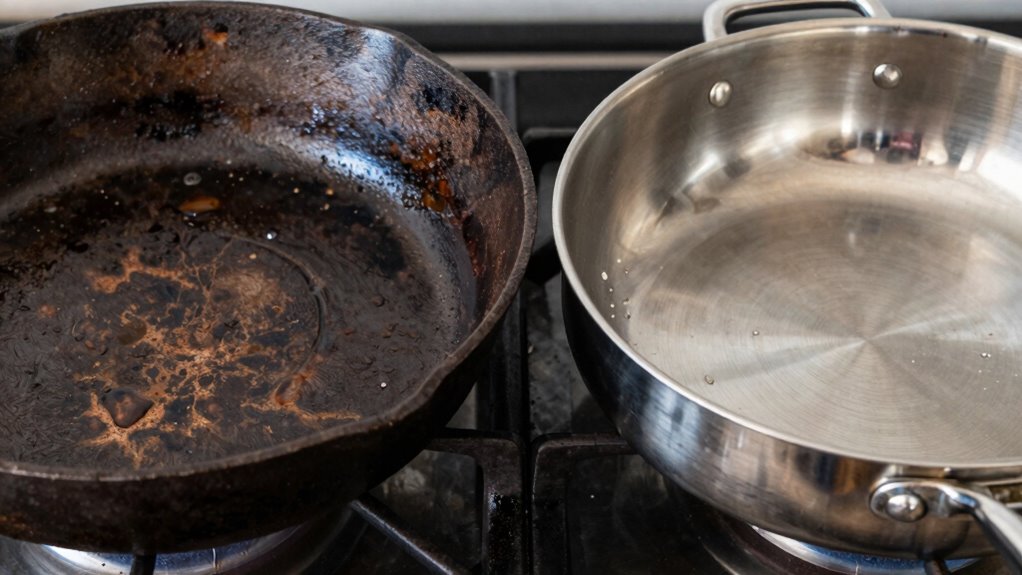
In everyday cooking, the key differences in skillets are heat retention, material, and surface quality. Cast iron offers excellent heat retention and even spreading, perfect for searing and frying. Lighter materials like stainless steel heat quickly but may need more attention to prevent hot spots. Non-stick coatings make cooking and cleanup easier. Understanding these differences helps you choose the right skillet for your tasks, so if you want to learn more, you’re in the right place.
Key Takeaways
- Material choice affects heat retention, distribution, and suitability for specific cooking techniques like searing or quick sautéing.
- Proper seasoning enhances non-stick performance and prevents rust, impacting ease of use and durability.
- Heat management varies with material; cast iron retains heat well, while aluminum heats faster but may have uneven distribution.
- Maintenance requirements differ; enameled cast iron needs no seasoning, unlike traditional cast iron.
- The skillet’s weight, design, and surface quality influence handling, cooking results, and everyday convenience.

Skillets come in many varieties, and understanding their differences can greatly impact your cooking results. When you’re choosing a skillet, one of the key factors to consider is how well it retains and distributes heat. Good heat distribution ensures your food cooks evenly, preventing hot spots that can burn or undercook parts of your dish. Cast iron skillets are known for their excellent heat retention and even heat distribution, making them ideal for searing steaks or frying foods that require uniform cooking. On the other hand, lighter materials like stainless steel or aluminum heat up quickly but might have uneven heat spread, which means you need to pay closer attention during cooking to avoid hotspots. Additionally, choosing a skillet with appropriate material**** can influence your overall cooking experience and results.
Seasoning techniques also play a crucial role, especially if you prefer cast iron or carbon steel skillets. Properly seasoning your skillet creates a natural non-stick surface and helps prevent rust while improving heat transfer. When you season a skillet, you coat it with a thin layer of oil and heat it, allowing the oil to polymerize into a durable coating. This process enhances the skillet’s performance, especially for tasks like sautéing or frying. If your skillet isn’t seasoned well, you might notice food sticking or uneven browning, which can ruin the final texture and flavor. Proper seasoning also improves over time, creating a better cooking surface and protecting the skillet from corrosion.
The material your skillet is made of influences both seasoning and heat distribution. For instance, enameled cast iron doesn’t require seasoning, but it still offers excellent heat retention and even cooking, making it a convenient choice. Non-stick skillets, usually made from aluminum with a coated surface, heat up quickly and provide easy food release, but they don’t typically require seasoning and aren’t suitable for high-temperature cooking. Knowing how each material behaves in terms of heat transfer and maintenance helps you select the right skillet for your everyday needs. Additionally, heat retention is an important factor that can influence cooking outcomes, especially for slow-cooking methods. Understanding the properties of different materials and how they affect heat distribution can guide you toward the best skillet for your style of cooking. Proper care and understanding of material properties can extend the lifespan of your skillet and enhance your cooking experience.
Ultimately, your choice of skillet depends on what you cook most often. If you’re frying or searing at high heat, a well-seasoned cast iron might be your best bet. For quick sautéing or boiling, a lightweight aluminum or stainless steel skillet could be more appropriate. Paying attention to seasoning techniques and understanding how heat distributes across different materials ensures you get consistent, delicious results every time you step into your kitchen. The right skillet, properly cared for, transforms simple ingredients into flavorful meals with ease.

Modern Innovations 10 Inch Cast Iron Skillet, Pre-Seasoned Smooth Polished Surface, Heavy-Duty, Naturally Non-Stick 100% Cast Iron Frying Pan- Saute, Sear & Grill on Campfires, Stoves & Ovens
Kitchen to Campfire: The 10-inch cast iron skillet's unmatched versatility delivers quality & reliable cooking wherever you are-…
As an affiliate, we earn on qualifying purchases.
As an affiliate, we earn on qualifying purchases.
Frequently Asked Questions
Which Skillet Material Retains Heat Best for Searing?
Cast iron skillets retain heat best for searing because of their exceptional heat retention and durability. When you heat a cast iron skillet, it stays hot longer, ensuring a perfect sear on meats and vegetables. Its material durability means it withstands high temperatures and frequent use without warping or degrading. This makes cast iron ideal for searing, as it provides consistent heat and long-lasting performance, elevating your cooking results.
How Does Skillet Thickness Affect Cooking Performance?
You might be surprised how skillet thickness impacts your cooking. Thicker skillets deliver better heat distribution, ensuring even cooking and reducing hot spots, which is vital for delicate dishes. Plus, they’re more durable, resisting warping and lasting longer through frequent use. However, they can be heavier and take longer to heat. So, consider your cooking style — a thicker skillet offers consistent performance but demands a bit more effort to handle.
Are Non-Stick Coatings Safe for High-Temperature Cooking?
Non-stick coatings are generally safe for high-temperature cooking if they’re made with quality materials, but you should check non stick safety guidelines. Be aware that some coatings may degrade or emit fumes at very high temperatures, affecting coating durability and safety. To guarantee safe cooking, avoid overheating non-stick pans and choose those with reputable, heat-resistant coatings. Proper care maintains both non stick safety and coating durability over time.
What Handle Type Is Safest for Oven Use?
Think of your skillet’s handle as the sturdy anchor in a storm—safety depends on its strength. For oven use, choose a handle made of heat-resistant, durable materials like cast iron or silicone-coated metal, ensuring oven safety and handle durability. These handles won’t warp or melt under high temperatures, giving you confidence and control. Always check manufacturer specs to confirm they’re rated for oven use, keeping your cooking safe and stress-free.
How Do Different Skillet Shapes Influence Cooking Outcomes?
You’ll notice that skillet shape considerably influences cooking outcomes, with round skillets offering shape versatility for various dishes like pancakes or stir-fries, while square or rectangular ones excel at space-efficient cooking and presentation. The shape also impacts aesthetic appeal, making your dish more visually appealing. Choosing the right shape depends on your cooking style and presentation preferences, helping you achieve better results and a more attractive meal every time.

Tramontina Professional 10-Inch Non Stick Frying Pan, Heavy-Gauge Aluminum Skillet with Reinforced Nonstick Coating, Red Handle, Dishwasher and Oven Safe
PROFESSIONAL QUALITY: Designed to withstand the rigors of a professional kitchen and perfect for everyday home use.
As an affiliate, we earn on qualifying purchases.
As an affiliate, we earn on qualifying purchases.
Conclusion
Now that you understand the subtle but vital differences between skillet types, it’s clear that choosing the right one can elevate your cooking game. But here’s the question—are you truly ready to open the full potential of your kitchen? The next time you reach for a skillet, remember, it’s not just about what’s in your hand but what it promises to deliver. The secret ingredient might just be waiting right under your fingertips.

Cuisinart CI22-24BG Chef's Classic Enameled Cast Iron Round Fry Pan, 10-Inch, Provencal Blue
Cast iron contraction retains heat well. Interior does not alter flavors or absorb odors.
As an affiliate, we earn on qualifying purchases.
As an affiliate, we earn on qualifying purchases.

Cuisinart 5.5 Quart Sauté Pan w/ Cover, Stainless Steel Pan with Lid, Large Kitchen Pan, Dishwasher Safe, Compatible with Induction, Electric, Gas Cooktops, Oven Safe Saucepan, Cool Grip Handles
EXCEPTIONAL DESIGN: The 5.5-Quart Saute Pan with Helper Handle and Flavor Lock Lid has straight high sides and…
As an affiliate, we earn on qualifying purchases.
As an affiliate, we earn on qualifying purchases.