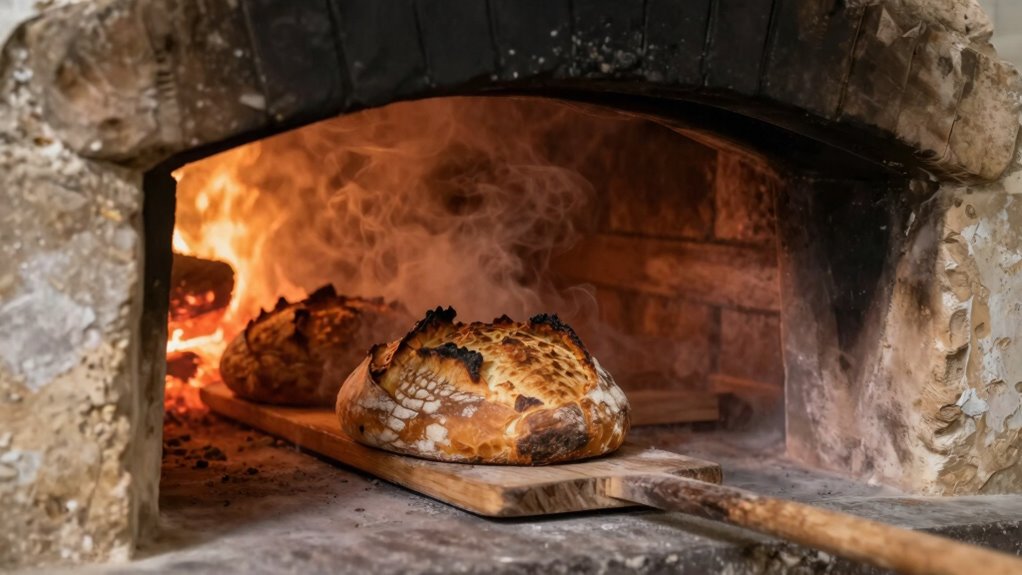

To get a better crust, you need a controlled baking environment with the right temperature and humidity. Keep your dough in warm, slightly humid conditions to promote active fermentation and develop flavor. Use a cooling rack to guarantee proper airflow and prevent moisture buildup, keeping the crust crisp. Avoid overproofing by monitoring conditions closely, as too much heat can lead to flat, porous crusts. Mastering this environment will improve your bread’s texture and appearance; uncover more tips to perfect your technique.
Key Takeaways
- Maintain consistent warm and humid conditions to promote optimal fermentation and crust development.
- Use a proper cooling rack to allow airflow, preventing moisture buildup and ensuring a crispy crust.
- Control ambient temperature to avoid overproofing or underproofing, which affects crust texture.
- Keep the environment free from drafts and fluctuations to ensure uniform baking conditions.
- Monitor humidity levels to balance dough hydration and crust crispness during fermentation and baking.
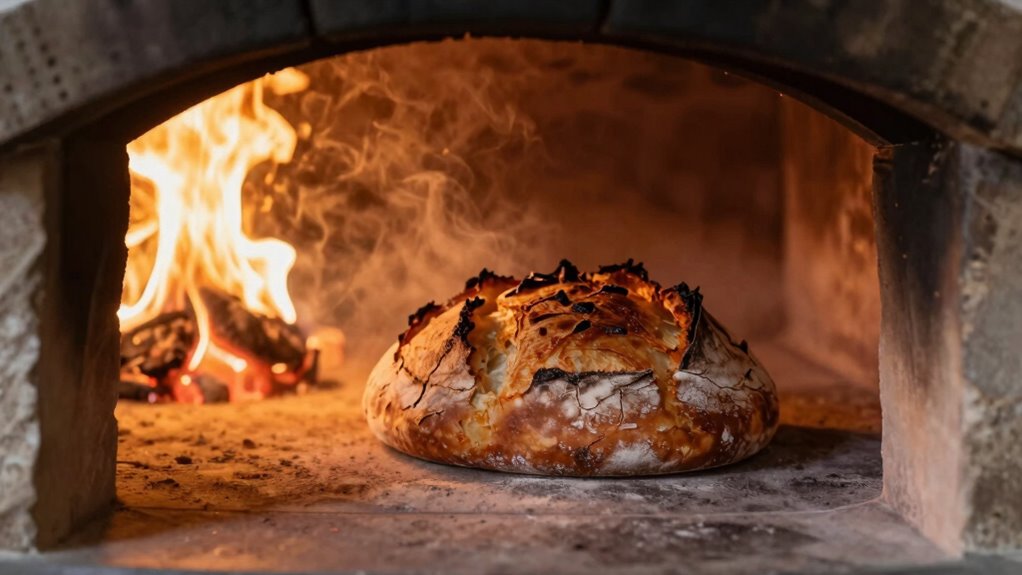
Creating the ideal bread baking environment is essential for achieving the perfect loaf. One of the key elements in shaping that environment is understanding how to manage dough fermentation and how to properly cool your bread after baking. When you pay attention to these details, you’ll notice a significant improvement in the crust quality. Using cooling racks is crucial because they allow your bread to cool evenly and prevent moisture from accumulating at the bottom, which can make the crust soggy. Once your bread comes out of the oven, placing it on a cooling rack helps maintain that crisp, golden crust you’re aiming for.
Dough fermentation is another vital part of creating the right environment. When your dough ferments properly, it develops flavor and structure, which directly impacts the crust. During fermentation, yeast produces gases that cause the dough to rise, and this process also influences the crust’s texture. If fermentation is too short or too long, your bread might end up with a dull crust or a chewy, tough one. Finding the perfect window for dough fermentation involves monitoring temperature and humidity levels. A warm, humid environment encourages active fermentation, leading to a better rise and a more developed crust. If your kitchen is too cold, fermentation slows down, and your crust might lack that desirable crunch. Conversely, too much heat can overproof the dough, resulting in a flat or overly porous crust. Maintaining the right baking environment is essential for consistent results and optimal fermentation. Proper temperature control can help you achieve the ideal crust every time. Additionally, controlling the ambient conditions can make a noticeable difference in your bread’s final quality.
Once baked, cooling your bread on a rack plays a significant role in achieving the crust’s ideal texture. When you transfer your loaf onto a cooling rack, the air circulates around it, preventing condensation from forming on the bottom. This airflow keeps the crust dry and crispy. If you leave your bread to cool on a flat surface or wrap it immediately, trapped steam can soften the crust and compromise that satisfying crunch. It’s tempting to cut into your bread right away, but giving it time to cool on a cooling rack is worth the wait. This step ensures that the crust remains firm and beautifully textured, which is often what makes homemade bread stand out. Proper cooling techniques are crucial for maintaining that perfect crust and flavor.
bread cooling rack
As an affiliate, we earn on qualifying purchases.
As an affiliate, we earn on qualifying purchases.
Frequently Asked Questions
How Does Humidity Affect Bread Crust Formation?
Humidity control plays a vital role in crust formation by influencing moisture levels during baking. Higher humidity keeps the surface moist longer, allowing the crust to develop more slowly and resulting in a thicker, chewier crust. Without proper humidity control, the crust can become thin or overly hard. Adjusting humidity levels during baking enhances crust development, ensuring a well-balanced, flavorful crust that’s both crispy and properly textured.
What Is the Ideal Temperature for a Baking Environment?
You should aim for an oven temperature of around 450°F (232°C) for ideal crust. Studies show that well-insulated ovens retain heat better, ensuring consistent baking. Keep your baking surface preheated, whether it’s a stone or steel, to create that perfect crust. Proper oven insulation helps maintain even heat, preventing hot spots. This environment encourages caramelization and crust development, giving your bread that irresistible golden-brown finish every time.
Does Air Circulation Impact Crust Quality?
Yes, airflow patterns and kitchen ventilation considerably impact crust quality. Proper air circulation helps remove excess moisture from the oven, allowing the crust to develop a crisp, golden exterior. If ventilation is poor, trapped humidity can lead to a softer crust. You should guarantee good airflow to promote even heat distribution, which results in a better crust and overall bread texture. Adjusting vents and using fans can optimize this environment.
How Do Different Oven Types Influence Crust Development?
You’ll notice that different oven types, like traditional deck ovens versus convection ovens, influence crust development considerably. A deck oven with excellent insulation maintains high heat, creating a crisp crust, especially when dough hydration is high. Conversely, convection ovens circulate hot air, promoting even browning but potentially drying the crust. Choosing the right oven depends on your desired crust texture and how well your oven retains heat, impacting overall bread quality.
Can Ambient Lighting Affect Bread Crust?
Ambient lighting can subtly influence your bread crust, mainly through lighting ambiance and mood enhancement. Bright, warm lights may encourage a more relaxed baking environment, potentially improving crust quality, while dim or cool tones might create a tense atmosphere that affects your focus. Although lighting doesn’t directly change the crust, a positive mood and comfortable setting can help you bake more attentively, resulting in better crust development.
bread proofing box
As an affiliate, we earn on qualifying purchases.
As an affiliate, we earn on qualifying purchases.
Conclusion
So, next time you’re obsessing over the perfect crust, remember—it’s all about the environment. Crank up that steam, preheat like you mean it, and stop blaming the flour. After all, a better crust isn’t just about the dough; it’s about creating the right drama in your oven. Who knew that a little heat, humidity, and patience could turn you into a crust-creating hero? Happy baking—your crust deserves a standing ovation!
kitchen humidity meter
As an affiliate, we earn on qualifying purchases.
As an affiliate, we earn on qualifying purchases.
oven temperature controller
As an affiliate, we earn on qualifying purchases.
As an affiliate, we earn on qualifying purchases.