
🔍 Read the full analysis: Risotto Alla Milanese: Saffron, Patience, And The Perfect Mantecatura on Mad Tasting

Get kitchen staples and gadgets delivered free — and shop member deals
- Fast, free delivery on millions of items
- Access to Prime Big Deal Days deals on October 6–7
- Prime Video, Amazon Music and more included
TL;DR
Risotto alla Milanese remains Milan’s iconic dish, crafted with Carnaroli or Vialone Nano rice, saffron infusion, and a precise mantecatura. Its authenticity depends on technique and patience, not shortcuts.
Risotto alla Milanese, Milan’s signature dish, is made with short-grain rice, saffron, and a meticulous technique of gradual cooking and off-the-heat emulsification. This method has persisted for centuries, emphasizing patience and precision, and remains a symbol of Milanese culinary identity.
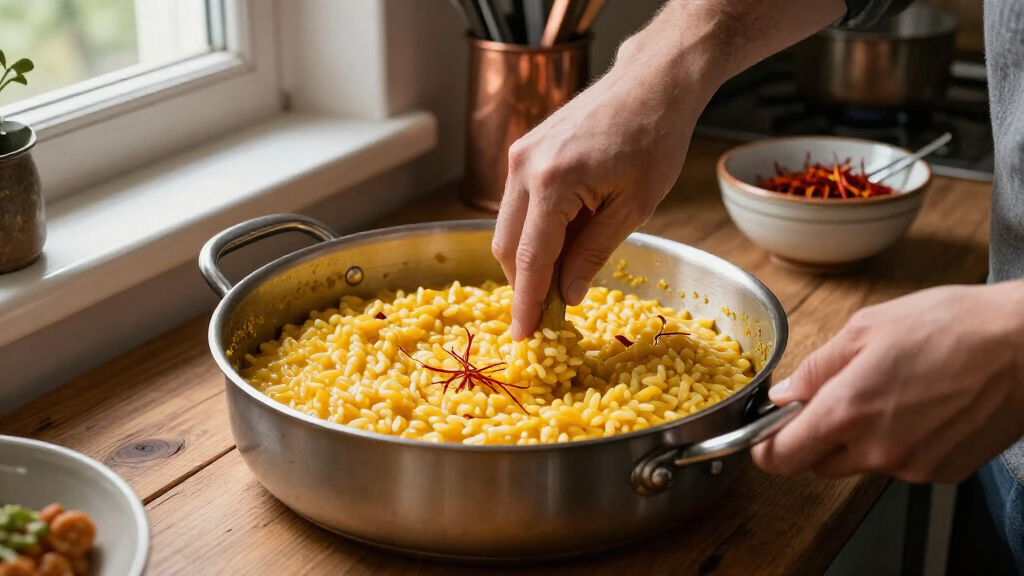
The dish’s core ingredients are Carnaroli, Arborio, or Vialone Nano rice, which are toasted in butter to develop flavor, then cooked slowly with hot stock added in stages over approximately 18–20 minutes. The saffron is best when infused in warm stock for at least 15–20 minutes before adding, ensuring even color and aroma. The final step, mantecatura, involves off-the-heat emulsification of cold butter and Parmigiano-Reggiano, creating a glossy, flowing texture known as all’onda. Cream is never used; the dish’s creaminess derives solely from rice starch, butter, and cheese.
Experts emphasize that rushing the process, stirring frantically, or adding cream to fake texture results in a disappointing dish. The choice of rice and proper saffron handling are critical to authenticity. Milanese chefs confirm that the dish’s signature golden color and honeyed aroma are non-negotiable. The technique has remained unchanged for centuries, maintaining its cultural and culinary significance.
Risotto Alla Milanese: Saffron, Patience, And The Perfect Mantecatura
A golden dish built on restraint: quality rice, warm saffron infusion, staged stock, and one decisive off-the-heat finish. Authenticity comes from timing, texture, and respect for the ingredient.
More than a recipe: a living emblem of Milan.
Risotto alla Milanese expresses regional pride through a method that has survived changing tastes, commercial shortcuts, and culinary fashion. Its identity rests on a few non-negotiables: short-grain rice, saffron’s honeyed aroma, gradual cooking, and a polished finish.
Rooted in the Po Valley
Carnaroli, Arborio, and Vialone Nano grew alongside a regional cuisine shaped by slow, deliberate cooking and abundant rice cultivation.
Traditionally served with ossobuco
The saffron rice became a defining companion to ossobuco alla Milanese, reinforcing its place in the city’s culinary canon.
Technique is having a comeback
Chefs and food historians are renewing attention to rice quality, saffron handling, and the final mantecatura.
Five controlled movements create the signature texture.
Every stage protects the balance between starch release, absorption, aroma, and flow. The process is patient, but never passive.
Infuse
Steep saffron threads in warm stock or water for 15–20 minutes.
Toast
Coat the rice in butter until nutty and translucent at the edges.
Build
Add hot stock in stages, allowing each addition to absorb gradually.
Wait
Cook gently for approximately 18–20 minutes; stir with purpose, not panic.
Mantecare
Remove from heat. Emulsify cold butter and Parmigiano-Reggiano until glossy.
What belongs in the pot?
The dish’s creamy texture comes from rice starch, butter, and cheese. Shortcuts can imitate the appearance, but they cannot reproduce the same structure.
| Decision | Traditional choice | Shortcut or risk | Signal |
|---|---|---|---|
| Rice | Carnaroli, Vialone Nano, or Arborio | Low-starch long-grain rice | ✓ Structure |
| Saffron | Threads infused before cooking | Dry threads scattered directly into the pan | ✓ Even aroma |
| Stock | Hot, added in stages | Cold stock or one large pour | ~ Control |
| Texture | Flowing and glossy, all’onda | Stiff, dry, or overly liquid | ✓ Emulsion |
| Cream | Never required | Used to fake creaminess | ✗ Shortcut |
From regional grain to Milan’s golden signature.
Rice-growing landscape and regional identity.
Starch creates body while staying structured.
Warm infusion delivers color and depth.
Absorption builds a unified texture.
Cold butter and cheese create all’onda.
Why Authentic Risotto alla Milanese Matters Today
Risotto alla Milanese is more than a recipe; it is a cultural emblem of Milan, representing centuries of tradition and regional pride. Its precise technique and ingredient quality distinguish it from other rice dishes, and preserving this culinary heritage matters to both local identity and global gastronomic appreciation. The dish’s longevity demonstrates its resilience against fads and fusions, maintaining its original integrity despite changing tastes and modern shortcuts.
For home cooks and professional chefs alike, understanding and respecting the traditional method ensures the dish’s authenticity and preserves Milan’s culinary legacy. As interest in regional Italian cuisine grows worldwide, the dish’s continued relevance underscores the importance of technique, patience, and respect for ingredients in high-quality cooking.
As an affiliate, we earn on qualifying purchases.
Historical Roots and Modern Revival of Milanese Risotto
Risotto alla Milanese dates back over six centuries, originating in Milan’s noble and working-class kitchens. Its foundation lies in the Po Valley’s rice varieties—Carnaroli, Arborio, and Vialone Nano—that developed alongside regional cuisine emphasizing slow, deliberate cooking. Traditionally served with ossobuco alla Milanese, the dish has endured through wars, famine, and changing culinary trends by maintaining its core principles. In recent years, chefs and food historians have renewed interest in authentic techniques, emphasizing the importance of rice quality, saffron handling, and the final mantecatura to preserve the dish’s original character.
Despite the proliferation of shortcuts and commercialized versions, the traditional method remains a benchmark for quality. Experts like Milanese chefs and culinary historians agree that the dish’s essence is rooted in patience and meticulous technique, which continue to define its reputation as Italy’s quintessential saffron rice.
As an affiliate, we earn on qualifying purchases.
Current Challenges in Preserving Traditional Techniques
While the core method is well-established, there is some debate about the precise timing of saffron infusion and the ideal rice-to-stock ratio among chefs. Additionally, modern adaptations sometimes incorporate shortcuts, like pre-infused saffron or faster cooking methods, which may compromise authenticity. It is not yet clear how widespread these deviations are or how they impact the dish’s cultural integrity in contemporary kitchens.
As an affiliate, we earn on qualifying purchases.
Future of Milanese Risotto: Preserving and Teaching Tradition
Experts and culinary institutions are increasingly focused on educating home cooks and chefs about traditional techniques through workshops, videos, and recipes. There is a growing movement to standardize the method and safeguard its authenticity amid commercial influences and modern cooking pressures. The next steps include documenting best practices, promoting regional pride, and possibly integrating these techniques into culinary curricula to ensure the dish’s legacy endures for future generations.
As an affiliate, we earn on qualifying purchases.
Key Questions
What rice is best for making Risotto alla Milanese?
The best choices are Carnaroli, Vialone Nano, or Arborio. Carnaroli is most forgiving for beginners due to its high starch content and resistance to overcooking.
How should saffron be handled for maximum flavor?
Infuse saffron threads in warm stock or water for 15–20 minutes before adding to the rice. This ensures even color and aroma, avoiding patches of flavor or dullness.
Is cream ever used in authentic Risotto alla Milanese?
No, traditional Milanese risotto relies solely on rice starch, butter, and Parmigiano-Reggiano for creaminess. Adding cream is considered a shortcut and compromises authenticity.
How long does the cooking process typically take?
The entire process, from toasting the rice to mantecatura, takes approximately 18–20 minutes, emphasizing patience and careful timing.
What is the key to achieving the perfect glossy texture?
The final off-the-heat mantecatura with cold butter and cheese is crucial. This emulsifies the starch and creates the characteristic all’onda flow and glossiness.
Source: Mad Tasting
NFL season / tailgating Picks
team gear
As an affiliate, we earn on qualifying purchases.