TL;DR

Get kitchen staples and gadgets delivered free with Prime
- Fast, free delivery on millions of items
- Prime Video, Amazon Music and more included
- Member-only deals all year
Good Housekeeping’s pumpkin-carving guide shares advice from Michael Natiello, creative director of The Great Jack-o’-Lantern Blaze, on choosing, carving and preserving a jack-o’-lantern. His tips include cutting an opening in the bottom, thinning the pumpkin wall and coating cut edges with petroleum jelly; how long a carved pumpkin will last is not specified.
Good Housekeeping’s pumpkin-carving guide offers advice from Michael Natiello, creative director of The Great Jack-o’-Lantern Blaze, on making a jack-o’-lantern easier to carve and helping it stay presentable. The recommendations cover pumpkin selection, cutting and cleanup, with preservation suggestions including sealing exposed edges with petroleum jelly and soaking a shriveled pumpkin in cold water.
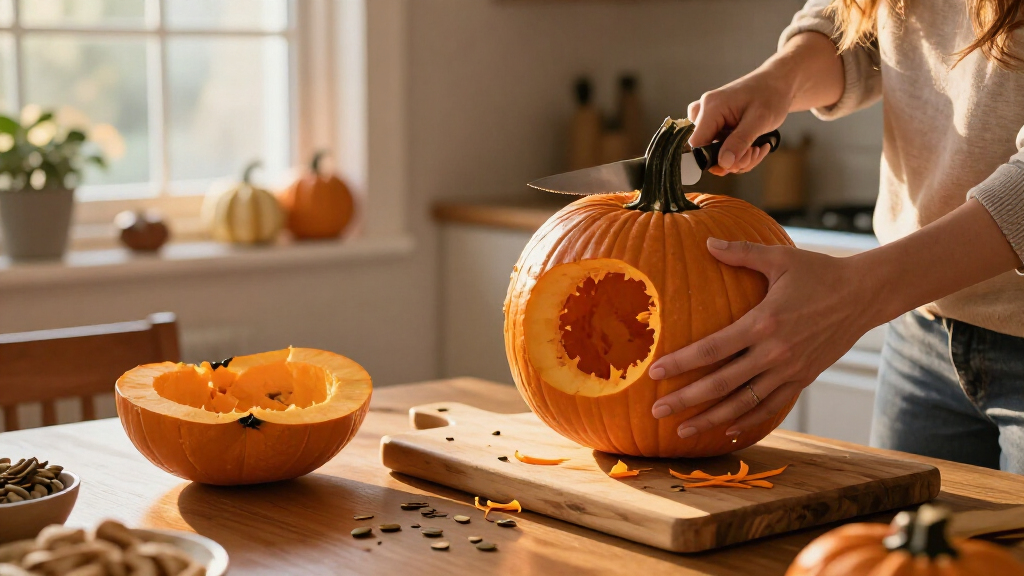
Natiello’s advice begins with choosing a pumpkin that is fresh, unbruised and steady, with a sturdy stem and a flat base. The guide recommends cutting an opening in the bottom rather than removing the top. It says this can help prevent the pumpkin’s sides from caving in. If the opening is cut at the top, the lid should be angled so it does not fall inside when replaced.
After removing the pulp and seeds, scrape the inner wall behind the design until it is about 1¼ inches thick, the guide advises. A thinner wall can be easier to cut. Natiello also recommends drawing a design on paper first, then taping it to the pumpkin and marking the lines with a fork or pencil. For the cuts, the report suggests a serrated kitchen knife or an X-Acto knife, and says to work with straight, up-and-down cuts rather than slicing at an angle.
For cleanup, the guide suggests making rough cuts first and refining the edges afterward. Scraps of shell can be reused as decorative features. To help slow shriveling, Natiello recommends spreading petroleum jelly on cut edges. If the pumpkin has already begun to shrivel, the guide says a facedown soak in cold water for up to eight hours may revive it. The source gives no guarantee of how long either method will preserve a pumpkin.
Tips for a Cleaner, Longer Display
The advice addresses two common frustrations with carving: designs that are difficult to cut cleanly and pumpkins that lose their shape before Halloween. Choosing a stable pumpkin, thinning the area behind the design and planning the pattern can make the work more manageable, while sealing cut surfaces may help retain moisture.
These are practical recommendations, not a promise that a carved pumpkin will remain fresh for a set number of days. A jack-o’-lantern is cut produce and will deteriorate; the source does not provide controlled comparisons showing how much longer petroleum jelly or a cold-water soak may keep one in good condition. Readers should treat the methods as maintenance tips rather than a guaranteed shelf-life extension.
The lighting advice also affects how the finished pumpkin is used. The guide offers candles, Christmas lights and battery-operated votives as options. An open flame requires care: place a candle inside before lighting it, keep the pumpkin away from flammable materials and do not leave it unattended. Battery-operated lights avoid the flame and heat associated with a candle.
pumpkin carving kit with serrated knife
As an affiliate, we earn on qualifying purchases.
As an affiliate, we earn on qualifying purchases.
From Pumpkin Choice to Final Lighting
The source report presents the advice as a sequence of steps, starting before any cutting begins. It stresses taking time to select the pumpkin, remove its insides and work through the design, rather than rushing directly to the carving. A flat bottom matters because the pumpkin needs to remain stable while being handled.
The guide also distinguishes between an opening at the bottom and a traditional top lid. It favors the bottom opening to help keep the sides from collapsing; when carving from the top, an angled cut can help the lid sit in place. Once the carving is complete, the report suggests leaving the lid on briefly while a candle burns, then making a small hole where the lid has blackened to create a chimney. It also proposes sprinkling cinnamon inside the lid for scent, though this is a decorative suggestion rather than a preservation method.
The article is a seasonal how-to report rather than a scientific test of pumpkin storage. Its expert attribution is to Natiello, identified as a pumpkin-carving professional and creative director of The Great Jack-o’-Lantern Blaze. The supplied source does not describe laboratory testing or compare the tips against other preservation methods.
As an affiliate, we earn on qualifying purchases.
How Long the Pumpkin Will Last
The report does not give a specific lifespan for a carved pumpkin, nor does it quantify how much petroleum jelly may slow shriveling. Results may vary, and the source does not present a comparison of different preservation methods. It also does not set out storage temperatures or provide a food-safety assessment of the carved pumpkin.
The cold-water soak is described as a way to revive a pumpkin that has begun to shrivel, for up to eight hours, but the article does not say how long the effect lasts or recommend repeating the soak. The supplied material also does not include a publication date, so the precise timing of the report cannot be confirmed from it.
As an affiliate, we earn on qualifying purchases.
Carve, Display and Check Daily
The source describes no follow-up study or scheduled update. For readers using the tips, the next steps are to choose a firm, stable pumpkin, plan the design, carve carefully and check the finished lantern as it sits on display. If it begins to shrivel, the guide’s suggested cold-water soak is an option, but it does not promise a particular result.
Before lighting, place the candle inside the pumpkin and use care with an open flame; do not leave it unattended. The report also suggests battery-operated votives or lights as alternatives. It does not specify a future event or further expert guidance.
As an affiliate, we earn on qualifying purchases.
Key Questions
What kind of pumpkin should I choose for carving?
Good Housekeeping’s guide recommends a fresh pumpkin with a sturdy stem, no bruises and a flat bottom so it stays steady while you work.
Is it better to cut the opening in the top or bottom?
Carving expert Michael Natiello recommends cutting the opening in the bottom to help prevent the sides from caving in. If you cut a lid from the top, the guide says to angle the cut so the lid is less likely to fall inside.
How can I help a carved pumpkin last longer?
Natiello recommends coating the cut edges with petroleum jelly to help seal in moisture. The guide does not say how many extra days this may add. It also suggests a facedown cold-water soak for up to eight hours if the pumpkin shrivels.
How thick should the pumpkin wall be behind the design?
The report recommends thinning the inner wall in the face area to about 1¼ inches, which it says can make the shell easier to pierce.
What can I use to light a jack-o’-lantern?
The guide lists candles, Christmas lights and battery-operated votives. Use care with any open flame: keep it away from flammable materials and do not leave it unattended. Battery-operated lights do not require a flame.
Source: rss
NFL season / tailgating Picks
team gear
As an affiliate, we earn on qualifying purchases.