
🔍 Read the full analysis: Caponata: Sicily's Sweet-and-Sour Eggplant Masterpiece on Mad Tasting

Get kitchen staples and gadgets delivered free with Prime
- Fast, free delivery on millions of items
- Prime Video, Amazon Music and more included
- Member-only deals all year
TL;DR
Mad Tasting’s guide describes caponata as a Sicilian cooked vegetable dish centered on eggplant, celery, tomatoes, olives and capers, balanced with agrodolce—a sweet-and-sour sauce. The guide says frying the eggplant gives it a richer texture, while roasting produces a lighter result; it recommends resting the dish and serving it at room temperature. Recipes vary by household, and the guide says the exact origin of the name remains uncertain.
Mad Tasting’s guide to caponata describes a Sicilian cooked vegetable dish built around eggplant, celery, tomatoes, olives and capers, with vinegar and sweetness creating its defining agrodolce finish. The guide compares frying and roasting the eggplant, recommends resting the finished dish and serving it at room temperature, and notes that household recipes vary rather than following one fixed formula.
Mad Tasting describes the flavor as a contrast: tender eggplant gives the sauce a mild, substantial base; celery adds a faint bitterness; and tomatoes bring moisture and help the ingredients come together. Olives and capers contribute briny, salty notes, while vinegar supplies the sharp edge. The guide says a little sweetness rounds the acidity without making the dish dessert-like, and notes that recipes may use sugar or raisins for that sweetness.
According to the guide, how the eggplant is cooked changes the texture. Frying makes it richer and silkier, while roasting is a lighter alternative. Mad Tasting advises tasting the mixture after the vegetables have cooked, when their moisture and sweetness are easier to judge. It also cautions that salt can build as the sauce reduces, particularly because olives and capers are already salty, and recommends adjusting in small steps rather than relying on a single ratio.
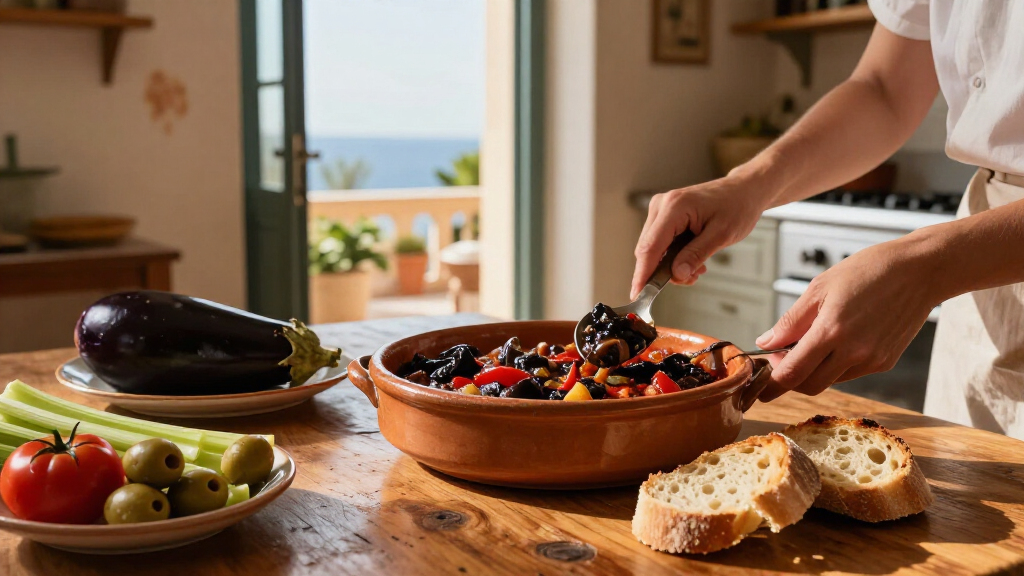
Mad Tasting says caponata can be served at room temperature, including as an antipasto or alongside a main course. The guide suggests spooning it onto crusty bread and using the taste to judge the balance: the bread should carry the sauce without leaving it aggressively sharp or salty. It recommends letting the flavors rest before making further corrections, especially if vinegar initially seems dominant.
Sicilian food guide · The art of agrodolce
Caponata: Sicily’s Sweet-and-Sour Eggplant Masterpiece
A flexible cooked vegetable dish built on tender eggplant, briny accents and a bright, gently sweet sauce. The best balance comes from tasting as you go.
A guide to Caponata · Source: Mad Tasting
A familiar base, balanced by contrast
Mad Tasting describes a cooked vegetable dish where mild, juicy and briny ingredients meet vinegar and a small touch of sweetness. There is no single fixed formula.
Eggplant
Soaks up the sauce and gives the dish its soft, substantial center.
Celery + tomato
Celery brings a faint bitterness; tomatoes add moisture and help bind the flavors.
Olives + capers
Salty, savory notes keep the eggplant from tasting heavy.
Vinegar
Supplies caponata’s bright acidity. Let it settle before deciding it needs correction.
Sugar or raisins
A little sweetness softens the acidity without turning the dish dessert-like.
Seasoning
Salt can build as the sauce reduces, especially with salty olives and capers.
Let the vegetables lead
Tomatoes vary in sweetness, and olives and capers differ in saltiness. Cook the vegetables first, then taste and adjust in small steps.
Go gently: too much sugar can hide the vegetables. If vinegar seems dominant, give the mixture time to rest before adding anything.
A flavor spectrum
Illustrative flavor cues, not a measured recipe ratio. Taste your cooked mixture to find its balance.
Two good ways to cook eggplant
The method changes the result. Mad Tasting offers frying and roasting as options, with neither presented as the only correct choice.
Fry
Creates a richer, silkier eggplant texture that carries the sauce generously.
Roast
A lighter alternative that still gives the vegetables a tender base for the agrodolce.
Choose a method
Fry for silkiness or roast for a lighter result.
Cook the vegetables
Let their moisture and sweetness develop.
Taste and adjust
Make small seasoning changes; account for briny ingredients.
Rest, then serve
Let flavors settle and serve at room temperature.
Sicilian recipes, household by household
The familiar base—eggplant, tomatoes, celery, olives, capers and vinegar—welcomes variations. These additions are part of a flexible tradition, not a checklist for authenticity.
An uncertain name story
The guide says caponata’s name has no definitive origin.
One proposed link is “capone,” a local name for a fish historically served with sweet-and-sour sauce. The guide offers the idea that the vegetable dish may have been a more accessible alternative, while noting that this account is unproven. The history of its regional and household variations is not established.
Rest, taste, and bring it to the table
Serve caponata at room temperature as an antipasto, with crusty bread, or alongside a main course. Bread should carry the sauce without leaving it aggressively sharp or salty.
Let it rest
Vinegar may seem dominant at first. Give the flavors time to settle before adding sweetness.
Adjust gradually
Olives and capers bring salt, and reduction can concentrate it. Taste before adding more.
No storage schedule given
The supplied guide material does not specify storage times or temperatures.
Caponata, explained
What is caponata?
A Sicilian cooked vegetable dish usually made with eggplant, celery, tomatoes, olives and capers, finished with a sour-sweet agrodolce sauce.
What does agrodolce mean?
“Sour-sweet.” Vinegar gives acidity; a little sugar, raisins or another ingredient may soften it.
Fried or roasted eggplant?
Both work. Frying gives a richer, silkier texture; roasting makes a lighter result.
How should it be served?
Rest it and serve at room temperature, with crusty bread, as antipasto or as a side.
Is there one definitive recipe?
No. Ingredients and proportions vary by household; some versions add raisins, pine nuts, peppers or almonds.
What is the name’s origin?
It remains uncertain. A possible connection to “capone” is suggested, but not proven.
A Flexible Dish Built on Balance
Mad Tasting presents caponata’s appeal as a balance of salty, sharp and mild flavors. Eggplant can absorb and carry the sauce, while celery, vinegar, olives and capers keep the result from tasting heavy. The guide says that balance helps the dish work as either a small starter or a side, and notes that it can be eaten at room temperature.
For home cooks, the guide emphasizes that there is no single fixed formula. Tomatoes vary in sweetness, and olives and capers differ in saltiness. Its advice is to treat a recipe as a starting point, then taste and adjust once the vegetables have cooked. It cautions against overcorrecting: adding too much sugar to counter vinegar, for example, can obscure the vegetables.
As an affiliate, we earn on qualifying purchases.
Sicilian Recipes, Household by Household
Mad Tasting describes a familiar base of eggplant, tomatoes, celery, olives, capers and vinegar, with a small amount of sweetness. The guide says some versions add raisins, pine nuts, peppers or almonds. It presents these as variations within a flexible tradition, rather than a checklist for determining whether a dish is authentic. Raisins add sweetness, nuts bring texture, and peppers change the mix of vegetables.
The guide says the name’s history is uncertain and may be linked to “capone,” a local name for a fish historically served with sweet-and-sour sauce. It offers as one possible account the idea that the vegetable dish became a more accessible alternative, while noting that this is not a proven origin. The source does not establish when or how the dish’s regional and household variations developed.
As an affiliate, we earn on qualifying purchases.
Origins and Exact Ratios Remain Open
Mad Tasting does not provide a definitive origin story for caponata’s name; it presents the proposed link to capone as uncertain. The guide also gives no single authoritative ingredient ratio, reflecting the household variation it describes. Although the article’s description refers to storage, the supplied material does not specify detailed food-storage times or temperatures, so those should not be inferred from it.
As an affiliate, we earn on qualifying purchases.
Taste and Adjust Before Serving
For cooks following Mad Tasting’s guidance, the next step is to choose fried or roasted eggplant, cook the vegetables, then taste the sauce and adjust gradually. If vinegar tastes too sharp, the guide advises allowing the mixture time to settle before adding sweetness; if olives or capers dominate, it suggests that more cooked eggplant or tomato may soften their impact. Mad Tasting recommends resting the dish and serving it at room temperature with bread or as part of an antipasto spread. The source gives no scheduled follow-up or further development beyond these practical recommendations.
As an affiliate, we earn on qualifying purchases.
Key Questions
What is caponata?
Caponata is a Sicilian cooked vegetable dish that Mad Tasting says is usually made with eggplant, celery, tomatoes, olives and capers. The guide describes its characteristic agrodolce sauce as a balance of vinegar and a little sweetness.
What does agrodolce mean?
Agrodolce means “sour-sweet.” Mad Tasting explains that vinegar gives caponata acidity, while sugar, raisins or other ingredients may soften it. The guide says the intended balance is not candy-like sweetness.
Should the eggplant be fried or roasted?
Mad Tasting presents both methods as options. Frying gives the eggplant a richer, silkier texture, while roasting makes for a lighter result. The guide does not prescribe one method as the only correct choice.
How is caponata served?
Mad Tasting recommends letting caponata rest and serving it at room temperature, with crusty bread or as part of an antipasto spread. The guide also says it can be served as a side dish.
Does caponata have one definitive recipe?
Mad Tasting identifies no single fixed formula. Ingredients and proportions vary among households and versions; the guide notes that some include raisins, pine nuts, peppers or almonds. It recommends adjusting the seasoning after the vegetables cook.
Source: Mad Tasting
NFL season / tailgating Picks
team gear
As an affiliate, we earn on qualifying purchases.