Salting in layers helps you develop richer, more balanced flavors by allowing salt to penetrate deeply into your ingredients. When you salt gradually, crystals form and cling to surfaces, ensuring even seasoning throughout. This process enhances natural flavors without overpowering, creating a more natural, satisfying taste. It works especially well with proteins, vegetables, and grains. Keep exploring how layering your seasoning technique can elevate your dishes to the next level.

Get kitchen staples and gadgets delivered free — and shop member deals
- Fast, free delivery on millions of items
- Access to Prime Big Deal Days deals on October 6–7
- Prime Video, Amazon Music and more included
Key Takeaways
- Layered salting allows salt to dissolve and recrystallize, enhancing flavor depth and ensuring even seasoning throughout the dish.
- Applying salt in stages promotes gradual flavor development, preventing overpowering and creating a balanced taste.
- Crystallized salt penetrates both surface and interior, resulting in more nuanced and satisfying saltiness.
- Recognizing chemical reactions during layering refines seasoning, maximizing flavor interaction with food.
- This technique enhances natural flavors, yields juicier textures, and elevates the overall culinary quality of dishes.
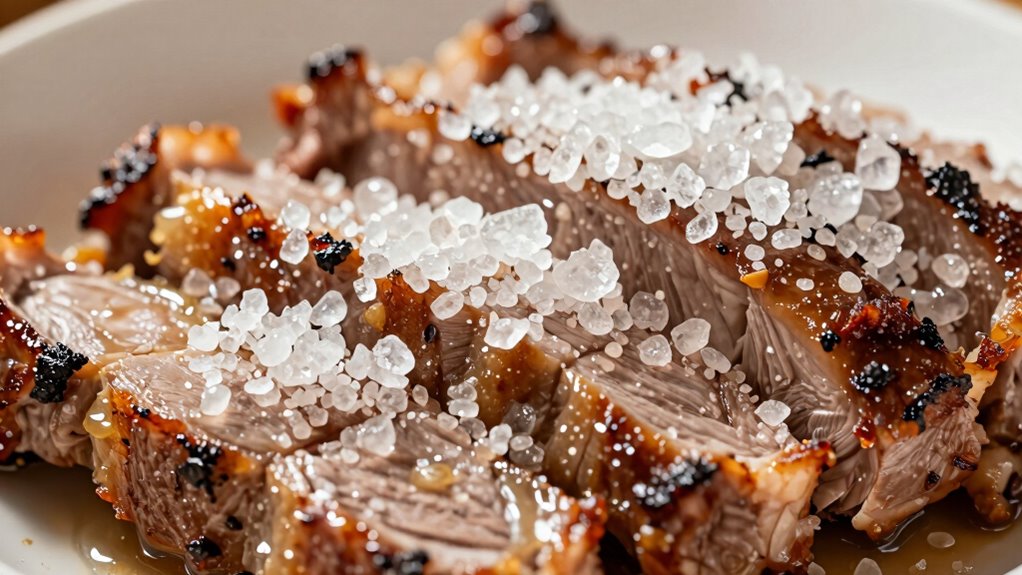
Salting in layers is a simple technique that can profoundly enhance the flavor of your dishes. When you apply salt in stages, instead of all at once, you give the salt time to interact with the food more effectively, leading to better salt crystallization and a richer taste. This method isn’t just about seasoning; it’s about creating a depth of flavor that transforms ordinary ingredients into something extraordinary. By layering your salt, you allow the seasoning to penetrate gradually, ensuring every bite is consistently flavorful and well-balanced.
Salting in layers enhances flavor, deepening taste and ensuring every bite is perfectly balanced.
When you salt in layers, each application of salt contributes to a process called salt crystallization. As the salt dissolves and recrystallizes within the food, it forms tiny crystals that cling to the surface and seep into the interior. This crystallization process amplifies flavor enhancement because the salt becomes more than just a surface seasoning; it infuses the food with a more complex, satisfying saltiness. The key is to salt in stages—adding a little, letting it sit, then adding more—so the salt has time to work its magic, creating a more nuanced flavor profile. Understanding the crystallization process of salt helps you better appreciate how flavor is developed through this technique. Recognizing how chemical reactions involved in salt crystallization occur can help you refine your method for the best results.
You’ll notice that with layered salting, the food develops a more balanced, less salty taste overall. Instead of overwhelming your palate with a single heavy-handed application, you get a gradual build-up of flavor. This technique is especially effective with proteins like meats and poultry, where slow salting helps the salt penetrate deeply, resulting in a juicy, flavorful interior. It’s also great for vegetables and grains, where even seasoning is essential for good taste. The process encourages a natural, harmonious flavor enhancement rather than a quick, superficial burst of saltiness that can overpower the dish. Additionally, understanding the interaction between salt and food allows you to optimize the layering technique for maximum flavor enhancement. Recognizing how chemical reactions involved in salt crystallization occur can help you refine your method for the best results. Using layering techniques consistently can turn an ordinary dish into a culinary masterpiece by elevating the overall flavor profile.
Frequently Asked Questions
Can Salting in Layers Reduce Overall Sodium Intake?
Salting in layers can help reduce overall sodium intake because it offers better flavor control, allowing you to use less salt overall. By seasoning gradually and thoughtfully, you enhance flavors without overdoing it, which benefits your health. This technique can make meals more satisfying and flavorful, encouraging healthier eating habits. Ultimately, it’s a smart way to enjoy tasty food while managing sodium levels and gaining health benefits.
Does Layering Salt Affect the Texture of the Dish?
Ever wondered if layering salt affects your dish’s texture? It can actually enhance texture by promoting flavor distribution evenly throughout the dish. This method allows the salt to penetrate gradually, leading to better texture enhancement without making the food overly salty. So, yes, layering salt can improve the overall texture, ensuring each bite offers a balanced, flavorful experience. Wouldn’t you want your dish to have the perfect mouthfeel and taste?
How Does Salting in Layers Impact Cooking Time?
Salting in layers can slightly increase your cooking time because the salt creates a barrier that slows moisture loss and heat transfer. This method enhances flavor penetration, so your dish develops richer taste without overcooking. You might notice it takes a bit longer for the heat to penetrate evenly, but the improved flavor makes the extra time worthwhile. Overall, it boosts cooking efficiency by delivering better results with minimal additional effort.
Is Layering Salt Suitable for All Types of Cuisine?
Layering salt acts like a symphony conductor, guiding flavor development across diverse cuisines. It’s suitable for most dishes because it guarantees seasoning balance, enhancing taste without overpowering. Whether you’re working with delicate fish or hearty roasts, this method helps you build depth step by step. You become the artist, creating a harmonious blend of flavors. So, yes, layering salt is versatile and elevates almost any culinary creation.
Can This Method Be Used With Pre-Salted or Cured Ingredients?
Yes, you can use this method with pre-salted or cured ingredients. Layering salt enhances flavor penetration and guarantees even salt distribution, even in already cured items. By adding an extra layer of salt, you help the salt permeate deeply, balancing flavors and preventing uneven seasoning. Just be mindful of the salt content to avoid over-salting. This technique improves overall flavor and consistency in your dishes.
Conclusion
So, don’t skip layering your salt—trust me, it makes a noticeable difference. Some might think it’s too time-consuming, but it’s really just about timing your seasoning for maximum flavor. By salting in layers, you give each part of your dish a chance to develop depth and richness. Give it a try; your taste buds will thank you for the extra effort, and you’ll enjoy a more flavorful, well-rounded meal every time.
NFL season / tailgating Picks
team gear
As an affiliate, we earn on qualifying purchases.