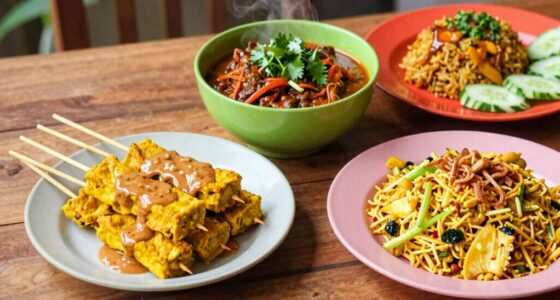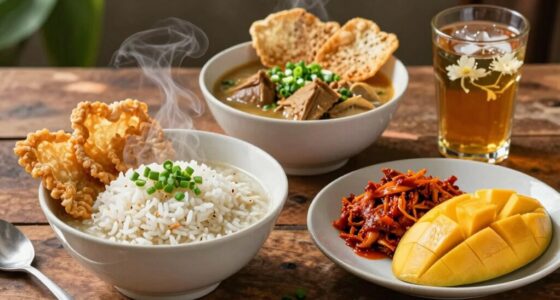
Indonesia’s regional foods showcase its incredible diversity, blending centuries of culture and tradition. In Java, you’ll find gudeg, a sweet and savory jackfruit stew, while Bali emphasizes fresh herbs in dishes like lawar. Sumatra and Sulawesi boast rich flavors with rendang and Coto Makassar, cooked with local ingredients. Festivals highlight these unique flavors and techniques, celebrating cultural pride. Keep exploring to discover how these vibrant regional dishes reflect Indonesia’s rich culinary tapestry.
Listen free for 30 days with Audible
Thousands of audiobooks and originals — cancel anytime.
As an affiliate, we earn on qualifying purchases.
Key Takeaways
- Indonesia’s culinary diversity is reflected in regional dishes like Gudeg, Rendang, Lawar, and Coto Makassar.
- Traditional cooking methods preserve unique flavors passed down through generations across different regions.
- Festivals celebrating local foods showcase regional specialties, music, dance, and cultural customs.
- Bali emphasizes fresh herbs and spices, exemplified by dishes like Lawar, highlighting community identity.
- Sumatra and Sulawesi feature rich, flavorful dishes like Rendang and Coto Makassar, representing regional culinary adaptations.

Have you ever wondered how diverse Indonesia’s culinary landscape truly is? The country’s rich tapestry of flavors and ingredients reflects centuries of cultural exchange and local traditions. Traditional cooking plays an essential role in preserving these unique flavors, passed down through generations and often celebrated during various culinary festivals. These festivals aren’t just about food—they’re vibrant gatherings that showcase regional specialties, music, dance, and customs, giving you a full sensory experience of Indonesia’s diverse heritage.
Indonesia’s culinary festivals celebrate vibrant traditions, regional flavors, music, dance, and community heritage.
In Java, you’ll find traditional dishes like gudeg, a sweet, savory jackfruit stew that’s slow-cooked with coconut milk and palm sugar. It’s a staple in Yogyakarta and Central Java, often served during special occasions and local festivals. Moving to Bali, traditional cooking emphasizes fresh herbs and spices, resulting in dishes like lawar—a mixture of chopped vegetables, minced meat, and spices, often paired with rice. During local festivals, these dishes take center stage, highlighting the importance of community and cultural identity.
Sumatra offers a different culinary scene, with dishes like rendang—slow-cooked beef in coconut milk and spices, which is rich, flavorful, and complex. Rendang is often prepared during communal celebrations, where families gather to cook and share the dish, emphasizing the significance of traditional cooking methods. Similarly, in Sulawesi, you’ll encounter distinctive flavors in dishes like coto Makassar, a hearty beef soup flavored with turmeric and spices, often featured during regional festivals and family gatherings. These regional dishes are a testament to Indonesia’s culinary diversity, and its ability to adapt and incorporate local ingredients and techniques. Exploring these dishes provides insight into the cultural identity that each region cultivates through its culinary traditions.
Across Indonesia, culinary festivals serve as a lively platform to honor and preserve regional foods. These festivals attract locals and tourists alike, providing an opportunity to taste authentic dishes and learn about their history. Many festivals feature cooking competitions, traditional performances, and demonstrations of traditional cooking techniques, allowing you to witness firsthand how these recipes are crafted and passed down. They also foster a sense of pride in local ingredients and culinary heritage, connecting communities through shared traditions. By showcasing traditional cooking methods, these festivals help ensure that time-honored techniques continue to thrive in modern culinary practices, preserving the authenticity of Indonesian cuisine.
Indonesian traditional cooking utensils
As an affiliate, we earn on qualifying purchases.
As an affiliate, we earn on qualifying purchases.
Frequently Asked Questions
What Is the History Behind Each Regional Dish?
You discover that each regional dish in Indonesia has a rich history rooted in local culture and environment. Regional cooking reflects the culinary heritage passed down through generations, influenced by trade, colonization, and indigenous traditions. These dishes reveal how communities adapted ingredients and techniques to create unique flavors. By exploring these foods, you gain insight into Indonesia’s diverse history, showcasing how regional identities shape the country’s vibrant culinary landscape.
How Do Regional Foods Influence Indonesian Culture?
Regional foods influence Indonesian culture by showcasing local traditions and values through street vendors and culinary fusion. When you explore street vendors, you experience authentic flavors that reflect regional identities. Culinary fusion, blending indigenous ingredients with foreign influences, highlights Indonesia’s openness to cultural exchange. These foods foster community ties, preserve heritage, and promote pride in local customs, ultimately shaping Indonesia’s diverse and vibrant cultural landscape.
Are There Specific Ingredients Unique to Certain Regions?
Yes, regional foods in Indonesia feature unique spices and local produce that define their flavors. You’ll find saffron in West Java, sago in Papua, and turmeric in Sumatra, each adding distinct taste profiles. These ingredients, often unavailable elsewhere, highlight local agricultural practices and cultural influences. By exploring these regional ingredients, you get a deeper understanding of each area’s identity and how they shape Indonesia’s rich culinary tapestry.
How Are Traditional Recipes Preserved Over Generations?
You hold the key to preserving tradition through culinary techniques and food preservation methods, passing down recipes that whisper stories of your ancestors. As you master fermentation, drying, or pickling, you reveal secrets that keep these flavors alive. Every generation adds its touch, weaving a tapestry of taste and history. Your dedication guarantees that these cherished recipes endure, allowing future generations to savor the rich heritage embedded in each bite.
What Festivals Celebrate Regional Foods in Indonesia?
You’ll find that festivals like Bali’s Ngaben and Padang’s Tabuik celebrate regional foods through vibrant street food displays and culinary traditions. These festivals boost culinary tourism, inviting visitors to taste authentic dishes and experience local culture firsthand. As you explore, you’ll see how these events preserve and showcase Indonesia’s diverse regional cuisines, turning street food into a lively celebration of heritage that draws both locals and tourists alike.
Indonesian spice blends for rendang
As an affiliate, we earn on qualifying purchases.
As an affiliate, we earn on qualifying purchases.
Conclusion
You’ll find that Indonesia’s regional foods reflect its incredible diversity—over 1,300 ethnic groups each bring unique flavors and traditions to the table. Did you know that the country’s cuisine incorporates more than 300 different spices? This rich variety means every dish you try offers a new story and taste experience. So, next time you explore Indonesian food, remember you’re tasting a vibrant tapestry of culture and history in every bite.
As an affiliate, we earn on qualifying purchases.
As an affiliate, we earn on qualifying purchases.
Baby shower & registry season Picks
baby registry must-haves
As an affiliate, we earn on qualifying purchases.