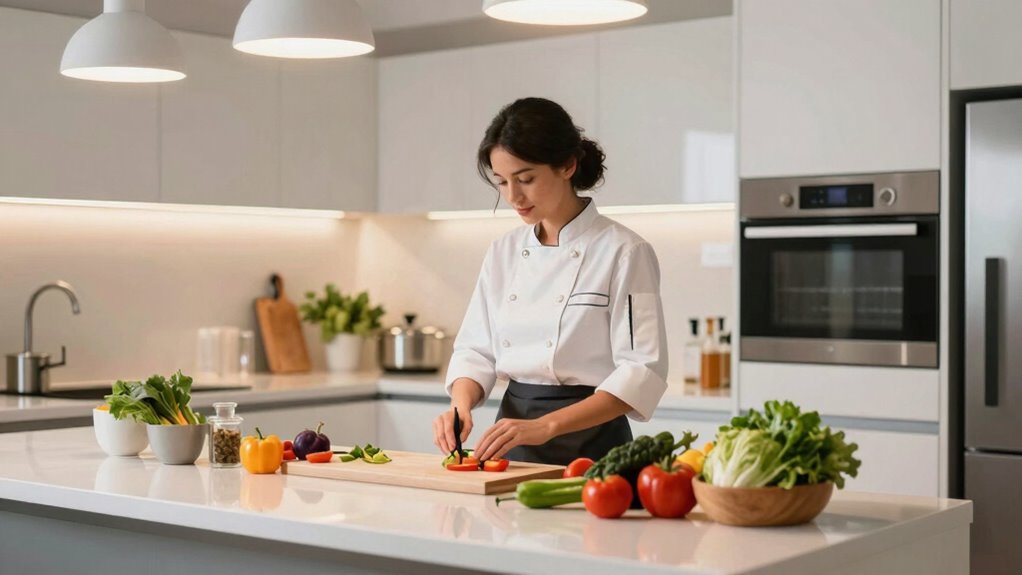
Better lighting makes cooking and filming easier by helping you make your food look more appealing and professional. It enhances colors, reduces shadows, and guarantees details are clear, so your dishes appear fresh and inviting. Good lighting also creates a cohesive atmosphere that matches your scene’s mood, making setup quicker and editing simpler. With the right lighting techniques, you’ll improve your content quality and troubleshoot issues faster—if you keep exploring, you’ll discover how to perfect your approach even more.

Get kitchen staples and gadgets delivered free with Prime
- Fast, free delivery on millions of items
- Prime Video, Amazon Music and more included
- Member-only deals all year
Key Takeaways
- Improved lighting enhances food colors, making dishes look more appetizing and appealing on camera.
- Proper lighting reduces shadows and glare, ensuring clear visibility of all dish details.
- Consistent, well-balanced lighting simplifies setup and minimizes editing time.
- Adjusting color temperature helps create the desired mood and ambiance for scenes.
- Diffused light produces a professional, polished appearance, elevating overall video quality.
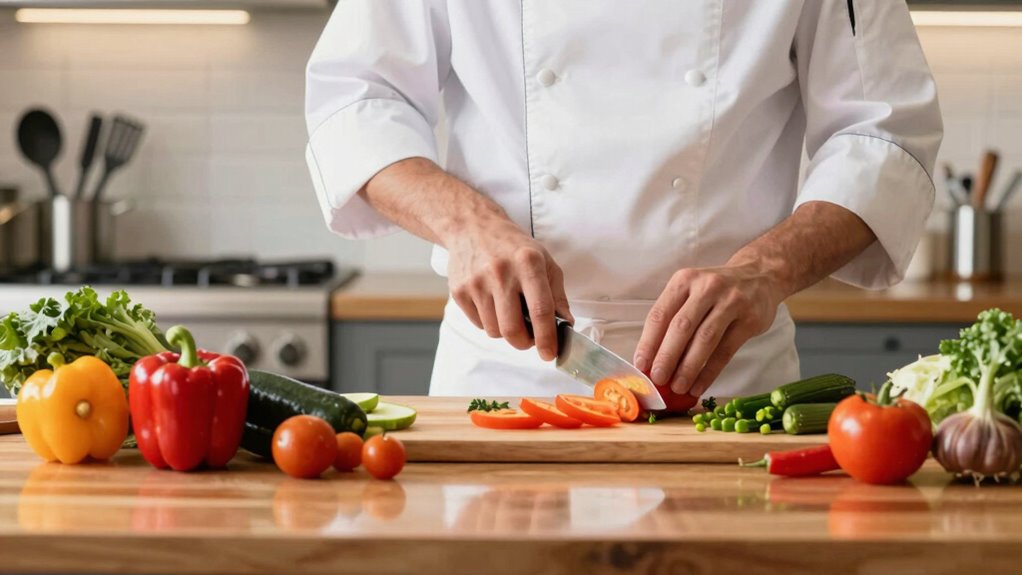
Good lighting can make all the difference when cooking or filming, guaranteeing your dishes look appetizing and your videos appear professional. When you pay attention to the quality of your light, you can control how colors appear and how details pop. One key factor to contemplate is color temperature, which influences the warmth or coolness of your light. Cooler temperatures, with a bluish hue, can make your food look fresh and vibrant, while warmer tones create a cozy, inviting atmosphere. Matching the color temperature to the mood you want to evoke helps your audience see your dishes in the best light, making everything look more appealing and true to life. Additionally, understanding color temperature can help you achieve the perfect ambiance for your scene. Light diffusion is another essential element that can elevate your lighting setup. Without proper diffusion, light can create harsh shadows and uneven highlights that distract from the food or the subject you’re filming. When you use diffusers—whether softboxes, umbrellas, or diffusion panels—you spread the light more evenly across your scene. This softens shadows and reduces glare, giving your videos a polished, professional look. Proper diffusion not only enhances visual clarity but also to guarantee that every detail of your dish is clearly visible, from the glistening sauce to the delicate garnish. Incorporating lighting techniques into your setup can further enhance your control over the scene’s mood and clarity.
Good lighting enhances food appeal by controlling color warmth and vibrancy for a professional, inviting look.
By controlling both color temperature and light diffusion, you can craft a lighting environment that’s tailored to your needs. For instance, if you’re shooting a recipe in a bright, daylight-inspired setting, a daylight-balanced light source (around 5600K) combined with good diffusion will mimic natural light, making your food look fresh and inviting. Conversely, if you want a warm, intimate atmosphere, opting for a lower color temperature and using diffusers to soften the light will create a cozy scene that draws viewers in. Understanding lighting setup and how different elements interact helps you develop a more cohesive and effective scene. When you’re mindful of these factors, you’ll find that your setup becomes more intuitive and your results more consistent. Properly adjusted lighting not only simplifies your workflow but also enhances the quality of your content, reducing the need for extensive editing later. Whether you’re capturing food for social media or filming a cooking tutorial, understanding how color temperature and light diffusion work together will make your shots more appealing and your process smoother. Good lighting isn’t just about brightness; it’s about shaping the way your audience perceives your culinary creations and to take into account every shot looks as delicious as the dish itself. Additionally, being aware of lighting principles can help you troubleshoot and improve your setup over time.
LED softbox lighting for cooking videos
As an affiliate, we earn on qualifying purchases.
As an affiliate, we earn on qualifying purchases.
Frequently Asked Questions
What Types of Lighting Are Best for Cooking Videos?
You should use natural sunlight or LED panels for cooking videos. Natural sunlight provides soft, even lighting that highlights your dishes beautifully, especially during the day. LED panels offer adjustable brightness and color temperature, making it easier to control your lighting setup regardless of the time or weather. Both options reduce shadows and enhance details, helping your audience see every step clearly and making your videos look professional effortlessly.
How Does Lighting Impact Food Presentation?
You might think lighting doesn’t matter, but it actually transforms food photography and boosts aesthetic appeal. Poor lighting dulls colors and makes dishes look unappetizing, while good lighting highlights textures and vibrant hues. It emphasizes the freshness and detail, turning a simple meal into a visual feast. So, ironically, the right lighting can make all the difference, making your dishes irresistible and ensuring they look as delectable as they taste.
Can Poor Lighting Affect the Taste of Food?
Poor lighting doesn’t directly change the taste of your food, but it can impact your perception of it. When the culinary ambiance is dim or unflattering, it may diminish your appetite and make the food aroma less appealing. This can lead to a less satisfying eating experience overall. Good lighting enhances visual appeal, boosts appetite, and complements the food aroma, making your meals more enjoyable and helping you appreciate the flavors fully.
What’s the Ideal Color Temperature for Filming Recipes?
For filming recipes, aim for a color temperature around 5000K to 5500K, which provides perfect, natural-looking light. This range enhances visual clarity, making your dishes look delicious and vibrant. Cooler temperatures can create a bluish hue, while warmer ones add yellow tones. By choosing the right color temperature, you guarantee your filming environment’s light is lively, luminous, and lovely, bringing your culinary creations to life.
How Do I Avoid Shadows While Cooking or Filming?
To avoid shadows while cooking or filming, focus on shadow control by adjusting your lighting placement. Position your lights at multiple angles—preferably at 45-degree angles—to evenly illuminate your workspace. Use diffusers or softboxes to soften harsh light, reducing sharp shadows. Additionally, fill lights can help eliminate shadows cast by primary lights. Regularly check your setup from different perspectives to guarantee balanced, shadow-free illumination for clear, professional-looking footage.
As an affiliate, we earn on qualifying purchases.
Conclusion
So, next time you’re struggling to make your culinary masterpiece look as good as it tastes, remember: better lighting isn’t just for Instagram fame. It’s your secret weapon to avoid those “what did I just cook?” moments and to keep your viewers from squinting in confusion. Embrace the glow, and suddenly, your kitchen becomes a stage, and you a star — all without needing a fancy camera or a professional crew. Shine on!
diffusion panels for video lighting
As an affiliate, we earn on qualifying purchases.
As an affiliate, we earn on qualifying purchases.
color temperature adjustable LED light
As an affiliate, we earn on qualifying purchases.
As an affiliate, we earn on qualifying purchases.
NFL season / tailgating Picks
team gear
As an affiliate, we earn on qualifying purchases.