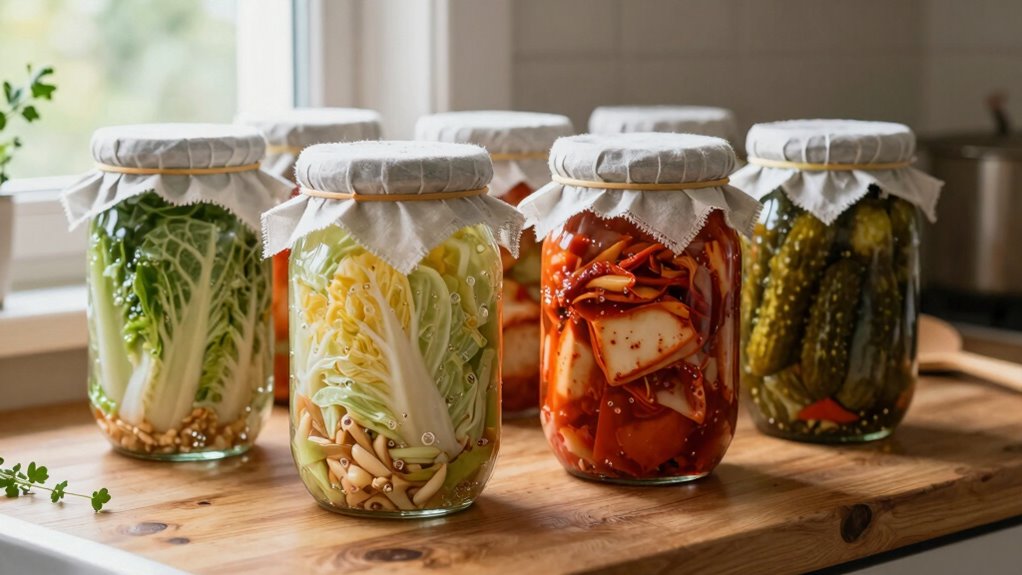
Home fermentation is a fun way to turn simple ingredients into probiotic-rich foods. Start with clean tools, high-quality ingredients, and a wide-mouth jar covered with a breathable cloth. Keep your ferment in a cool, dark spot and be patient—timing is key for flavor and safety. Watch for signs of spoilage, and experiment with different vegetables and flavors. Once you get the basics down, you’ll discover plenty more to explore on your journey.
Key Takeaways
- Use clean, high-quality ingredients and proper equipment to ensure safety and successful fermentation.
- Maintain a cool, dark environment and monitor for spoilage signs regularly.
- Keep ingredients submerged with weights to prevent mold and unwanted bacteria.
- Be patient; fermentation takes time for flavor development and probiotic benefits.
- Experiment, keep notes, and learn from experience to improve your fermentation skills.
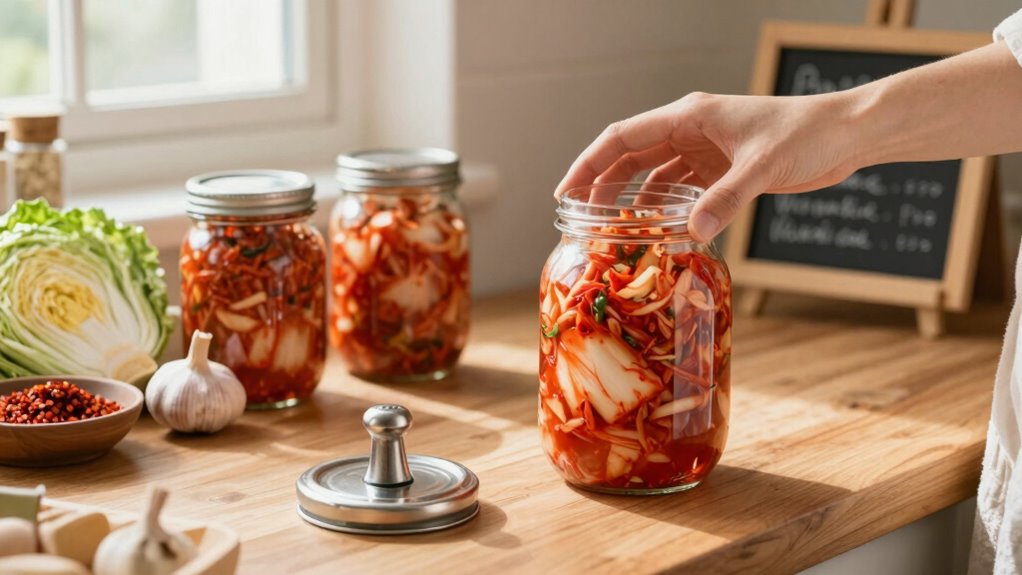
Getting started with home fermentation can be both fun and rewarding, even if you’ve never tried it before. The idea of turning simple ingredients into tasty, probiotic-rich foods might seem intimidating at first, but once you understand the basics, it becomes an engaging and satisfying hobby. The key is to prioritize fermentation safety, which involves keeping your process clean and monitoring for any signs of spoilage. This includes understanding the importance of biodiversity, as diverse beneficial microbes contribute to healthier fermentation. The presence of a variety of microbes can enhance flavor development and fermentation stability. This way, you can enjoy your homemade creations without worry. To begin, you’ll need some equipment essentials—basic tools that make the process easier and more reliable. A wide-mouth glass jar, for example, is ideal because it’s easy to clean and allows you to see your ferment as it develops. You’ll also want a breathable cover, like a cloth or paper towel secured with a rubber band, to keep out unwanted debris while allowing gases to escape. Another must-have is a fermentation weight or a small, clean dish that fits inside the jar to keep your vegetables or other ingredients submerged, preventing mold growth.
Once you have your equipment essentials in place, it’s crucial to understand the fundamentals of fermentation safety. Always start with fresh, high-quality ingredients, and confirm your tools are thoroughly cleaned to prevent bacteria or mold contamination. Keep your ferment in a cool, dark spot—ideally between 60-75°F (15-24°C)—to foster proper fermentation. Regularly check your jars for signs of spoilage, such as off smells, unusual colors, or slimy textures. If you notice anything alarming, it’s best to discard that batch to avoid health risks. Patience is essential; most ferments need time to develop their flavors and beneficial probiotics, but rushing the process can compromise safety. Additionally, understanding fermentation windows can help you determine the optimal time for your batch to be ready, balancing flavor and safety.
As you gain confidence, experiment with different vegetables, flavors, and fermentation times. Keep notes on what works best for you, and don’t be discouraged by initial mishaps. Fermentation is as much an art as it is a science, and learning from each batch helps you improve. Remember, the goal is to create safe, delicious fermented foods by understanding and respecting the fermentation process. With a little practice, you’ll find that mastering the basics of home fermentation opens a world of healthy, homemade foods that can elevate your meals and boost your gut health. Enjoy the process, stay attentive to safety, and soon, you’ll be crafting your own probiotic-rich delights with confidence.

Folinstall 1.5 Gallon Large Fermentation Jars with 2 Airtight Lids and 3 Airlocks, Wide Mouth Glass Mason Jar with Scale Mark, Pickle jars, Mead Making Kit, Kimchi Containers, 2 Pack
- Square Design with Airlock Valve: Innovative square glass fermenting jars
- Prevents Pressure Build-Up: Airlock maintains optimal fermentation environment
- Airtight Seal: Specially designed lid keeps ferments fresh
As an affiliate, we earn on qualifying purchases.
As an affiliate, we earn on qualifying purchases.
Frequently Asked Questions
How Long Does It Take to See Results in Fermentation?
You’ll typically see visible changes in your fermentation within a few days, depending on what you’re making. The fermentation timeline varies: some foods like sauerkraut or kimchi might take 3 to 7 days, while others like yogurt may be ready in 12 to 24 hours. Keep an eye out for bubbles or a tangy smell—these are signs of active fermentation. Patience is key for the best results!
Can I Ferment With Any Type of Vegetable?
You can ferment most vegetables, but some are more compatible than others. Think of fermentation like jazz improvisation—certain veggies like cabbage and carrots blend harmoniously, creating vibrant flavor variations, while others may not develop as well or could spoil. Experiment with different vegetables to find your favorites. Just remember, vegetable compatibility varies, so choose fresh, firm produce and enjoy the creative process of discovering new flavors.
Is Homemade Fermentation Safe to Consume?
Yes, homemade fermentation is safe to consume if you follow proper safety precautions. Many fermentation myths suggest it’s risky, but maintaining cleanliness, using the right salt concentrations, and monitoring for mold or foul odors guarantees safety. You should always use fresh ingredients, keep everything submerged, and store your ferments at appropriate temperatures. These steps help prevent harmful bacteria growth, making your homemade fermented foods both delicious and safe to enjoy.
What Are Common Signs of Spoiled Fermented Foods?
You’ll notice spoiled fermented foods often have off-putting signs like a foul odor, slimy texture, or unusual mold growth. Flavor development may turn sour or rancid, indicating overgrowth of harmful bacteria. Bacterial growth can cause bubbles or foam, but if you see pink, black, or fuzzy mold, it’s best to discard the food. Always trust your senses—if it smells or looks wrong, avoid eating it to stay safe.
Do I Need Special Equipment for Home Fermentation?
You don’t need special equipment to start home fermentation. Just use fermentation containers like glass jars or crocks that are non-reactive and easy to clean. You might also want starter cultures, such as specific bacteria or yeast, to guarantee successful fermentation. Keep your containers covered with breathable lids or cloths to allow gases to escape while preventing contamination. With these basics, you’ll be ready to ferment your favorite foods confidently.

4-Pack of Fermentation Glass Weights with Easy Grip Handle for Wide Mouth Mason Jars
- Material: Food-safe, lead-free, non-porous glass
- Design: Easy grip handle for removal
- Compatibility: Fits wide-mouth Mason jars
As an affiliate, we earn on qualifying purchases.
As an affiliate, we earn on qualifying purchases.
Conclusion
As you start your fermentation journey, remember that over 2,000 years of tradition support this healthy, delicious craft. With patience and curiosity, you’ll discover how simple ingredients transform into tangy, nutritious foods. Did you know that fermented foods can boost your gut health and immunity? Embrace the process, experiment with flavors, and enjoy the rewarding experience of creating your own artisanal ferments at home. Happy fermenting!

Fermentaholics Breathable Jar Unbleached Muslin Cloth Covers for Fermentation – Reusable Elastic Covers for Sourdough Starter, Kombucha, Kefir & Ginger Bug, 4 Pack (Gallon Jar (2.5-4.4 in))
- Breathable Muslin Material: Allows airflow for aerobic fermentation
- Universal Fit: Fits jars, bowls, cups, and jugs
- Elastic Stretch Design: Fits openings 2 to 3.75 inches
As an affiliate, we earn on qualifying purchases.
As an affiliate, we earn on qualifying purchases.
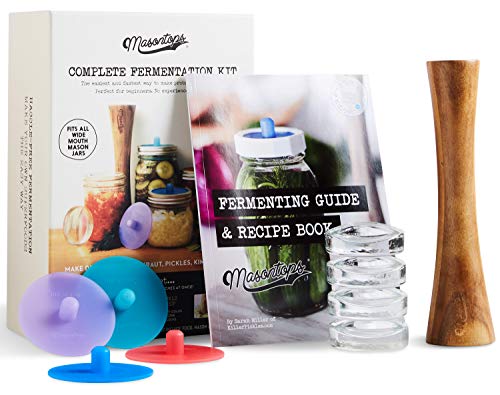
Masontops Complete Mason Jar Fermentation Kit – Pickle Kit, Sauerkraut Making Kit Kimchi Container – Fermentation Airlock Lids Wide Mouth Mason Jars
- Complete Fermentation Kit: Includes all necessary tools for fermentation
- Fits 4 Mason Jars: Converts four wide mouth jars into fermenters
- 9-Piece Starter Set: Includes lids, weights, tamper, and recipe book
As an affiliate, we earn on qualifying purchases.
As an affiliate, we earn on qualifying purchases.