Carryover cooking explains more than most recipes do because it shows how heat continues to transfer inside your food after you remove it from heat. Factors like size, shape, and material of your cookware influence how much the temperature rises. Larger, thicker cuts tend to cook more internally, so resting is essential to avoid overcooking. Understanding these principles helps you predict doneness better. Keep going to discover how mastering heat transfer makes your cooking perfectly reliable.
Key Takeaways
- Carryover cooking accounts for temperature increases after removal from heat, explaining why timing and resting are crucial in recipes.
- Understanding heat transfer within food helps predict final doneness better than fixed cooking times.
- Recipes often overlook carryover effects, leading to overcooked or uneven results without proper resting.
- The size, shape, and thermal properties of food influence how much carryover cooking occurs.
- Recognizing carryover cooking enables precise control over doneness and juiciness, which most recipes fail to address.
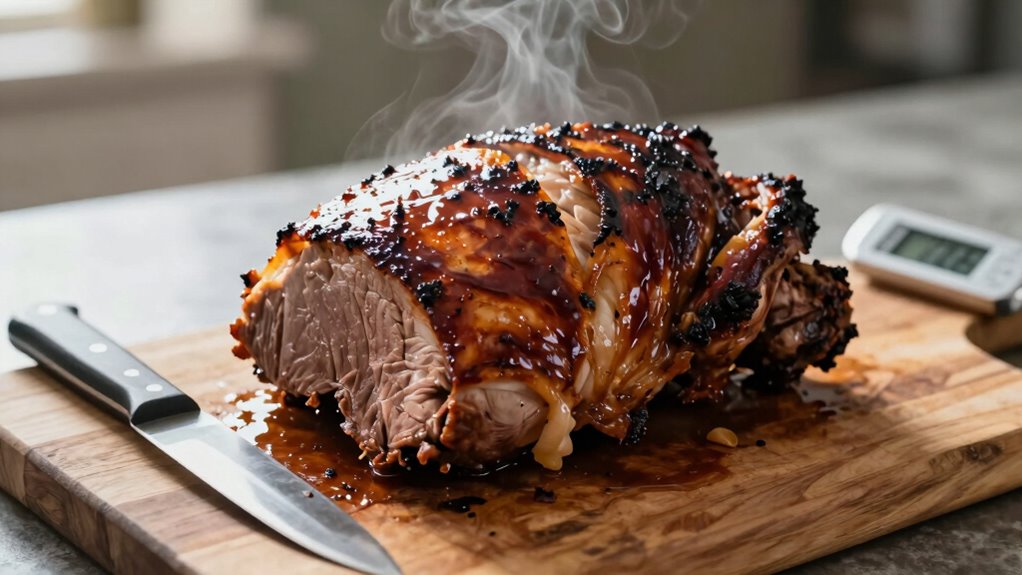
When you finish cooking your meat or other dishes, you might notice they continue to cook slightly even after removing them from the heat. This phenomenon, known as carryover cooking, is driven by the way heat moves within food. Understanding why it happens can help you achieve perfect doneness every time, which most recipes often overlook.
At the core of carryover cooking is the concept of temperature stability. Once you take a piece of meat off the heat, its internal temperature doesn’t instantly stop rising. Instead, heat from the hotter outer layers transfers inward, causing the internal temperature to climb a few more degrees. This process depends heavily on thermal conduction—the way heat moves through the food’s tissues. Foods with high thermal conductivity, such as large roasts or thick steaks, will experience more significant temperature increases during this resting period. Conversely, thinner cuts or smaller portions heat through more quickly and evenly, showing less of this effect.
Carryover cooking causes internal temperature to rise after removal, influenced by heat transfer and food thickness.
Your choice of cookware and how you cook also influence temperature stability. For instance, a dense, heavy pan or oven with consistent heat promotes even cooking and minimizes sudden temperature fluctuations. This consistency allows heat to be distributed smoothly within the food, leading to more predictable carryover effects. When you remove the dish from the heat source, the heat stored in the outer layers continues to transfer inward, raising the internal temperature even after the heat source is gone. This thermal conduction process highlights the importance of understanding heat transfer in achieving optimal doneness. Additionally, the size and shape of the food play a role in how much carryover occurs, as larger and thicker items tend to experience more significant temperature shifts. Recognizing heat transfer as a fundamental principle allows cooks to better control their results and avoid overcooking.
Knowing about thermal conduction helps you anticipate how much additional cooking will occur after removing your dish from heat. For tender cuts like prime rib or thick steaks, resting time is crucial to allow the internal temperature to stabilize and reach its ideal point. If you cut into the meat too soon, you risk losing juices and ending up with uneven doneness. By understanding how internal heat redistributes, you can better judge when to rest your meat, ensuring it reaches the perfect temperature for serving.
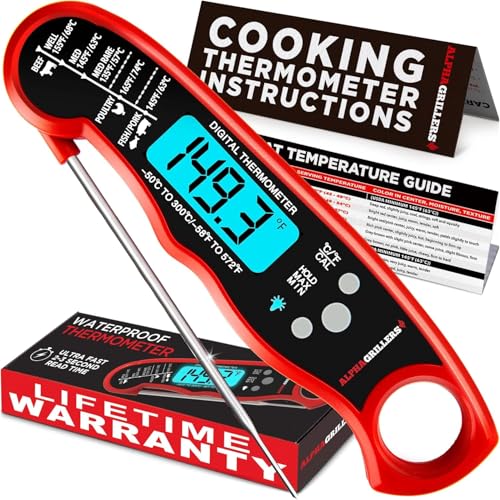
Alpha Grillers Instant Read Meat Thermometer Digital, Cooking, Food, Grill
- Instant Read Response: 2-second accurate temperature readings
- Versatile Use: Suitable for grilling, baking, frying, and more
- Easy to Read Display: Bright backlit digital screen for visibility in all conditions
As an affiliate, we earn on qualifying purchases.
As an affiliate, we earn on qualifying purchases.
Frequently Asked Questions
How Long Does Carryover Cooking Typically Last?
Carryover cooking usually lasts about 5 to 15 minutes, depending on the size and thickness of the meat. During this time, temperature stabilization occurs, and the internal temperature continues to rise slightly. You should let your meat rest during this resting period, which allows juices to redistribute and guarantees even doneness. Keep in mind, larger cuts need longer resting periods for the best results.
Does Carryover Cooking Vary With Different Types of Meat?
Carryover cooking varies with different meat types, primarily due to distinct meat textures and cooking temperatures. For instance, tender cuts like steaks experience brief, gentle carryover, while thicker roasts or dense meats like brisket see prolonged, powerful carryover. You’ll notice that the temperature and texture influence how much residual heat continues cooking, so adjusting for these differences guarantees perfect doneness and prevents overcooking during carryover.
Can You Overcook Food Through Carryover Cooking?
Yes, you can overcook food through carryover cooking if you don’t practice proper temperature control and resting techniques. After removing meat from heat, it continues to cook as it rests, so knowing when to take it off the heat is essential. By monitoring internal temperatures and allowing your food to rest properly, you prevent overcooking and guarantee it stays tender and perfectly cooked.
How Can I Control Carryover Cooking to Avoid Overcooking?
You can control carryover cooking by using resting techniques and temperature monitoring. After cooking, let your meat rest uncovered or loosely tented with foil, which helps stabilize internal temps. Use a reliable meat thermometer to track the temperature as it rises—you’ll notice it peaks during resting. Remove the food just before your desired final temperature, so carryover cooking doesn’t push it beyond perfect doneness.
Does Carryover Cooking Affect All Cooking Methods Equally?
Carryover cooking affects all cooking methods, but its impact varies based on thermal equilibrium and residual heat. When you cook, heat transfers internally, and residual heat continues to cook the food even after removing it from heat. Methods like roasting or grilling experience more carryover because of high residual heat, while boiling or steaming see less. Understanding this helps you control doneness and avoid overcooking, especially with large or thick cuts.

Utopia Kitchen Cast Iron Skillet Set 3 Piece 6 8 10 Inch PFAS-Free Black
- Even Heat Distribution: Distributes heat evenly for perfect cooking
- Versatile Cooking Options: Use on stovetops, ovens, grills, and campfires
- Pre-Seasoned for Immediate Use: Ready to cook with enhanced non-stick surface
As an affiliate, we earn on qualifying purchases.
As an affiliate, we earn on qualifying purchases.
Conclusion
So, next time you pull that perfect roast or juicy steak off the heat, remember carryover cooking is the secret force turning good into legendary. It’s like a culinary magic trick that transforms your dish into something extraordinary, making every bite feel like a masterpiece. Don’t underestimate this silent hero — it’s the reason your meals stay tender, juicy, and utterly irresistible long after they leave the stove. Master it, and elevate every meal to epic proportions!

Nordic Ware Naturals® Quarter Sheet with Oven-Safe Nonstick Grid
- Material: Natural aluminum with steel grid
- Size: Quarter sheet for small meals
- Nonstick Grid: Lifts food for crisp results
As an affiliate, we earn on qualifying purchases.
As an affiliate, we earn on qualifying purchases.
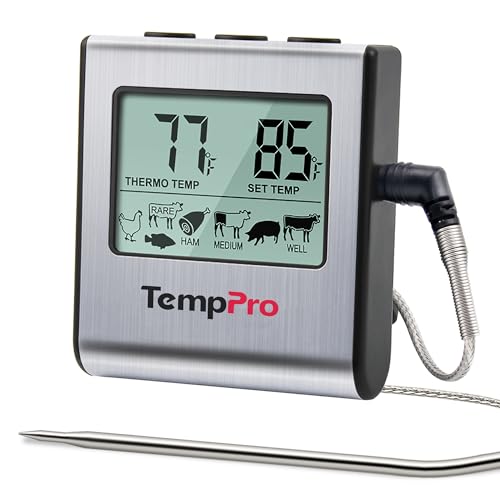
TempPro TempTrack Large LCD Digital Meat Thermometer for Cooking
- Cook Mode with USDA Settings: Preset and customizable temperature settings
- Timer and Alarm: Up to 99h 59m with alert notifications
- High Temperature Resistance: Probe withstands up to 716°F, range 32-572°F
As an affiliate, we earn on qualifying purchases.
As an affiliate, we earn on qualifying purchases.