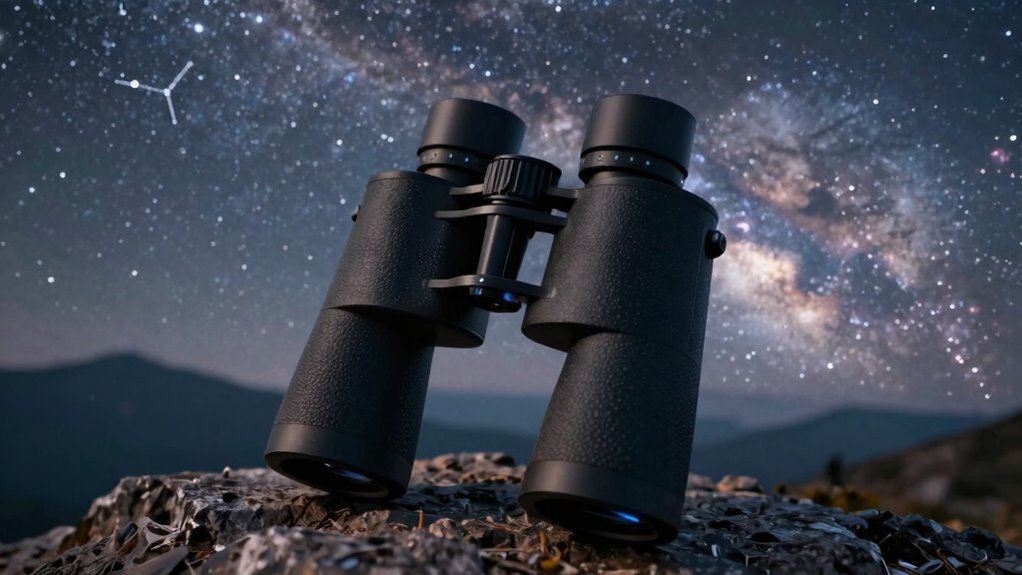

Binoculars for stargazing occupy a sweet spot between the naked eye and a telescope: wide fields for sweeping the Milky Way, easy two-eyed viewing, and no setup time. My top pick is the Celestron SkyMaster Pro ED 7×50, which pairs bright, color-true ED glass with a steady handheld view — the combination I’d recommend to most backyard astronomers. If budget leads the decision, the Celestron Cometron 7×50 delivers genuinely usable night-sky views for the price of a takeout dinner, while the Celestron SkyMaster 25×100 sits at the opposite extreme for observers committed to a tripod and deep-sky detail. The main tradeoff to understand before buying: bigger objective lenses gather more light but demand mounting, while smaller apertures stay handheld but reveal less. Read on for the full breakdown of all 13 models and which one fits your sky, budget, and arms.

Get kitchen staples and gadgets delivered free with Prime
- Fast, free delivery on millions of items
- Prime Video, Amazon Music and more included
- Member-only deals all year
Key Takeaways
- 7×50 models (SkyMaster Pro ED, Cometron) dominated the handheld category — exit pupils near 7mm match dark-adapted eyes, making them the most natural grab-and-go stargazing tools in this lineup.
- Everything above 15x magnification, including all three 20×80 options and the 25×100, is effectively tripod-required; no observer holds these steady enough for satisfying planetary or lunar detail.
- The 20×80 bracket showed the biggest quality spread — the generic BaK-4 model, the standard SkyMaster 20×80, and the SkyMaster Pro 20×80 differ mainly in prism glass and coatings, which matters most at night.
- The Adasion 12×42 and 20×50 waterproof models are general-purpose binoculars pressed into astronomy duty; they work for bright targets but their smaller objectives give away the most under dark skies.
- The SkyMaster Gemini 2×40 is a niche wide-field instrument — it complements another binocular rather than replacing one, and buyers should understand its fixed ultra-low magnification before ordering.
| Adasion 12×42 Binoculars for Adults with Phone Adapter & Tripod |  | Best Accessory Bundle | Magnification: 12x | Objective Lens Diameter: 42mm | Field of View: 367 ft / 1000 yds | VIEW ON AMAZON | See Our Full Breakdown |
| Celestron SkyMaster Pro ED 7×50 Binoculars |  | Best Overall | Magnification: 7x | Objective Lens Diameter: 50mm | Lens Glass: Extra-Low Dispersion (ED) | VIEW ON AMAZON | See Our Full Breakdown |
| 20×80 Astronomy Binoculars with BaK-4 Prisms |  | Best Big-Glass Value | Magnification: 20x | Objective Lens Diameter: 80mm | Prism Type: BaK-4 | VIEW ON AMAZON | See Our Full Breakdown |
| Celestron Cometron 7×50 Astronomy Binoculars |  | Best for Beginners | Magnification: 7x | Objective Lens Diameter: 50mm | Angular Field of View: 6.6° | VIEW ON AMAZON | See Our Full Breakdown |
| Celestron SkyMaster 25×70 Binoculars |  | Best High-Magnification Value | Magnification: 25x | Objective Lens Diameter: 70mm | Prisms: BaK-4 | VIEW ON AMAZON | See Our Full Breakdown |
| Celestron Outland X 10×50 Binoculars |  | Best Grab-and-Go All-Rounder | Magnification: 10x | Objective Lens Diameter: 50mm | Angular Field of View: 5.6° | VIEW ON AMAZON | See Our Full Breakdown |
| Celestron SkyMaster Gemini 2×40 Ultra-Wide Astronomy Binoculars |  | Best for Constellation Touring | Magnification: 2x | Objective Lens Diameter: 40mm | Field of View: 24° | VIEW ON AMAZON | See Our Full Breakdown |
| Celestron SkyMaster 20×80 Astronomy Binoculars |  | Best Big-Aperture Value | Magnification: 20x | Objective Lens Diameter: 80mm | Exit Pupil: 4mm | VIEW ON AMAZON | See Our Full Breakdown |
| Celestron SkyMaster Pro 15×70 Binoculars |  | Best Overall for Serious Stargazing | Magnification: 15x | Objective Lens Diameter: 70mm | Prism Type: BaK-4 | VIEW ON AMAZON | See Our Full Breakdown |
| Celestron SkyMaster 25×100 Giant Astronomy Binoculars |  | Best Premium Deep-Sky Reach | Magnification: 25x | Objective Lens Diameter: 100mm | Prism Type: BaK-4 | VIEW ON AMAZON | See Our Full Breakdown |
| 20×50 Waterproof Binoculars for Adults |  | Best Budget High-Power Pick | Magnification: 20x | Objective lens diameter: 50 mm | Field of view: 168 yards at 1,000 yards | VIEW ON AMAZON | See Our Full Breakdown |
| Celestron SkyMaster Pro 20×80 Astronomy Binoculars |  | Best Premium Astronomy Binocular | Magnification: 20x | Objective lens diameter: 80 mm | Prism type: BaK-4 | VIEW ON AMAZON | See Our Full Breakdown |
| Celestron SkyMaster 15×70 Astronomy Binoculars |  | Best Value Giant Binocular | Magnification: 15x | Objective lens diameter: 70 mm | Prisms: BaK-4 | VIEW ON AMAZON | See Our Full Breakdown |
| binoculars for stargazing | Magnification | Objective Lens Diameter | Prism Type | Warranty |
|---|---|---|---|---|
| Adasion 12×42 Binoculars for A | 12x | 42mm | BAK4 | — |
| Celestron SkyMaster Pro ED 7×5 | 7x | 50mm | — | Limited lifetime US warranty |
| 20×80 Astronomy Binoculars wit | 20x | 80mm | BaK-4 | — |
| Celestron Cometron 7×50 Astron | 7x | 50mm | Porro, BK7 glass | Celestron Limited Lifetime US Warranty |
| Celestron SkyMaster 25×70 Bino | 25x | 70mm | — | Celestron Limited Lifetime US Warranty |
| Celestron Outland X 10×50 Bino | 10x | 50mm | BaK-4 | Celestron Limited Lifetime US Warranty |
| Celestron SkyMaster Gemini 2×4 | 2x | 40mm | — | — |
| Celestron SkyMaster 20×80 Astr | 20x | 80mm | BaK-4 | Celestron Limited Lifetime US Warranty |
| Celestron SkyMaster Pro 15×70 | 15x | 70mm | BaK-4 | Celestron Limited Lifetime US Warranty |
| Celestron SkyMaster 25×100 Gia | 25x | 100mm | BaK-4 | Celestron Limited Lifetime US Warranty |
| 20×50 Waterproof Binoculars fo | 20x | 50 mm | BAK4 Porro | — |
| Celestron SkyMaster Pro 20×80 | 20x | 80 mm | BaK-4 | — |
| Celestron SkyMaster 15×70 Astr | 15x | 70 mm | — | Limited lifetime US warranty |
More Details on Our Top Picks
Adasion 12×42 Binoculars for Adults with Phone Adapter & Tripod
This option stands out for what comes in the box rather than raw astronomy pedigree. The phone adapter and swivel tripod make it the easiest way to start snapping Moon shots without buying anything else, and at 1.25 lbs it’s the lightest pick here by far. Optically, the 42mm objectives simply can’t gather light like the Celestron SkyMaster Pro ED 7×50, so faint deep-sky objects stay out of reach — but the BAK4 prisms and multi-coatings deliver genuinely bright views of the Moon and bright planets. The bundled 2.2-inch tripod is more of a table novelty than a stable astronomy platform, and true hands-free stargazing will require a taller tripod. This pick makes the most sense for casual backyard observers who want to combine stargazing with smartphone photography on a budget.
Pros:- Complete kit with phone adapter and tripod included
- Very lightweight at 1.25 lbs for grab-and-go use
- BAK4 prisms with fully multi-coated optics for bright low-light views
- IPX7 waterproof and fog-proof build with twist-up eyecups for glasses wearers
Cons:- 42mm objectives limit light grasp for faint night-sky targets
- Bundled 2.2-inch tripod is too short for stable extended astronomy use
Best for: Casual stargazers and hobbyist photographers who want to capture Moon shots on a phone without buying extra gear
Not ideal for: Serious deep-sky observers — the 42mm objectives gather far less light than dedicated 70-80mm astronomy models
- Magnification:12x
- Objective Lens Diameter:42mm
- Field of View:367 ft / 1000 yds
- Prism Type:BAK4
- Eye Relief:13.6mm – 19.6mm
- Weight:1.25 lbs
- Waterproofing:IPX7 waterproof, fog-proof
- Included Accessories:Phone adapter, 360° swivel tripod, case, strap
Our verdict“A solid choice for beginners who value convenience and phone photography over serious light-gathering power.”
Celestron SkyMaster Pro ED 7×50 Binoculars
If there’s one pick that balances optical quality, comfort, and versatility, this is it. The ED glass is the standout differentiator — it suppresses the color fringing that plagues budget models like the Celestron Cometron 7×50, giving stars razor-sharp edges against a dark sky. The 7×50 configuration is a classic astronomy formula: 7mm exit pupil matches the fully dilated eye, maximizing brightness for wide-field sweeps of the Milky Way. The 7x magnification keeps views steady handheld, which the SkyMaster 25×70 simply cannot claim. Tradeoffs are real, though: anyone wanting to pull detail on planets or resolve tight clusters will find 7x limiting, and the threaded eyepieces accept 1.25-inch astronomical filters that must be purchased separately. This model is better suited to viewers who prize a clean, immersive wide field over raw zoom.
Pros:- ED objective lenses minimize chromatic aberration for crisp, color-true star images
- 7×50 configuration delivers maximum brightness for handheld wide-field viewing
- Waterproof, nitrogen-purged housing for dew-prone nights
- Threaded eyepieces accept 1.25-inch astronomical filters
Cons:- Low magnification limits views of planets and small deep-sky objects
- Compatible astronomy filters are not included and add extra cost
Best for: Observers who want a premium handheld experience for sweeping the Milky Way and bright deep-sky objects with accurate color
Not ideal for: Anyone chasing high-magnification lunar or planetary detail — 7x tops out quickly compared to 20x-25x models
- Magnification:7x
- Objective Lens Diameter:50mm
- Lens Glass:Extra-Low Dispersion (ED)
- Lens Coatings:XLT multi-coated
- Waterproof:Yes, nitrogen purged
- Filter Compatibility:1.25-inch astronomical eyepiece filters
- Housing:Rubber-armored polycarbonate
- Warranty:Limited lifetime US warranty
Our verdict“The most well-rounded choice here for quality-focused stargazers who mostly view handheld under dark skies.”
20×80 Astronomy Binoculars with BaK-4 Prisms
For pure aperture per dollar, this 20×80 configuration is hard to argue with. The 80mm objectives pull in roughly double the light of the Celestron SkyMaster 25×70, which translates directly into fainter stars and richer cluster views. The included tripod and adapter matter more than they sound — at 4.66 lbs, handheld viewing is a non-starter, and competing models often make you buy the mount separately. Compared with the Adasion 12×42, this is a different class of instrument entirely: less portable, far more reach. The 173 ft field of view is narrow, making it clumsy for scanning large swaths of sky — it’s built for pointing at known targets like the Moon, the Pleiades, or globular clusters. Buyers needing a premium optical polish will notice the glass doesn’t match the SkyMaster Pro ED line for color correction.
Pros:- 80mm objectives deliver serious light grasp for faint deep-sky targets
- Tripod and adapter included, unlike most competitors
- BaK-4 prisms with 17mm eye relief for comfortable glasses-compatible viewing
- Waterproof rubber-armored housing with ±5 diopter adjustment
Cons:- Heavy at 4.66 lbs, impractical for handheld use
- Narrow 173 ft field of view makes locating targets difficult
- Optical coatings lag behind premium ED models for color accuracy
Best for: Budget-conscious observers who already know what they want to look at and want maximum light grasp without a premium price
Not ideal for: Anyone planning to handhold or travel light — at 4.66 lbs it lives on a tripod
- Magnification:20x
- Objective Lens Diameter:80mm
- Prism Type:BaK-4
- Field of View:173 ft at 1000 yds
- Eye Relief:17mm
- Exit Pupil:4mm
- Weight:2.08 kg (4.66 lb)
- Included Accessories:Tripod, tripod adapter, carrying case
Our verdict“A strong value pick for tripod-based viewing of the Moon and star clusters when aperture matters more than portability.”
Celestron Cometron 7×50 Astronomy Binoculars
Learning the night sky rewards two things: a wide field and a steady image — and this delivers both for minimal investment. The 6.6° field of view is the widest in this lineup, letting newcomers frame constellations and find targets without the frustration that high-power models like the SkyMaster 25×70 impose. The 50mm objectives with multi-coated optics keep the Milky Way and bright comets visible under decent skies. Compared with the SkyMaster Pro ED 7×50, the BK7 Porro prisms and lack of ED glass mean stars show softer edges and some false color — acceptable at this level, but a reason serious observers should upgrade later. Note that the tripod adapter socket is there but the adapter isn’t included, and the 26.2 ft close focus rules out butterfly-watching duty. This model makes the most sense as a first astronomy tool that won’t punish mistakes.
Pros:- Wide 6.6° field of view ideal for scanning constellations and the Milky Way
- 50mm multi-coated objectives gather plenty of light for the price
- Steady handheld 7x image that beginners can actually hold still
- Tripod-adaptable with a limited lifetime US warranty
Cons:- BK7 Porro prisms deliver dimmer, less sharp edges than BaK-4 alternatives
- Tripod adapter sold separately
- 26.2 ft close focus limits daytime nature use
Best for: First-time stargazers and students learning constellations who want an easy, forgiving wide-field view
Not ideal for: Detail-focused observers — BK7 prisms and no ED glass produce softer, less color-accurate images than premium models
- Magnification:7x
- Objective Lens Diameter:50mm
- Angular Field of View:6.6°
- Prism Type:Porro, BK7 glass
- Optics:Multi-coated
- Close Focus:26.2 ft (8 m)
- Tripod Adaptable:Yes; adapter not included
- Warranty:Celestron Limited Lifetime US Warranty
Our verdict“The smartest low-risk entry point for anyone testing whether astronomy is their hobby.”
Celestron SkyMaster 25×70 Binoculars
This is the pick for pulling in lunar detail — crater rims, mountain shadows, the works — at a price well below the giant 25×100 class. The 25x power with 70mm objectives and BaK-4 prisms strikes a workable balance: more reach than the Cometron 7×50, notably less arm strain than the 20×80 model in this lineup. Crucially, the tripod adapter is included, which the Cometron can’t claim, though the tripod itself is not. The 2.8mm exit pupil means the image dims noticeably compared with 7×50 configs, so faint nebulae suffer while the Moon and planets shine. Handheld, 25x produces a shake that makes focusing genuinely difficult — plan on mounting it. Compared with the 20×80 BaK-4 model, you trade some light grasp for extra magnification, a reasonable swap for lunar enthusiasts on a budget.
Pros:- 25x magnification reveals real lunar and planetary detail
- 70mm BaK-4 objectives with multicoated optics for sharp low-light views
- Tripod adapter included along with full accessory set
- Water-resistant rubber-armored housing backed by a lifetime US warranty
Cons:- Effectively unusable handheld due to image shake at 25x
- 2.8mm exit pupil dims the view for faint deep-sky objects
- Requires a tripod purchase that isn’t included
Best for: Lunar and planetary enthusiasts who want high magnification for surface detail without giant-binocular cost or weight
Not ideal for: Handheld observers and deep-sky hunters — the image shakes at 25x and the small exit pupil dims faint targets
- Magnification:25x
- Objective Lens Diameter:70mm
- Prisms:BaK-4
- Optics:Multicoated
- Tripod Mount:1/4-20 adapter included
- Water Resistance:Water-resistant exterior
- Included Accessories:Tripod adapter, lens caps, rainguard, case, neck strap
- Warranty:Celestron Limited Lifetime US Warranty
Our verdict“A cost-effective high-power tool for Moon-focused viewing, provided you already own or will buy a tripod.”
Celestron Outland X 10×50 Binoculars
The Outland X 10×50 earns its spot as the most versatile pick in this lineup because it splits the difference between astronomy and everyday use. The 50mm objectives pull in enough light for brighter clusters, the Milky Way band, and the Moon, while staying light enough to handhold — something the giant Celestron SkyMaster 20×80 simply cannot claim. Compared with dedicated astro binoculars, the tradeoff is aperture: faint deep-sky objects like galaxies will stay out of reach. What you get instead is a waterproof, nitrogen-purged chassis that survives dew-heavy nights and damp grass, plus twist-up eyecups that suit eyeglass wearers. At 10x, some shakiness creeps in during extended sessions, so a tripod adapter (sold separately) is a smart add-on for serious stargazing.
Pros:- Bright, high-contrast low-light performance from BaK-4 prisms and multi-coated optics
- Waterproof, fogproof, rubber-armored build handles dew, rain, and rough handling
- Lightweight enough for handheld use, unlike the giant SkyMaster models
- Tripod-adaptable when you want rock-steady views
Cons:- Tripod adapter is not included
- 10x magnification is still challenging to hold steady for some users on faint targets
Best for: Casual stargazers and birdwatchers who want one binocular that works at night and on daytime hikes
Not ideal for: Deep-sky hunters chasing faint galaxies and nebulae — 50mm objectives can’t gather enough light for those targets
- Magnification:10x
- Objective Lens Diameter:50mm
- Angular Field of View:5.6°
- Prism Type:BaK-4
- Lens Coating:Multi-coated
- Waterproof / Fogproof:Yes / Yes (nitrogen-purged)
- Tripod Adaptable:Yes (adapter not included)
- Warranty:Celestron Limited Lifetime US Warranty
Our verdict“This pick makes the most sense for buyers who want a rugged do-everything binocular that dabbles in astronomy rather than specializing in it.”
Celestron SkyMaster Gemini 2×40 Ultra-Wide Astronomy Binoculars
Most binoculars in this roundup magnify the sky; the Gemini 2×40 takes the opposite approach with a massive 24° field of view that frames entire constellations, meteor showers, and satellite passes in one glance. At 2x with a 20mm exit pupil, views stay bright and dead steady without any tripod — a completely different experience from the tripod-bound SkyMaster 25×100. The tradeoff is obvious: 2x won’t resolve detail in star clusters or show planets as more than points. Where the Cometron 7×50 narrows your view to a patch of sky, the Gemini shows you the whole picture, making it a superb companion for learning the sky or enjoying meteor showers naked-eye style with a brightness boost. Just note the short 10mm eye relief, which is tight for eyeglass wearers.
Pros:- Extraordinary 24° field frames whole constellations at once
- Low magnification keeps handheld views naturally steady
- Featherlight at 6.8 oz for all-night comfort
- Tripod mount and IPX4 water resistance add outdoor practicality
Cons:- 2x magnification provides almost no detail on distant objects
- 10mm eye relief is uncomfortable for eyeglass wearers
Best for: Beginners learning constellations and sky-watchers who chase meteor showers and wide-field panoramas
Not ideal for: Anyone wanting detail — 2x magnification won’t show clusters, nebulae structure, or planets meaningfully
- Magnification:2x
- Objective Lens Diameter:40mm
- Field of View:24°
- Exit Pupil:20mm
- Optical Coating:Fully multi-coated
- Focus Type:Individual focus
- Water Resistance:IPX4
- Weight:6.8 oz
Our verdict“A niche but genuinely fun tool for wide-sky browsing — buy it alongside a higher-power pair, not instead of one.”
Celestron SkyMaster 20×80 Astronomy Binoculars
The SkyMaster 20×80 is the classic entry into giant binocular astronomy, and its appeal comes down to light: 80mm objectives gather roughly 2.5 times the light of the Outland X 10×50, pulling faint open clusters, the Andromeda Galaxy, and bright nebulae out of the background sky. Compared with the SkyMaster Pro 15×70, you get more aperture and more reach for less money, but you give up the Pro’s fully multi-coated XLT optics and sealed waterproof body. That’s the honest trade: more glass, less refinement. With a 4mm exit pupil, images are dimmer per unit area than ideal for true dark-sky work — a limitation worth knowing before buying. At 20x and this weight, handheld viewing is off the table; budget for a sturdy tripod, since none is included.
Pros:- 80mm objectives gather substantial light for deep-sky targets in low light
- BaK-4 prisms and multi-coated optics produce bright, sharp, high-contrast images
- Built-in 1/4″-20 adapter mounts to any standard photo tripod in seconds
- Rubber-armored, water-resistant housing backed by a limited lifetime warranty
Cons:- Too heavy and powerful for handheld use — tripod required but not included
- 4mm exit pupil is smaller than ideal for maximizing nighttime image brightness
Best for: Budget-conscious backyard astronomers ready to move beyond 50mm binoculars into serious deep-sky browsing
Not ideal for: Travelers and hikers — the size and weight make these a stationary, tripod-mounted instrument
- Magnification:20x
- Objective Lens Diameter:80mm
- Exit Pupil:4mm
- Prism Type:BaK-4
- Optics:Multi-coated
- Tripod Adapter:Built-in 1/4″-20
- Housing:Water-resistant, rubber-armored
- Warranty:Celestron Limited Lifetime US Warranty
Our verdict“This model delivers the biggest aperture-per-dollar leap in deep-sky performance, provided you already own or buy a solid tripod.”
Celestron SkyMaster Pro 15×70 Binoculars
This is the pick I’d point most committed stargazers toward, because it balances aperture, magnification, and usability better than anything else here. The 70mm objectives paired with fully multi-coated optics and Celestron’s XLT coatings deliver noticeably brighter, higher-contrast views than the standard SkyMaster 20×80, whose simpler multi-coating leaves light on the table. At 15x, the magnification is high enough to resolve globular clusters and split wide double stars, yet the 4.7mm exit pupil keeps images reasonably bright — and brief handheld sweeps are just barely feasible. The standout extra is the detachable RSR rail for mounting a red dot finder, which solves the classic problem of aiming big binoculars at tiny targets. It’s still a heavy, tripod-oriented instrument, and the waterproof sealed body makes it pricier than the non-Pro versions.
Pros:- 70mm objectives with fully multi-coated XLT optics deliver bright, high-contrast night-sky images
- RSR rail accepts a red dot finderscope for far easier aiming at faint targets
- Waterproof, nitrogen-purged, rubber-armored body withstands heavy dew and damp weather
- Built-in tripod adapter and a magnification/aperture balance that suits both deep-sky and terrestrial use
Cons:- 15x magnification is difficult to use handheld for anything but quick sweeps
- Heavy for extended carrying or travel, even compared with 50mm models
Best for: Dedicated amateur astronomers who want telescope-like deep-sky views with both-eye comfort and easy object location
Not ideal for: Casual users or travelers — the weight and 15x magnification demand tripod mounting and a committed setup routine
- Magnification:15x
- Objective Lens Diameter:70mm
- Prism Type:BaK-4
- Optical Coating:Fully multi-coated with XLT coatings
- Waterproof / Fogproof:Yes / Yes (nitrogen-purged)
- Tripod Adapter:Built-in
- Special Feature:Detachable RSR (Reflex Sight Ready) rail
- Warranty:Celestron Limited Lifetime US Warranty
Our verdict“The most complete stargazing package in this lineup — worth the premium if astronomy is your primary mission.”
Celestron SkyMaster 25×100 Giant Astronomy Binoculars
At the top of the power ladder sits the SkyMaster 25×100, a true observatory-class binocular. Those 100mm objectives pull in roughly twice the light of the SkyMaster Pro 15×70, revealing fainter galaxies, dust lanes, and subtle nebulosity that smaller instruments wash out. The 25x magnification also adds real reach on globular clusters and the Moon. But this power demands commitment: these binoculars are strictly tripod instruments, and not just any tripod — a lightweight camera model will sag and vibrate under the weight, so factor a heavy-duty mount into the total cost. Compared with the SkyMaster Pro 20×80, you trade refined coatings and a sealed body for raw aperture. The 4mm exit pupil means images are less forgiving under light pollution than a 7×50 like the Cometron would be.
Pros:- Huge 100mm aperture delivers exceptionally bright low-light and nighttime views
- 25x magnification resolves globular clusters, lunar detail, and faint deep-sky objects
- Built-in 1/4″-20 adapter mounts to standard tripods in seconds
- Durable, water-resistant rubber-armored housing with a limited lifetime warranty
Cons:- Heavy and powerful enough that stable viewing absolutely requires a tripod (not included)
- 4mm exit pupil makes images dim and unforgiving under light-polluted skies
Best for: Deep-sky enthusiasts at dark sites who want maximum light-gathering in binocular form and already own a heavy-duty mount
Not ideal for: Beginners and anyone without a sturdy tripod — handheld use is impossible, and the setup is heavy to transport
- Magnification:25x
- Objective Lens Diameter:100mm
- Prism Type:BaK-4
- Optics:Multi-coated
- Housing:Rubber-armored, water-resistant
- Tripod Mount:Built-in 1/4″-20 adapter
- Included Accessories:Deluxe carrying case, lens caps, rainguard, neck strap, lens cloth
- Warranty:Celestron Limited Lifetime US Warranty
Our verdict“The most powerful option in this roundup — a superb second instrument for experienced observers with a dark sky and a serious tripod.”
20×50 Waterproof Binoculars for Adults
This model makes the list for buyers who want 20x magnification on a tight budget, but it demands honest expectations. The BAK4 Porro prisms and multilayer-coated lenses deliver respectable brightness for the price, and the rubberized grip feels secure on cold nights at the eyepiece. Compared with the Celestron SkyMaster 15×70, the smaller 50 mm objectives gather less light, which matters for faint deep-sky targets — though the lighter build makes it easier to hand-hold for short bursts. The biggest tradeoff is the narrow 168-yard field of view at 1,000 yards, which makes locating objects in the sky genuinely harder than with wider options like the Adasion 12×42. Water resistance is daily-level only, so dew-heavy nights are fine but rain is a risk.
Pros:- 20x magnification delivers detailed views of the moon and bright planets at a low price point
- BAK4 Porro prisms with full multi-coating produce good image brightness for the budget class
- Rubberized grip and center focus wheel make handling straightforward in the dark
- Lighter and more portable than 70-80 mm giant binoculars
Cons:- Narrow 168-yard field of view makes finding celestial targets difficult without a finder aid
- Water resistance is basic — the body cannot be immersed and offers limited weather protection
- No published weight or dimensions, which makes tripod planning a guessing game
Best for: Budget-conscious beginners who want high magnification for moon and planet viewing without investing in a big astronomy binocular
Not ideal for: Deep-sky observers chasing faint nebulae and galaxies — the 50 mm objectives and narrow field of view limit both light gathering and target acquisition
- Magnification:20x
- Objective lens diameter:50 mm
- Field of view:168 yards at 1,000 yards
- Eyepiece diameter:26 mm
- Prism type:BAK4 Porro
- Lens coating:Full multi-coating
- Water resistance:Daily waterproof; not submersible
Our verdict“A reasonable entry point for casual high-magnification moon gazing, but serious stargazers will outgrow its narrow field and modest aperture quickly.”
Celestron SkyMaster Pro 20×80 Astronomy Binoculars
For observers ready to treat binocular astronomy as a serious pursuit, this is the strongest instrument in this batch. The 80 mm objectives paired with fully multi-coated Celestron XLT optics produce bright, high-contrast views of star clusters and nebulae that the budget 20×50 simply cannot match in light gathering. Unlike the standard Celestron SkyMaster 20×80, the Pro version adds a waterproof, nitrogen-purged housing, so cold, dewy nights won’t fog the internals — a genuine advantage for anyone observing through temperature swings. The built-in tripod adapter is essential rather than optional: at 20x, hand-holding is out of the question. The detachable RSR rail lets you mount a reflex sight, which solves the target-finding problem that plagues narrow-field giant binoculars, though that sight costs extra.
Pros:- 80 mm objectives gather substantial light for faint deep-sky objects like clusters and nebulae
- Fully multi-coated XLT optics deliver bright, high-contrast low-light images
- Waterproof and nitrogen-purged body prevents internal fogging in cold, humid conditions
- Built-in tripod adapter plus detachable RSR rail for adding a reflex finder sight
Cons:- Effectively requires a tripod — extended hand-held viewing at 20x is not realistic
- The reflex sight that makes target acquisition easy is an optional extra purchase
- Heavier and less portable than 50-70 mm alternatives in the lineup
Best for: Dedicated amateur astronomers who want deep-sky light gathering and already own (or will buy) a sturdy tripod and reflex sight
Not ideal for: Travelers and casual skywatchers — the size, weight, and tripod dependency make this impractical for grab-and-go viewing
- Magnification:20x
- Objective lens diameter:80 mm
- Prism type:BaK-4
- Optical coatings:Fully multi-coated Celestron XLT
- Body material:Polycarbonate and aluminum
- Waterproof:Yes
- Fog protection:Nitrogen purged
- Mounting:Built-in tripod adapter
- Finder rail:Detachable RSR rail
Our verdict“The choice for committed stargazers who want near-small-scope performance in binocular form, provided they accept the tripod and accessory investment.”
Celestron SkyMaster 15×70 Astronomy Binoculars
This model has earned its long-standing reputation by hitting a sweet spot between aperture, magnification, and price. The 70 mm objectives and BaK-4 prisms pull in enough light for satisfying views of the Milky Way, star clusters, and bright comets, while 15x magnification is more forgiving than the 20x of the SkyMaster Pro 20×80 — image shake is less punishing and target tracking is easier. Compared with the budget 20×50 in this roundup, the light-gathering advantage is dramatic, making this the smarter buy for anyone whose interest extends beyond the moon. It is not fully waterproof like the Pro version, only water-resistant, so heavy dew should be managed carefully. A ¼-inch-20 tripod adapter and full accessory kit come in the box, though you supply the tripod itself.
Pros:- 70 mm objectives with BaK-4 prisms deliver bright low-light views of deep-sky targets
- 15x magnification balances detail against a steadier, easier-to-track image than 20x models
- Complete accessory package includes tripod adapter, case, rainguard, neck strap, and lens cloth
- Limited lifetime US warranty backs the purchase long-term
Cons:- Heavy enough that a tripod is advisable for extended sessions, and none is included
- Water-resistant rather than waterproof — no nitrogen purging means internal fogging is possible in humid cold
- Optical coatings are multi-coated, not the fully multi-coated XLT standard of the Pro line
Best for: Intermediate stargazers upgrading from compact binoculars who want real astronomy light gathering at an accessible price
Not ideal for: Observers in wet climates or those wanting fog-proof sealed optics — the housing is only water-resistant, unlike the nitrogen-purged SkyMaster Pro models
- Magnification:15x
- Objective lens diameter:70 mm
- Prisms:BaK-4
- Optical coatings:Multi-coated
- Tripod mount:¼-inch-20 adapter
- Housing:Rubber-armored, water-resistant
- Included accessories:Tripod adapter, objective lens caps, rainguard, carrying case, neck strap, lens cloth, instruction manual
- Warranty:Limited lifetime US warranty
Our verdict“The best aperture-per-dollar choice in this lineup for stargazers who want serious night-sky performance without premium pricing.”

How We Picked
I judged every model through one lens: performance on astronomical targets under real night conditions. The three criteria that carried the most weight were light-gathering ability (objective lens size and coating quality), view steadiness (magnification relative to handheld usability and tripod mountability), and optical quality (ED glass, BaK-4 versus BK-7 prisms, and fully multi-coated optics). A binocular that gathers lots of light but produces purple stars around bright planets ranked below one with cleaner, dimmer optics, because false color is far more distracting on stars than on birds.
The ranking also reflects honesty about mounting requirements. Models like the SkyMaster 25×100 are optically impressive but useless without a heavy tripod, so I weighted them for committed observers rather than casual ones. Conversely, budget picks such as the Cometron 7×50 earned high placement because they deliver a high percentage of the stargazing experience at a fraction of the cost — value per photon, not just absolute performance, drove the order.
| binoculars for stargazing | Prism Type | Warranty |
|---|---|---|
| Adasion 12×42 Binoculars for A | BAK4 | — |
| Celestron SkyMaster Pro ED 7×5 | — | Limited lifetime US warranty |
| 20×80 Astronomy Binoculars wit | BaK-4 | — |
| Celestron Cometron 7×50 Astron | Porro, BK7 glass | Celestron Limited Lifetime US Warranty |
| Celestron SkyMaster 25×70 Bino | — | Celestron Limited Lifetime US Warranty |
| Celestron Outland X 10×50 Bino | BaK-4 | Celestron Limited Lifetime US Warranty |
| Celestron SkyMaster Gemini 2×4 | — | — |
| Celestron SkyMaster 20×80 Astr | BaK-4 | Celestron Limited Lifetime US Warranty |
| Celestron SkyMaster Pro 15×70 | BaK-4 | Celestron Limited Lifetime US Warranty |
| Celestron SkyMaster 25×100 Gia | BaK-4 | Celestron Limited Lifetime US Warranty |
| 20×50 Waterproof Binoculars fo | BAK4 Porro | — |
| Celestron SkyMaster Pro 20×80 | BaK-4 | — |
| Celestron SkyMaster 15×70 Astr | — | Limited lifetime US warranty |
Factors to Consider When Choosing Binoculars For Stargazing
Before committing to any of these 13 models, it helps to understand how aperture, magnification, and exit pupil interact — because the numbers on the box tell you less than you’d think about actual night-sky performance.Aperture: The Number That Actually Matters
For astronomy, objective lens diameter matters more than magnification, because stars and nebulae are limited by how much light you collect, not how big you make them. A 50mm objective gathers roughly twice the light of a 35mm one — that is the difference between seeing the Orion Nebula as a fuzzy smudge and resolving its fainter outer glow. The common mistake is buying 10x or 12x binoculars with 25–42mm objectives: the magnification promises detail the aperture cannot deliver, resulting in dim, disappointing views. My rule of thumb: for dedicated stargazing, treat 50mm as the floor, and move to 70–80mm only if you will mount the binoculars. Bigger is brighter, but only when it comes with the support to use it.
Exit Pupil and Why 7×50 Feels Magical at Night
Divide objective size by magnification and you get the exit pupil — the diameter of the light beam exiting the eyepiece. Young eyes dilate to about 7mm in darkness, so a 7×50 binocular (7.1mm exit pupil) fills a dark-adapted eye completely, producing views that feel effortless and immersive. A 10×50 (5mm exit pupil) is brighter per unit area but wastes light your eye cannot take in, and image shakiness increases with power. This is why the 7×50 format has survived 70 years of optical innovation for astronomy: it is the sweet spot of brightness, steadiness, and wide field. Older observers whose eyes dilate only to 5mm get less benefit from the 7×50 format and may prefer 10×50 or 15×70 instead — an underappreciated factor in almost every buying decision.
The Tripod Question Nobody Asks Before Buying
Any binocular above roughly 12x magnification shakes too much in hand for satisfying astronomy — the jiggle that is invisible on a landscape erases fine lunar detail and doubles the apparent size of stars. Most large models in this roundup include or accept a tripod adapter, but the hidden cost is the tripod itself: a 25×100 giant needs a genuinely heavy-duty head, not the camera tripod already in the closet. Buyers routinely underestimate this and end up with binoculars that sit in a case because mounting is a hassle. My advice: if you are not willing to set up a tripod for every session, cap your choice at 15×70 and accept the handheld compromise at 10x–12x. If you embrace the tripod, the 20×80 and 25×80/100 class rewards you with telescope-class views and both-eyes comfort.
Glass and Coatings: Where Cheap Binoculars Cut Corners
At night, optical quality defects that hide in daylight become obvious. BK-7 prisms (common on budget models) produce squared-off exit pupils that dim the edges of the field; BaK-4 prisms transmit light evenly across the whole view. Fully multi-coated optics can transmit 80–90 percent of incoming light versus roughly 60 percent for single-coated glass — effectively adding free aperture. ED (extra-low dispersion) glass, found on the SkyMaster Pro ED models, suppresses the violet fringing around bright stars and planets that cheaper glass produces. The pattern in this roundup holds across the market: the same size class can vary enormously in what you actually see, so spend your budget on glass quality before extra magnification.
Field of View: Finding Things Versus Studying Them
Astronomy rewards wide fields more than most people expect. Sweeping the Milky Way, catching a comet’s tail, or framing star clusters like the Pleiades requires several degrees of true field — something a 25×100 giant simply cannot provide. This is why many serious observers own two binoculars: a wide-field 7×50 or the ultra-wide Gemini 2×40 for finding and framing, and a high-power giant for drilling into lunar and planetary detail. If you can only buy one, favor the wider option; there is more satisfaction in a rich, steady, sweeping view than in a shaky, narrow one. Check the apparent field of view and calculate true field (apparent field divided by magnification) before comparing models.
Build, Waterproofing, and Cold-Night Comfort
Stargazing happens in the cold and often in dew, so build quality matters differently than for daytime use. Nitrogen-purged, waterproof housings prevent internal fogging when temperatures drop — a real failure mode for non-waterproof binoculars left out as the night cools. Rubber armor keeps grip when hands are cold, and larger models like the 20×80 class double as body-heat sinks, getting uncomfortable to hold within minutes. Also weigh the bundled accessories: a phone adapter (as on the Adasion) enables basic astrophotography of the Moon, while included tripod adapters save a separate purchase. None of these features improve the optics, but they decide whether the binoculars actually leave the house.
Frequently Asked Questions
Can I realistically use binoculars for stargazing without a tripod?
Yes, but only below a certain magnification threshold. Binoculars at 7x or 8x are steady enough in most hands for extended stargazing, and 10x is manageable if you brace your elbows. At 12x and above, hand shake becomes visible on stars and lunar detail, and by 15x most observers find handheld viewing frustrating. A useful technique is lying back in a reclining lawn chair with elbows supported, which extends handheld usability up to about 15×70 for short sessions. If you want genuinely sharp views at 20x or 25x, a tripod is not optional — plan for a sturdy one rated for the binocular’s weight.
Is a 7×50 or a 10×50 better for a beginner interested in astronomy?
For pure stargazing, 7×50 is usually the better beginner choice for three reasons: the larger exit pupil matches dark-adapted eyes, the lower magnification keeps the image steady without support, and the wider field makes it far easier to find targets in the sky. A 10×50 shows slightly more detail on the Moon and planets but narrows the field and amplifies every hand tremor, which frustrates newcomers more than it rewards them. The exception is observers over about 50, whose eyes may no longer dilate past 5mm — for them the 7×50’s extra light is partly wasted and 10×50 becomes the smarter format. As a first astronomy binocular, the 7×50 class like the Cometron or SkyMaster Pro ED is the safer and more satisfying entry point.
What can I actually see with stargazing binoculars compared to a telescope?
Binoculars excel at targets that telescopes handle poorly: the Milky Way’s star rivers, large open clusters like the Pleiades and Beehive, bright comets, and constellation-scale sweeps. You will also see the Moon in crisp detail, Jupiter’s four Galilean moons as pinpoints, and the Orion Nebula’s glow clearly. What binoculars cannot do is resolve planetary disks — Saturn’s rings and Jupiter’s cloud bands stay out of reach, and galaxies remain faint smudges. A 25×100 giant narrows the gap with telescope-like lunar views, but it still cannot magnify planets meaningfully. Think of binoculars as a wide-field complement to a telescope, or a complete hobby on their own for deep-sky sweeping — not a telescope substitute for planetary observers.
The 10×80 label only tells you aperture and magnification — the viewing experience depends on prism type, coating quality, and mechanical tolerances underneath. A budget 20×80 with BK-7 prisms and single coatings may transmit 30 percent less light than a fully multi-coated BaK-4 model, which on faint nebulae is the difference between detection and nothing. Collimation (the alignment of the two optical tubes) also varies: giant binoculars are prone to drifting out of alignment, causing eye strain and double images that cheaper housings cannot hold against. The Pro-tier 20×80 models justify their premium through better glass and sturdier alignment, and that difference is more visible at night than during the day. Within any single size class, spend on optical quality rather than chasing larger numbers on the box.
Are cheap general-purpose binoculars like a 12×42 or 20×50 good enough for occasional stargazing?
They work for bright targets but give away the most under dark skies. A 42mm or 50mm objective at 12x–20x produces a small exit pupil (3.5–4mm), which is fine in daylight but dim on faint stars and nebulae. The Moon, bright planets, and the Pleiades will look good; the Orion Nebula, Andromeda Galaxy, and Milky Way structure will underwhelm compared to a 7×50 or 10×50. The 20×50 format also pushes past comfortable handheld magnification while offering less light than a 10×50 — arguably the worst compromise in this lineup for astronomy specifically. If stargazing is a primary use, buy a 50mm-class astronomy binocular; keep the general-purpose pair for daytime and accept that it is a versatile second choice for casual Moon-gazing.
Conclusion
The right choice here depends less on budget ceilings and more on how you observe. For the best overall balance of brightness, steadiness, and optical refinement, the Celestron SkyMaster Pro ED 7×50 is the pick I would hand most stargazers — its ED glass and handheld usability make it a lifelong companion rather than a stepping stone. On pure value, the Celestron Cometron 7×50 delivers an outsized share of the astronomy experience for minimal money, making it the smart first purchase and a great gift. At the premium end, the Celestron SkyMaster Pro 20×80 rewards committed observers who will mount it properly with brighter, cleaner deep-sky views than anything handheld can offer.
Beginners should start with either 7×50 option before deciding whether astronomy is a lasting habit. Giant-view hunters with tripods already in the garage should look at the SkyMaster 25×100 or SkyMaster 25×70 for maximum reach on a budget. For specific needs: the SkyMaster Gemini 2×40 suits ultra-wide Milky Way sweeping as a second instrument, the Adasion 12×42 fits buyers who want one binocular for both daytime and occasional night use, and the SkyMaster 15×70 remains the classic compromise between light grasp and manageable mounting. Whatever you choose, match the instrument to your patience for tripods and your sky’s darkness — those two factors predict satisfaction more than any spec sheet.