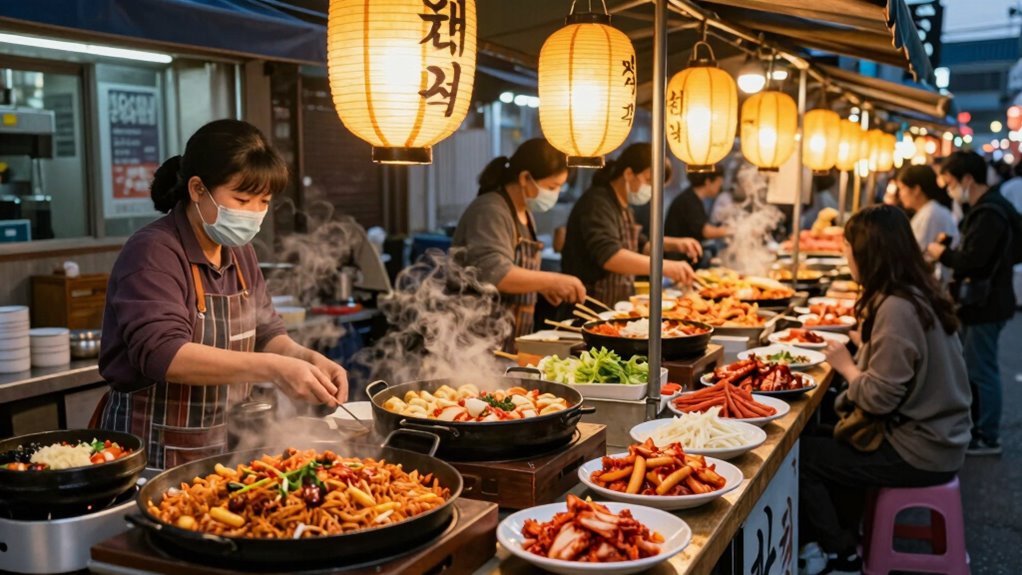

Korean cuisine took the world by storm through a mix of authentic flavors and innovative fusion dishes, appealing to diverse palates. Chefs and home cooks blend tradition with modern influences, creating exciting dishes like kimchi tacos and Korean-inspired burgers. The influence of K-pop and Korean dramas sparks curiosity, compelling people to try dishes like jjigae and galbi. This dynamic blend of tradition and pop culture keeps Korea’s food scene fresh and globally recognized—there’s so much more to explore.

Get kitchen staples and gadgets delivered free with Prime
- Fast, free delivery on millions of items
- Prime Video, Amazon Music and more included
- Member-only deals all year
Key Takeaways
- Fusion dishes like kimchi tacos and Korean-inspired burgers popularized Korean cuisine globally.
- Korean pop culture, including K-pop and dramas, sparked international interest in Korean food.
- Authentic ingredients such as gochujang and kimchi maintain flavor integrity while inspiring global experimentation.
- Modern chefs blend tradition with innovation, creating diverse, appealing dishes for worldwide audiences.
- Korea’s culinary heritage and creative adaptations have established its recognition on the international stage.

Korean cuisine is rapidly gaining international popularity, mesmerizing food lovers around the globe with its bold flavors and unique dishes. As you explore this vibrant culinary landscape, you’ll notice how chefs and home cooks alike are blending traditional elements with modern influences, creating exciting fusion dishes that appeal to diverse palates. This fusion approach doesn’t dilute the essence of culinary traditions; instead, it enhances them, making Korean flavors accessible and appealing to a broader audience. You’ll find that many contemporary Korean dishes incorporate influences from other cuisines—think kimchi tacos, Korean-inspired burgers, or bibimbap bowls with a twist—showcasing how adaptable these recipes are while still honoring their roots.
This blending of culinary traditions is central to Korea’s culinary evolution. It’s a reflection of the country’s openness to new ideas and its history of cultural exchange. When you taste dishes like Korean fried chicken, you experience a perfect harmony of crispy skin and tender meat, often accompanied by inventive sauces that highlight Korea’s love for bold, spicy, and savory flavors. These dishes exemplify how traditional techniques are maintained even as they evolve through fusion, making them both familiar and innovative at the same time. The popularity of street food, like tteokbokki (spicy rice cakes) and hotteok (sweet pancakes), also contributes to this dynamic culinary scene, as vendors frequently experiment with new ingredients or presentation styles that keep traditional flavors fresh and exciting. Additionally, the use of authentic ingredients like gochujang and kimchi plays a crucial role in maintaining flavor integrity while allowing for creative culinary expression. This commitment to culinary authenticity helps preserve Korea’s rich food heritage even as chefs innovate, ensuring that traditional flavors continue to thrive in modern contexts. The global rise of Korean cuisine can also be attributed to the influence of Korean dramas and K-pop, which spark curiosity and inspire audiences to try authentic dishes. You might find yourself craving a steaming bowl of jjigae (stew) or a plate of galbi (marinated barbecue ribs) after watching a Korean drama. Food becomes a cultural bridge, inviting you to explore Korea’s rich history and culinary traditions while also embracing creative innovations. Moreover, global culinary recognition has encouraged chefs worldwide to experiment with Korean ingredients, further solidifying Korea’s place on the international culinary stage. This blend of tradition and innovation allows Korean cuisine to stay relevant and exciting, constantly pushing boundaries and drawing more food lovers into its flavorful world.
As an affiliate, we earn on qualifying purchases.
Frequently Asked Questions
How Do Traditional Korean Dishes Vary Regionally?
You’ll notice that traditional Korean dishes vary regionally because of different regional ingredients and cooking techniques. In coastal areas, seafood dominates, leading to dishes like haemul pajeon, while inland regions favor hearty stews with locally available vegetables and beef. Mountain areas focus on preserved foods and fermentation, using unique techniques. These variations reflect Korea’s diverse climate and geography, giving each region its distinctive flavors and culinary traditions.
What Are the Health Benefits of Korean Cuisine?
You’ll benefit from Korean cuisine’s nutritional advantages, as it emphasizes fresh vegetables, fermented foods, and lean proteins that boost gut health and immunity. Its low-calorie, high-fiber ingredients support weight management, while probiotic-rich dishes like kimchi aid digestion. Additionally, Korean dishes often accommodate dietary considerations such as gluten-free and plant-based options, making it a healthy choice that promotes overall well-being.
How Has K-Pop Influenced Global Interest in Korean Food?
K-pop’s cultural influence has skyrocketed, making it impossible for you to ignore Korean food. As global youth trends embrace everything Korean, fans enthusiastically explore dishes seen in music videos and live performances. K-pop idols’ fashion and style inspire culinary curiosity, turning fans into food explorers. This explosive interest fuels a worldwide appetite for Korean cuisine, transforming it from traditional fare into a trendy, must-try experience that’s sweeping across continents.
What Challenges Do Korean Restaurants Face Internationally?
You face challenges like cultural adaptation, where you must balance authentic flavors with local tastes, and ingredient sourcing, which can be difficult outside Korea. Finding authentic ingredients often requires extra effort or imports, raising costs and complicating operations. Additionally, educating customers unfamiliar with Korean cuisine is essential, so you work to introduce the dishes while respecting traditions. These hurdles demand flexibility and dedication to bring genuine Korean flavors worldwide.
How Is Korean Cuisine Adapting to Local Tastes Worldwide?
You’ll notice Korean cuisine adapting quickly to local tastes, with 45% of international restaurants offering fusion flavors that blend traditional ingredients with regional influences. Street food stalls now incorporate local spices and styles, making dishes more relatable. This flexibility helps Korean food appeal to diverse palates, ensuring it remains popular worldwide. By embracing fusion and local ingredients, Korean cuisine continues to evolve while maintaining its authentic roots.
As an affiliate, we earn on qualifying purchases.
Conclusion
You might be surprised to learn that Korean cuisine has become a global phenomenon, with over 10,000 Korean restaurants opening worldwide in just the past decade. As you explore dishes like kimchi, bibimbap, and Korean fried chicken, you’ll see how this vibrant food culture continues to captivate tastes across the globe. So next time you enjoy Korean food, remember you’re part of a delicious, worldwide trend that’s shaping the way we eat!
As an affiliate, we earn on qualifying purchases.
As an affiliate, we earn on qualifying purchases.
Columbus Day / Indigenous Peoples' Day Picks
long weekend sales
As an affiliate, we earn on qualifying purchases.