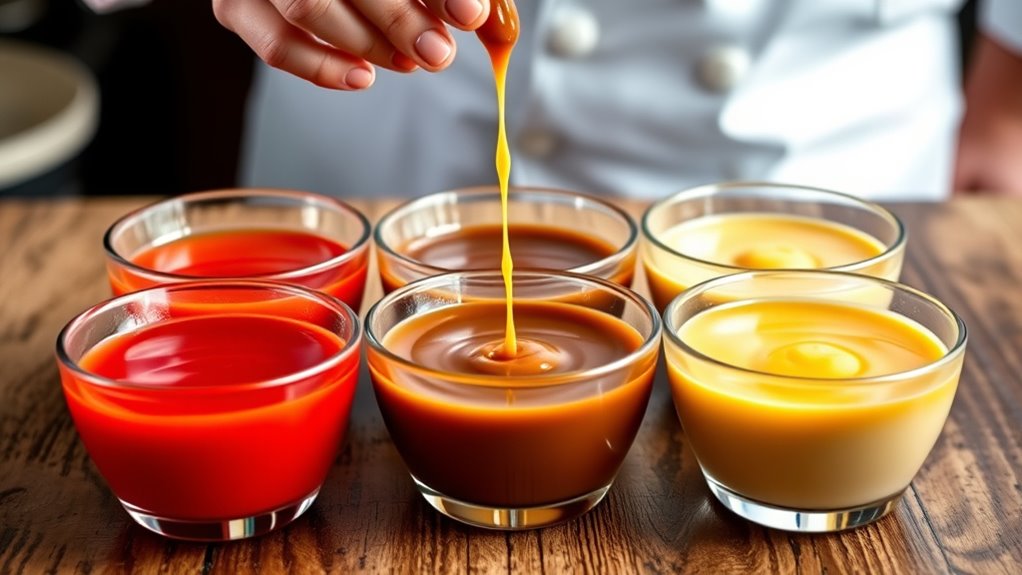

To master sauce essentials, focus on the five mother sauces: béchamel, velouté, espagnole, tomato, and hollandaise. These serve as versatile bases for countless other sauces that can enhance your dishes. Béchamel becomes cheese sauce, velouté transforms into chicken or seafood sauces, espagnole forms rich, complex options, tomato adds depth to pasta, and hollandaise pairs beautifully with eggs and fish. Keep exploring these foundations to unearth a world of culinary possibilities.
Key Takeaways
- The five mother sauces are béchamel, velouté, espagnole, tomato, and hollandaise, serving as versatile bases for many other sauces.
- Mastering these sauces enhances cooking versatility, allowing customization for various dishes like pasta, meats, and vegetables.
- Béchamel and velouté can be adapted into cheese or cream sauces, while espagnole and tomato serve as rich, flavorful foundations.
- Proper storage in airtight containers and freezing (where appropriate) preserves the sauces’ freshness and flavor for future use.
- Understanding and utilizing these sauces improves consistency, elevates dishes, and builds confidence in both quick and elaborate meal preparation.
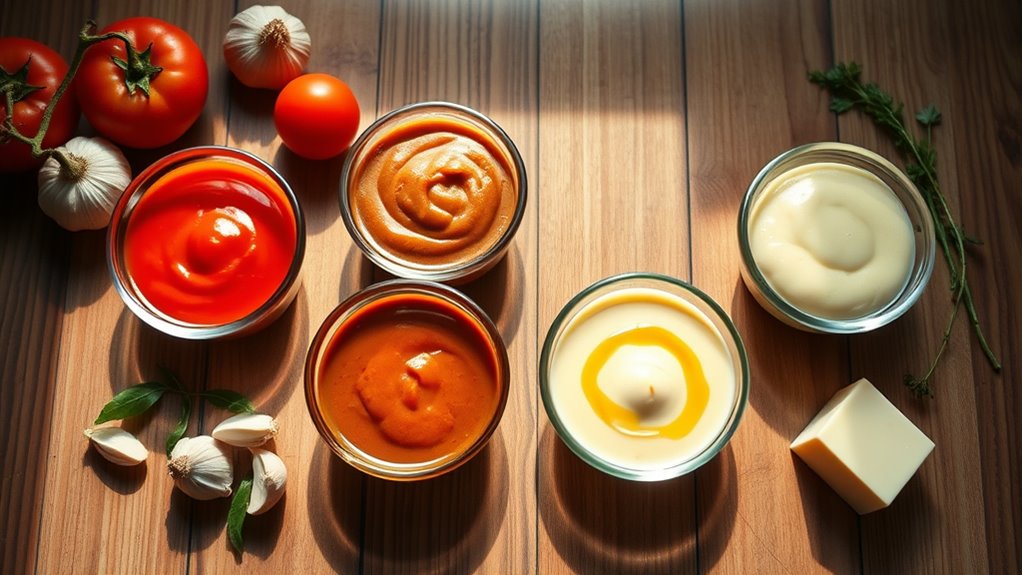
Have you ever wondered what makes a meal truly memorable? It’s often the subtle complexity of flavors, the careful balance of ingredients, and the way sauces enhance each bite. Understanding the basics of sauces, especially the mother sauces, can elevate your cooking and make every dish more impressive. When it comes to flavor pairing, using the right sauce can bring harmony to your ingredients, transforming simple components into a cohesive, delightful experience. Proper sauce storage is equally important; it preserves freshness, prevents spoilage, and makes it easier to incorporate sauces into your meals whenever needed.
Mother sauces serve as the foundation for countless other sauces, so mastering them gives you a versatile toolkit in the kitchen. These classic sauces—béchamel, velouté, espagnole, tomato, and hollandaise—are like building blocks. For example, a rich béchamel can become a creamy cheese sauce perfect for pasta or vegetables, while velouté, made from light stock and roux, can be adapted into sauces for poultry or seafood. Knowing how to tweak and flavor these base sauces allows you to create a variety of dishes with depth and richness, all while maintaining consistency and quality.
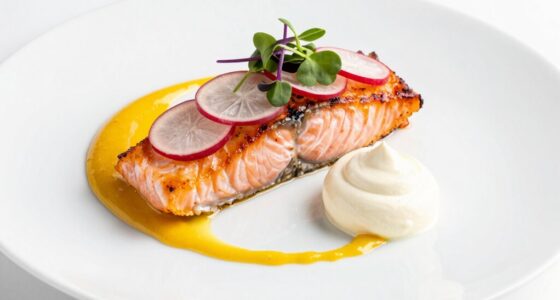
When it comes to flavor pairing, the key is understanding how sauces interact with other ingredients. Think about complementarity—pairing a tangy tomato sauce with sweet, roasted vegetables or a velvety hollandaise with tender eggs or fish. These combinations bring out the best in each component, creating a balanced and memorable bite. Experimenting with herbs, spices, and acids within your sauces can further enhance flavor pairing, giving your dishes a personalized touch.
Sauce storage plays an essential role in keeping your culinary creations fresh and ready to use. Most sauces can be stored in airtight containers in the refrigerator for several days—sometimes even longer if properly cooled and sealed. Make sure to label your containers with the date to track freshness. For longer storage, some sauces can be frozen, but always check which ones freeze well—tomato-based sauces and béchamel do, while hollandaise generally doesn’t. Proper storage not only preserves the flavors but also prevents contamination and spoilage, ensuring your sauces remain safe and flavorful when you need them.
In essence, understanding the fundamentals of mother sauces, mastering flavor pairing, and practicing proper sauce storage will critically improve your cooking. With these essentials, you can craft dishes that are both delicious and impressive, turning simple ingredients into memorable meals. Whether you’re preparing a quick weeknight dinner or a fancy dinner party, these skills will give you confidence and flexibility in the kitchen.
Top picks for "sauce essential mother"
Open Amazon search results for this keyword.
As an affiliate, we earn on qualifying purchases.
Frequently Asked Questions
Can Mother Sauces Be Stored Long-Term Safely?
Yes, you can store mother sauces long-term safely using proper storage techniques and preservation methods. Keep them in airtight containers and refrigerate promptly, ideally within two hours of cooking. For extended storage, consider freezing in small portions to prevent spoilage and maintain quality. Always label containers with dates, and reheat thoroughly before use. Proper storage guarantees your sauces stay fresh and safe to enjoy later.
What Are Common Mistakes When Preparing Mother Sauces?
Did you know that nearly 60% of home cooks make common pitfalls when preparing mother sauces? One major mistake is not properly emulsifying or cooking the roux, leading to lumps or thin sauces. Preparation errors like overheating or under-seasoning also ruin the flavor and texture. To avoid these, follow precise measurements, stir consistently, and taste as you go. Attention to detail guarantees your sauces turn out smooth, rich, and flavorful every time.
How Do I Adapt Mother Sauces for Dietary Restrictions?
You can adapt mother sauces for dietary restrictions by using gluten-free options like cornstarch or arrowroot instead of flour to thicken. For low sodium versions, swap in low-sodium broths or use herbs and spices to boost flavor without salt. You might also experiment with dairy-free alternatives or plant-based fats. These adjustments keep your sauces flavorful while respecting dietary needs, making your dishes more inclusive and enjoyable.
Are There Vegetarian or Vegan Versions of Mother Sauces?
Yes, you can make vegetarian or vegan versions of mother sauces by using plant-based thickeners like cornstarch or arrowroot instead of traditional roux. Incorporate meat substitutes such as tofu, tempeh, or mushrooms to add richness and flavor. These substitutions maintain the sauce’s texture and depth while aligning with plant-based diets. With a few adjustments, you can enjoy classic sauces that are both delicious and suitable for vegetarians and vegans.
What Are Innovative Uses for Mother Sauces in Modern Cuisine?
Think of mother sauces as a blank canvas ready for your culinary masterpiece. You can experiment with fusion techniques, blending flavors from different cuisines to create new dishes. Ingredient substitutions, like plant-based milks or vegan thickeners, allow you to reinvent classic sauces for modern tastes. Use these methods to craft innovative, personalized sauces that elevate your cooking and surprise your palate with every bite.
Conclusion
Mastering these five mother sauces gives you the tools to elevate any dish. Once you get the hang of them, you’ll see that the sky’s the limit in your kitchen. Don’t be afraid to experiment and put your own spin on these classics. Remember, the proof of the pudding is in the eating—so keep practicing, and soon you’ll be turning out culinary creations that truly impress. Happy saucing!